Friday, 9 February 2018

How Marketers Are Getting Their Message Across in an Ad-Blocking World

It used to be so simple.

A billboard here. A radio or television commercial there. Perhaps a print ad or two thrown in for good measure. That was your marketing strategy, and it worked.

Want to watch the latest episode of The Dukes of Hazzard? You had to sit through that commercial for cereal. Enjoying an “article” in the new issue of Playboy? You at least glanced at the ad for the new Volkswagen as you flipped the pages.

Marketing messages were everywhere as they are today, but one thing has fundamentally shifted in favor of the consumer: they now have the ability to tune them out, skip them entirely, or block them completely.

DVR allows viewers to fast-forward through commercials. Podcast and YouTube ads can be skipped immediately or after a few seconds. Streaming services like Netflix and Amazon Prime are commercial-free. Good old-fashioned terrestrial radio is on life support.

And let’s not forget about AdBlock and similar services. A tiny extension or a standalone browser dedicated to better user experience like Brave lets you stop them in their tracks. These tools either block or filter advertising content from websites, pages, and apps. Consider:

  • Ad blocker penetration is pegged at 18% in the United States. That number is even higher in Canada and many parts of Europe.
  • There were 600 million devices with ad blocking software in December 2016, and 62% of those were mobile.
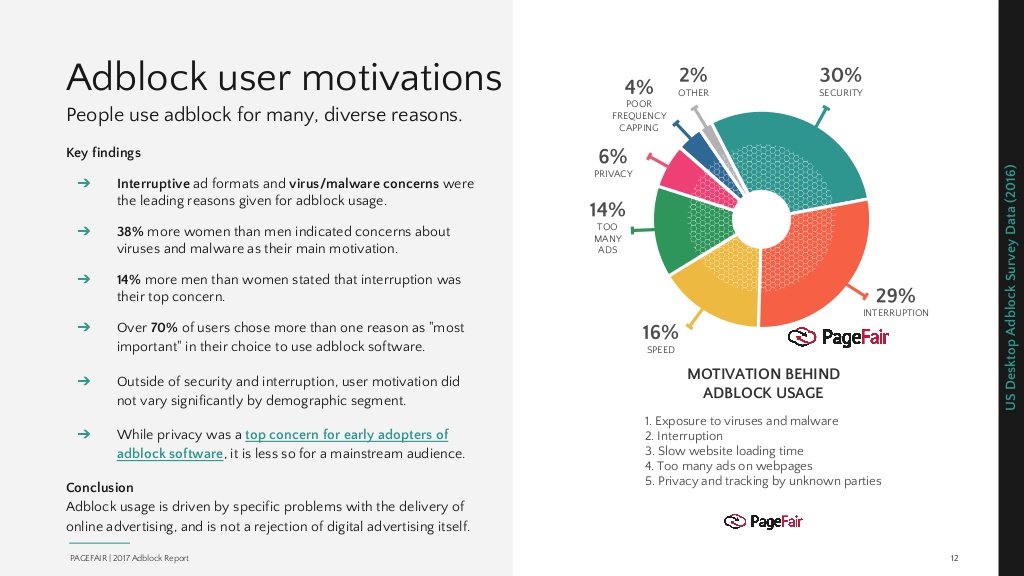
  • Reasons for using the technology include exposure to malware, interruption, speed issues, too many ads, and privacy concerns.
  • eMarketer predicts that 30% of all internet users will be blocking ads by the end of 2018.

We’ve entered the Age of Ad Blocking. And banner blindness. And instant gratification. Patience may be a virtue, but it seems to be in dwindling supply. Ain’t nobody got time for commercials and ads.

And if you think the solution is using an adblock wall – restricting or prohibiting access to content until users turn it off – think again: 74% will simply leave your site.

It might seem a catch-22. You need ads to market your products and/or monetize your website. You need to attract visitors to click those ads. But those same visitors claim to despise ads.

Look at the reasons why people use ad blockers for some quick insight. According to PageFair:
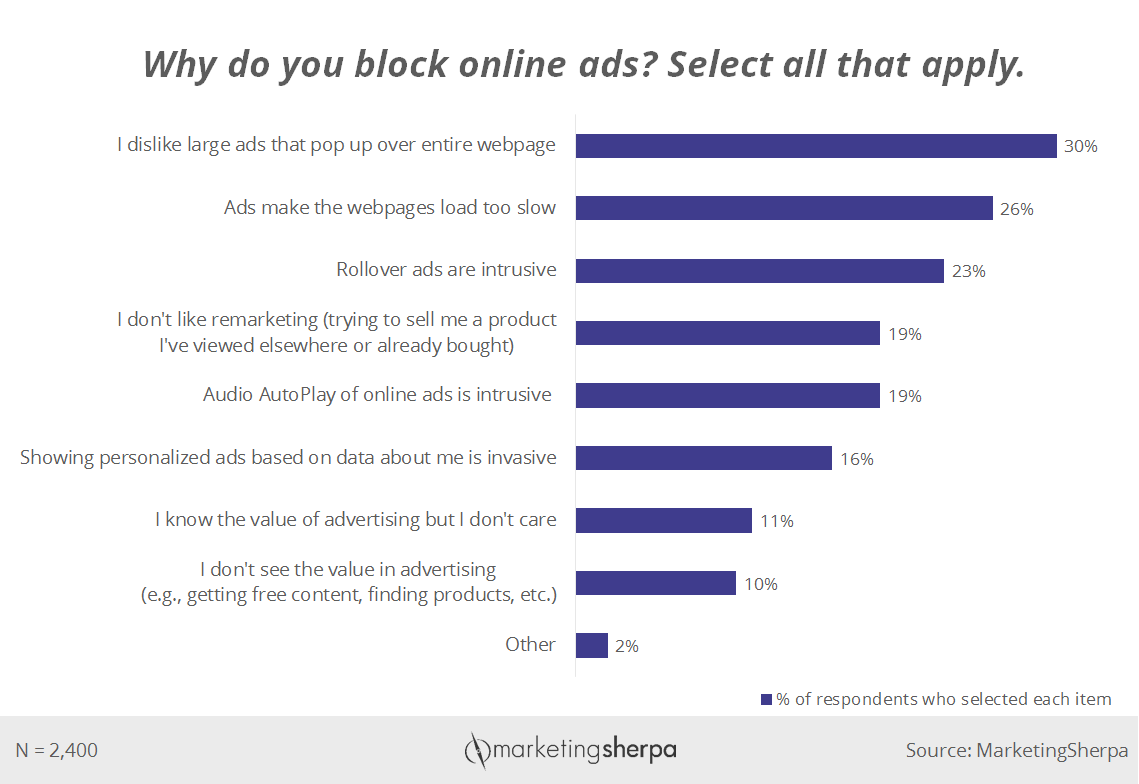
And according to MarketingSherpa:
And according to Hubspot:
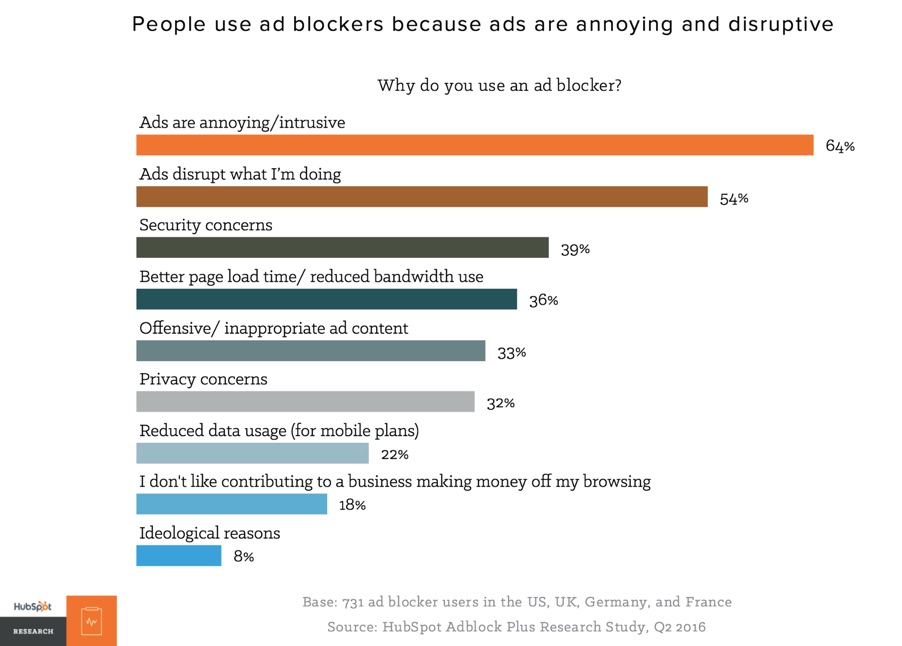
You’ll notice quite a bit of overlap. People don’t like sketchy ads, intrusive ads, ads that negatively affect page performance, ads that are irrelevant, ads that are annoying, and more.

What takeaways can you glean from that? It’s a straightforward list of what not to do with your advertising and messaging.

So, is marketing dead? Far from it.

Despite the seemingly overwhelming odds, marketers are still able to get their message across in an ad-blocking world. How? By adapting to the changing landscape. If the old ways don’t work, you have to find innovative new ways. Intrusive ads that interrupt the user experience are out. Honest, timely, and relevant “ads” are in.

Say hello the rise of Digital Advertising 3.0.

Influencer Marketing

In the simplest terms, an influencer is a content creator or personality with a relatively large following on a given platform. Their popularity or expertise gives them a great deal of clout with their fans.

But they need not be celebrities in the traditional sense of the word. Individuals like Kim Kardashian, Katy Perry, and Justin Bieber have tens of millions of followers, but that doesn’t automatically make them a good fit for you and your brand.

In fact, research has shown that influencers with fewer than 1000 followers – often called micro-influencers – saw likes 8% of the time, and comments 0.5% of the time on their posts and shares. Celebrities with 10+ million fans? Those numbers plummet to 1.6% and 0.04% respectively.

Influencer marketing is a partnership with an influencer to review, promote, or link to your content, brand, and products. It’s widely used and considered one of the most cost-effective and powerful strategies used today. Interest in it grew 90x between 2013 and 2016, and doubled again in the first nine months of 2017. 2018 looks to be no different.

And because there is no “ad” in a sense, nothing is blocked or filtered. This puts your message in front of as many eyes as possible, and if you’ve done your homework beforehand in finding the right influencer, it’s a targeted audience.

If you haven’t tried it yet, there’s no time like the present. A few things to remember:

  • Decide on the most appropriate platform for your ideal customer. Are they business professionals? You’ll do better on LinkedIn. Are they teenagers? Snapchat is a safe bet.
  • Move away from targeting just the numbers. Kim Kardashian has 58.6 million followers on Twitter, but she’s probably not the best fit for your new email marketing service. Look for micro-influencers – say 50,000 or less – active in your industry or popular with your target audience.
  • Check a potential influencer’s post history before making contact. You don’t want to discover objectionable, racist, or sexist material after they’re already linked to your brand.
  • Finding the right influencer is the most important part of the whole strategy. Take your time. Do it right.
  • Look at the engagement a typical post generates. Is it getting plenty of likes, shares, and comments?
  • Next, follow them. Engage with their content. Leave genuine comments. Then, reach out to them via email or a private direct message. Talk about why you think a partnership would benefit you both, and how your product fills a need for their audience.
  • Don’t give them too much or too little in crafting a message that will resonate with their audience. Work together.

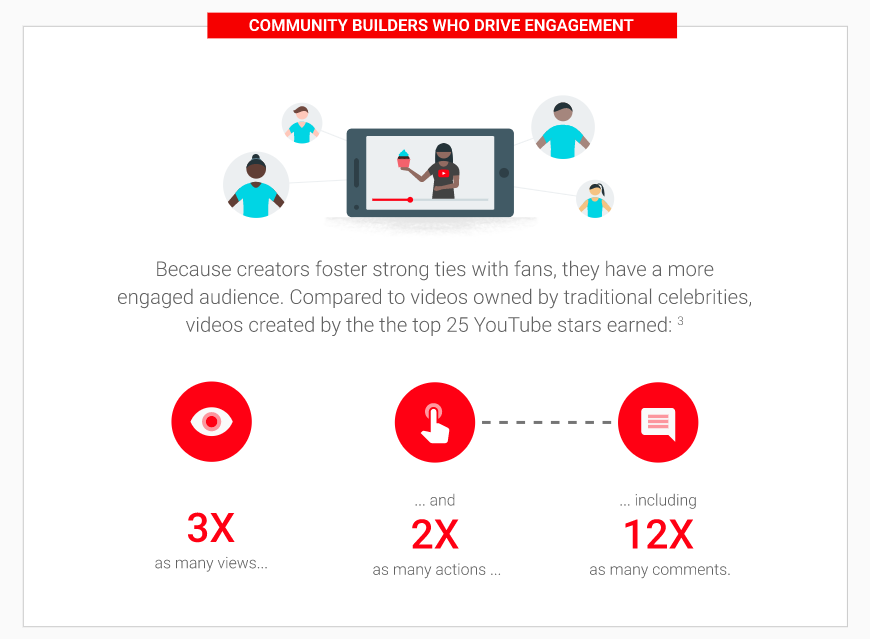
Done right, influencer marketing bypasses ad-blockers and delivers marketing that people actually want to see. Teenagers on YouTube, for example, trust the opinion and recommendations of influencers more than celebrities. They relate better to them, and believe the influencer understands them as well or better than their friends.
Native Advertising

Traditional online ads try and stand out from the background. They might use a different font or color. They might flash, or wiggle, or bounce. They might autoplay a video or audio clip.

They want you to notice them. And that’s their downfall: traditional display ads are very easy for blockers to identify and filter.

That’s where native advertising comes in.

Native ads mimic the digital environment in which they appear. They try and blend in. They don’t want to interrupt the user experience in any way, and ideally, they don’t even want you to notice it’s an ad at all. In fact, they might only be discernible as an ad by the Sponsored or Promoted tag most sites place on them.

Click a native ad, and it usually leads to a page that looks and feels like a regular blog post or article. It can easily be shared.

But it still has a message. The post includes or features the brand, product, or service being promoted in some way. It often has a call-to-action such as signing up to receive a special report or newsletter.

You’ve encountered native ads in your daily web browsing, even if you don’t realize it. They’re very popular on news and aggregate sites:
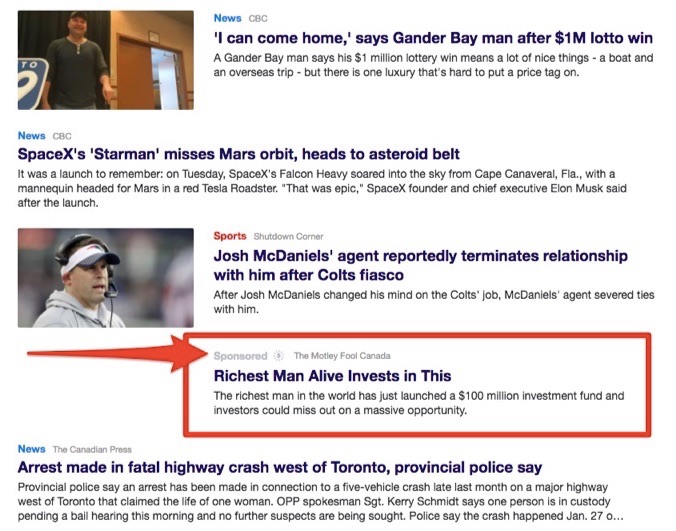
Scroll down the top stories on Yahoo, and you might not even notice the “Sponsored” tag on the post about an investment opportunity. It looks like any other article (with perhaps a bit of a clickbait headline).

Click on it, and you’re taken to a landing page that looks like a blog post. It mentions that Jeff Bezos – the richest man in the world – is pouring millions into a new tech innovation. Others are following his lead.

What is it? Just enter your email and download the free report.

The post is a native ad for The Motley Fool to collect leads for their financial services. And it works because there’s nothing to block. Users choose to click it.

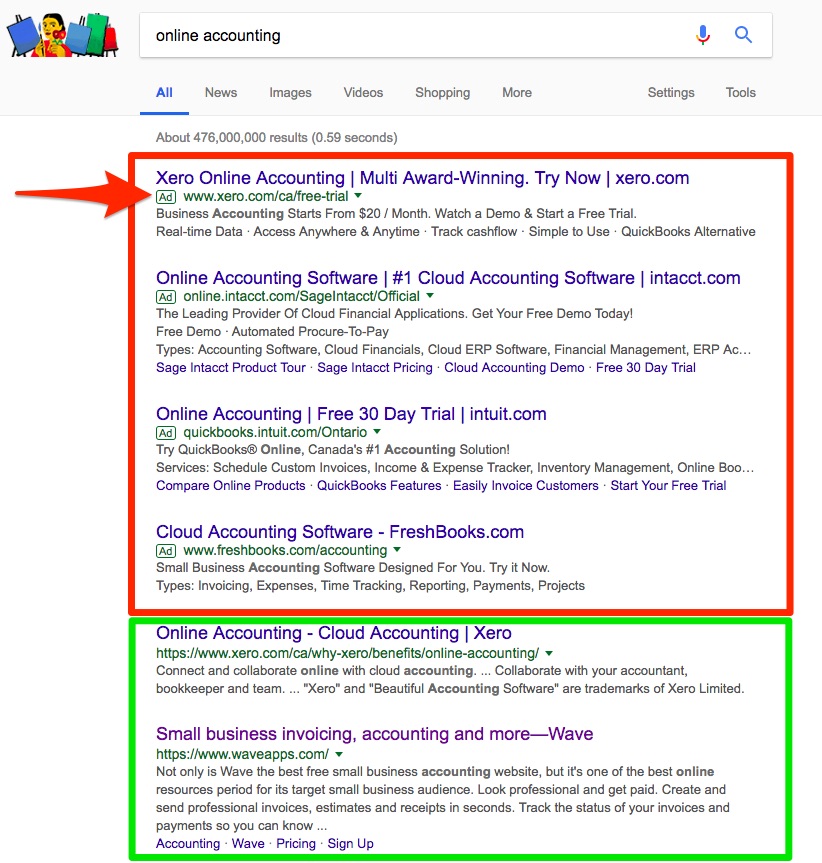
Google search ads are another powerful example of native ads at work. For any given search query, you’ll be presented with thousands of organic results…and a few paid ones, too. These are identified by the Ad tag, but otherwise look exactly like a regular search result.
Facebook in-feed ads are considered the most lucrative type. As you’re scrolling through your account feed, you’ll encounter them all the time, but they blend in with posts from your friends, family, and pages you follow.

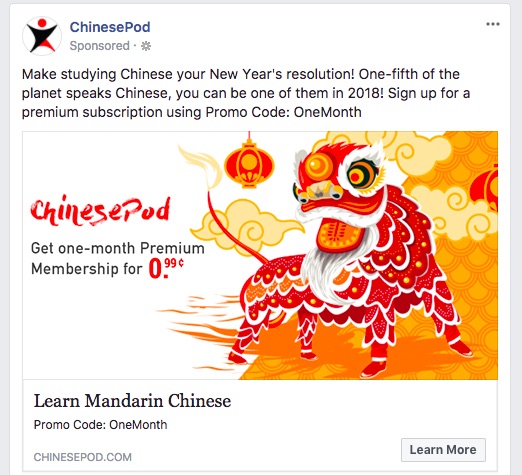
Some are a bit more obvious, like this ad for ChinesePod, an online platform to learn Mandarin. It’s definitely an ad, but because it appears in your feed rather than your sidebar – and includes like, shares, and comments – it takes on the appearance of a regular post.
Others appear decidedly un-ad like, like this one promoting the new Netflix film The Cloverfield Paradox. You’ll notice the Sponsored tag if you look for it, otherwise it just seems like someone posted the trailer for a cool new sci-fi movie. From the stats at the bottom, we can see hundreds of thousands have watched it, thousands have liked it, and hundreds have shared and commented on it.

In essence, it’s an ad that’s not an ad. And that’s the most powerful and effective type of ad you can create.
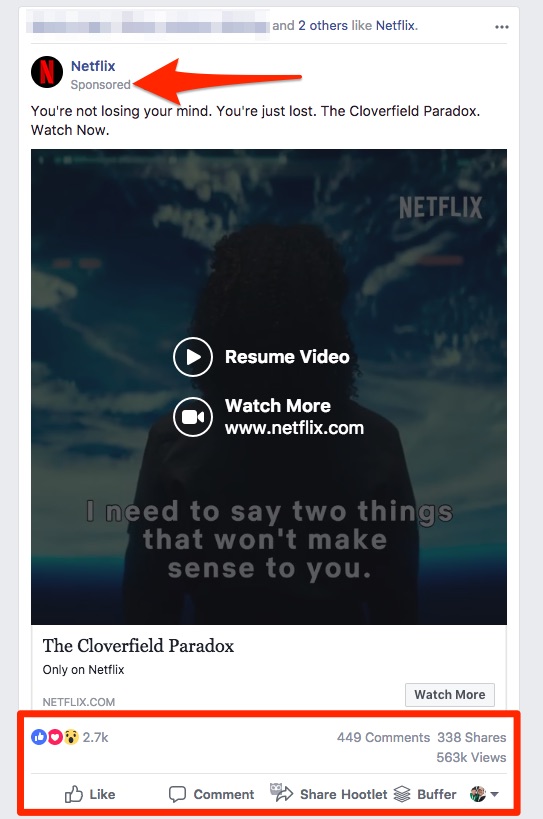
With this “ad”, Netflix has generated interest, excitement, and buzz for its latest big budget release.

Yahoo’s recent Perception Study found 4 key components to a native ad that produces a positive impression:

  1. Photos of people rather than objects
  2. Legible and identifiable logos
  3. Short format (15 seconds or less) videos
  4. Prominent brand name placement

Native ads can generate a click-through rate (CTR) 4x higher than non-native display ads, and they’re predicted to generate 74% of ad revenue by 2021.

Want to experiment with Google search ads? Go through Google. Facebook in-feed ads? Contact Facebook. For various news and aggregate sites, you’ll need to work with a native ads network such as Native Ads, Outbrain, Taboola, or Nativo.

And if you want some inspiration, check out a few spectacular native ad examples.

Native ads are not a fix-all. You still need to find the right platform(s) for your target market, and deliver relevant and timely “ads”.

Social Ads

You don’t need me to tell you just how popular social media is today. We spend more time on social platforms like Facebook, Instagram, Snapchat, LinkedIn, Twitter, and others than we do on any other type. It’s our favorite online activity.

There are over 2 billion monthly active users on Facebook, 800 million on Instagram, 500 million on LinkedIn, 330 million on Twitter, and 178 million on Snapchat. Worldwide, there are 3.03 billion active social media users (compared to 3.82 billion internet users). That’s a massive potential reach and audience.

So it makes sense that social ads are taking over.

Everyone spends time there. And it’s relatively easy to blend in and make your ads appear less like ads and more like shares, posts, and tweets.

Every social media platform now offers the ability to advertise and market in some way. Facebook makes the majority of its revenue – the vast majority – via selling ads space to businesses. In 2017, it earned $39.94 billion in ad revenue, up 49% from the $26.85 billion it made in 2016.

The story is the same for Instagram, Snapchat, Twitter, LinkedIn, and others. Ad revenue is big, big bucks. But as an SMB, you don’t have to spend millions, or even thousands, to get in on that action.
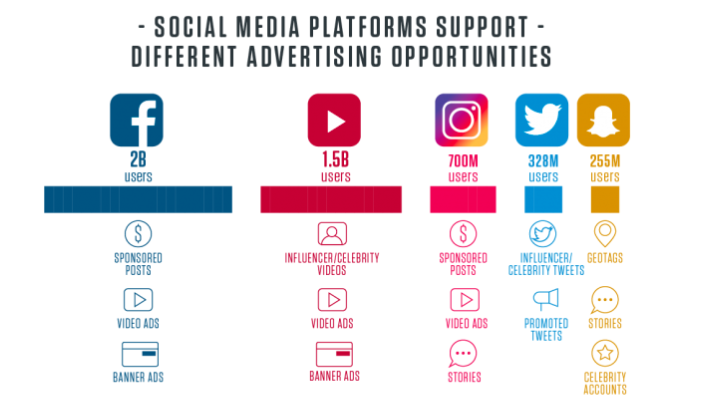
On Facebook, you can work with sponsored posts, in-feed video or image ads, or more traditional banner ads. Instagram? Sponsored posts, Stories, or video ads. Twitter? Promoted tweets and hashtags. YouTube? Video and banner ads. LinkedIn ads? The #1 rated platform by marketers for B2B leads. You’re spoiled for choice. Where does your market hang out online?

And let’s not forget Snapchat. Its growth may have slowed recently, but it’s still a tremendously popular platform for tweens, teens, and millennials. It provides traditional ads, Stories, geofilters, and lenses to spread awareness, increase engagement, and have fun. It may not seem so at first glance, but Snapchat and business can be a match made in heaven.

Social ads don’t strike social users as ads at all. They’re part of the experience. It’s marketing in a more organic, natural, and unobtrusive way. The hardest part is choosing the right platform and the right ad type to reach and resonate with your customers, not deciding whether you should try it in the first place.

You should.

Global social ad spend doubled from $16 billion in 2014 to $31 billion in 2016, and is expected to have grown another 26% in 2017. Big bucks. Big results. And nary an ad-blocker to be seen, because the ads are part of the platform experience itself.

That’s winning the advertising game the 2018 way.

In-App Ads

You’ve no doubt noticed the proliferation of in-app ads over the past few years. Any time you download and install a free app, you’re most likely going to be subjected to at least a few ads. It’s only fair, right?

Apps are big business. As the saying goes, there’s an app for that. Gaming, entertainment, finance, travel, reviews, meditation, exercise, and on and on. You need something, anything? An app exists to help you with it.

And in 2018, in-app ads are the fuel that drives the mobile app engine.
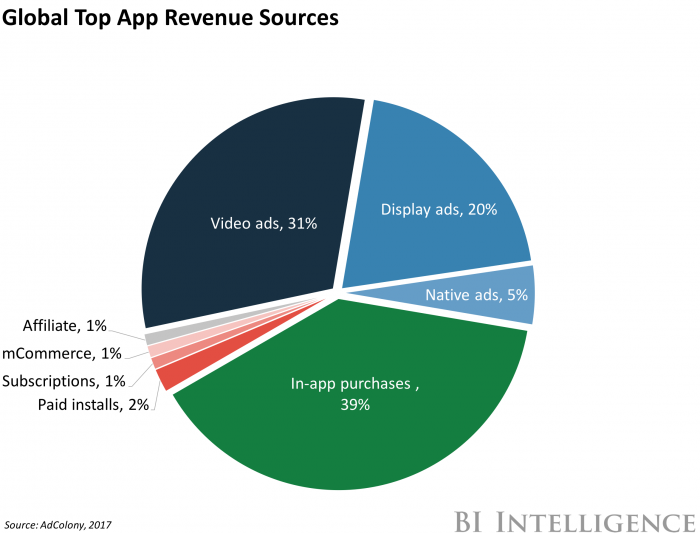
As you can see in the graphic above, video ads, display ads, and native ads account for 56% of app revenue sources. Developers need to make a living, too.

But it is a very fine line. If you’ve ever encountered an in-app ad, you’ve also likely been annoyed by one. There’s only so much space on a smartphone or tablet screen. Losing any to an ad can be irritating and frustrating.

So what’s the secret sauce? Many marketers and developers are seeing positive results with rewarded video ads.

App users are offered a choice: watch a brief video ad in exchange for an in-app reward (a free upgrade, additional life, downloadable template, exclusive content, etc), or skip it. No coercion. No aggressive sell. It’s entirely up to the individual whether they watch or not.

But those that do agree are actually seeing your ad. Typically 30 seconds or less, the videos play while the user patiently waits and watches. It’s a captive and willing audience for marketers.

Services like AdColony and Unity can connect advertisers and publishers in the app world to the benefit of both…and the app users themselves. That’s a triple win. Everyone’s happy.

As with any type of advertising, actively work to improve it over time. Monitor. Tweak. Manage. Improve.

Content Marketing

Perhaps the original ad-blocker killer, content marketing is still going strong. Even without the existence of blockers, it would still be a crucial cog in your digital marketing efforts.

Providing valuable, targeted, and useful content for free is a great way to spread awareness of your brand, increase engagement, build authority and expertise, and generate both goodwill and leads. Creating and sharing blog posts, infographics, videos, podcasts, and more is the ultimate method for winning in the digital arena.

It’s not salesy. It’s not pushy, or aggressive, or in-your-face. But pound for pound, content marketing delivers like no other. According to the Content Marketing Institute:

  • It delivers 3x more leads per dollar spend than paid search ads
  • It costs 62% less than traditional outbound techniques, but generates 3x more leads
  • It combats ad overload by delivering your message without the use of true ads
  • It produces conversion rates 6x higher than other methods

Content marketing is a long game. It’s not based on clicks or conversions, per se. Use it to engage, connect, and build relationships that you can leverage into sales and revenue down the road. When it comes to business in 2018, just getting known is more than half the battle.

And because the ad is the content itself, blockers won’t block, filters won’t filter, and your audience is being advertised to without realizing it. They get something valuable from you, and you get to deliver your message to them.

If you market online at all, content marketing should be a cornerstone of your strategy whether you’re concerned about ad-blockers or not.

I could go on in great detail about other methods to slay the ad-blocker beast, but I’m sure what we’ve already covered is more than enough to get you started. Suffice to say, there are other channels to explore:

  1. Email marketing is still one of the most powerful methods to connect, engage, educate, and nurture leads and customers.
  2. Interactive ads are a fun way to engage with your fans, leads, and customers. Give them something enjoyable and active to do while delivering your message, and the likelihood of getting blocked goes down exponentially. 360-degree video, augmented reality, virtual reality, and clickable maps are just a few examples of what you can do and use.
  3. Adapting to the growing use of mobile devices. Smartphones are ubiquitous. Start delivering content – and ads – on the platform your audience uses every day. You need to create mobile ads that target engagement and conversions if you want to succeed.

Keep looking, and you’ll find plenty of additional tips, tricks, and channels to beat the blockers.

Conclusion

If you’re only pushing ads the traditional ways – popups, banners, sidebars – you’re doing it wrong.

Advertising is changing. Evolving. Understand why people are blocking to better understand how to win them back. The idea isn’t to sneak past the blockers anymore, but rather to make them unnecessary.

People are using them because of performance – some studies suggest ad-blockers can reclaim 24 hours annually by making sites load faster – privacy, and security concerns. Keep that in mind when designing and launching your ad campaigns.

They don’t like repetitive display ads. They don’t like retargeting ads that follow them around.

They don’t like popups, before-content ads, and banners.

In the United States, 54% of ad-blocker users feel ads are annoying and/or irrelevant, 48% believe there are just too many ads, and 47% feel that they take up too much screen space.

The good news? 83% of respondents in a Hubspot survey agreed that not all ads are bad, but they want the ability to block the obnoxious ones.

The solution? Make sure your ads are not the obnoxious ones. Pay attention to what they hate, and create accordingly.

How have you adapted to the ad-blocking age? What methods have you used to get your message across?

About the Author: Neil Patel is the cofounder of Neil Patel Digital.


from The Kissmetrics Marketing Blog http://ift.tt/2BOzmFQ
via IFTTT

Thursday, 8 February 2018

Facebook looks to be testing comment downvoting

TwitterFacebook

Hating on your friends' dumb Facebook posts is on the verge of getting a whole lot easier. 

Ever the innovator, Facebook CEO Mark Zuckerberg appears to have found a way to transfer all the bickering in your feed into something much more orderly. Specifically, downvotes. 

On Thursday, various people took to Twitter to voice their surprise at a new feature they say they spotted on the sprawling social media platform. If their reports are accurate, it appears to allow you to downvote comments you don't like. 

This has long been a feature on sites like Reddit, but Zuckerberg has long been adamant about refusing to add a "dislike" button to his service.  Read more...

More about Facebook, Mark Zuckerberg, Social Media, Tech, and Big Tech Companies


from Social Media http://ift.tt/2FYswM1
via IFTTT

Skyscraper Armageddon: How this Seemingly-Foolproof Hack Often Fails

Most of my blog posts are long.

I shoot for over 3,000 words in almost all of them. Sometimes, I’ll even go over 10,000 words.

Because over the years, I’ve seen that those bring in the most traffic.

This isn’t new or unique. Many people have found success in going long.

But here’s the thing that most people miss:

Just because something is long doesn’t mean it’s going to rank well.

Length is often a correlation, not a causation.

Many times, there are other factors that you need to get right, first.

Without those, it doesn’t matter how long you’ll go. You’ll always struggle.

Especially when you apply this to Skyscraper content.

These are often tens of thousands of words long. They take weeks to plan, publish, and promote.

And unfortunately, they’re not foolproof.

Skyscraper content can and will fail. I’ll show you why in this article, along with a few tips to help your next one avoid the same fate.

How Skyscrapers work

I’ve been doing SEO for over a decade now.

Republishing old content has always been around in one form or another.

You’d analyze SERP competiion for different keywords, spot some weaknesses, and then launch new resources that were better, longer, and more in-depth.

However, Brian Dean gets the credit for revamping and formalizing this process into Skyscraper content.

The process is pretty straightforward, really.

Here are the three official steps:

  1. Find link-worthy content
  2. Make something even better
  3. Reach out to the right people

Brian then shows a few examples of where this has worked beautifully.

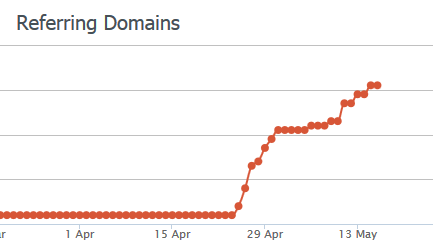
His Ranking Factors post, for example, saw massive success in only a few weeks:

referring domains from backlinko blog post

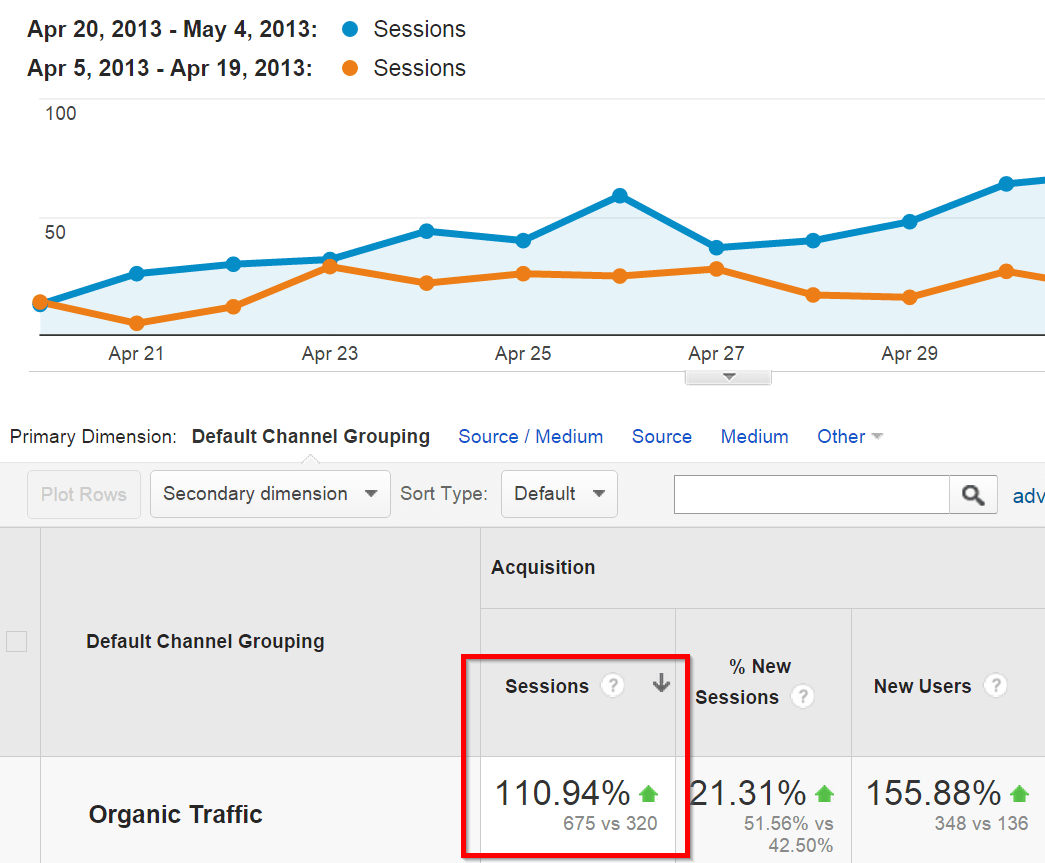
Organic traffic from search engines also doubled within a few weeks:

organic search traffic comparison

Now, I have used this tons of time since its debut to great effect.

I can vouch for its validity.

But I also have something most people don’t.

There are reasons that almost all of my Skyscraper guides work. While many others struggle or fail.

Unfortunately, it’s not as easy as one, two, three.

There is some context missing from this equation that I’ll share with you.

And the first is your brand.

Problem #1. You lack branding and authority

I’ve launched several multi-million dollar businesses.

The blog has been a large part of the success for each.

But do you want to know a secret?

None of them has been an overnight success.

Blogs, like businesses, take a long time to build up. That’s especially true if you’re in a competitive niche.

That’s why I tell people it takes two years for content marketing to pay off.

Most people don’t have that kind of time to wait. I totally get it.

But in that case, they’re just better off using AdWords to instantly drive leads.

Because content marketing is only getting harder and harder.

Search engines have evolved a lot over the past two decades.

However, the underlying principles haven’t really changed all that much.

Skyscrapers often fail because people are neglecting to take all of this into account.

That’s why I love this tweet from Ross Hudgens:

Basically, he’s saying that content isn’t ranked based on quality alone.

Instead, it often comes down to who’s publishing it.

Unfortunately, the website’s brand and authority often takes precedence over an individual post.

That means you could make the best resource in the world on your subject. But if you go up against even mediocre stuff from Walmart or Starbucks, you’re toast.

A large company’s underlying brand strength and domain authority will almost always outperform your site. No matter how good your Skyscraper is.

That’s why I say it takes two years for content marketing to work.

Not because you can’t publish or get content indexed quickly. That can happen within a few hours.

However, it’s realistically going to take years to build up enough recognition and authority for you to start competing for queries that matter.

Keywords in your industry follow the 80/20 rule. There are a handful that often send the most leads and sales.

The problem is that they’re also probably really competitive. So you’re not going to rank for them within a few years.

You can’t just rank for those terms, though, to succeed. You also need to get people to click.

That means you have to give them a reason to select you over all those other brands they already recognize.

And that’s not easy.

The Halo Effect is a bias that clouds people’s judgment. If someone is attractive, for example, people think they’re also more knowledgeable.

This same bias plays out online as brand bias.

People naturally gravitate towards brands they recognize in the search engines. They think their content is better or more trustworthy. Even when it isn’t.

Larry Kim ran an experiment last year that showed how brand bias affects conversion rates.

Repeat visitors to a website “convert 2-3x higher than first-time visitors.”

That’s why you build a sales funnel with your ad campaigns.

Trying to get people to convert immediately, when they don’t know you, is a losing proposition.

It would be incredibly expensive based on those conversion rates above.

Instead, your first goal is simply to develop recognition. Then, you rely on remarketing campaigns to ultimately convert them when ready.

Only after they’ve developed that brand recognition.

If you wanted to compare your website against another, you’d pull up their link profile.

This will show you different off-site authority metrics. So you can quickly see whether you’re in the same ballpark or not.

“Domain authority” is a good, high-level measurement to simplify things. But you’d want to dig into the details, like the number of unique root domains, to get a full picture.

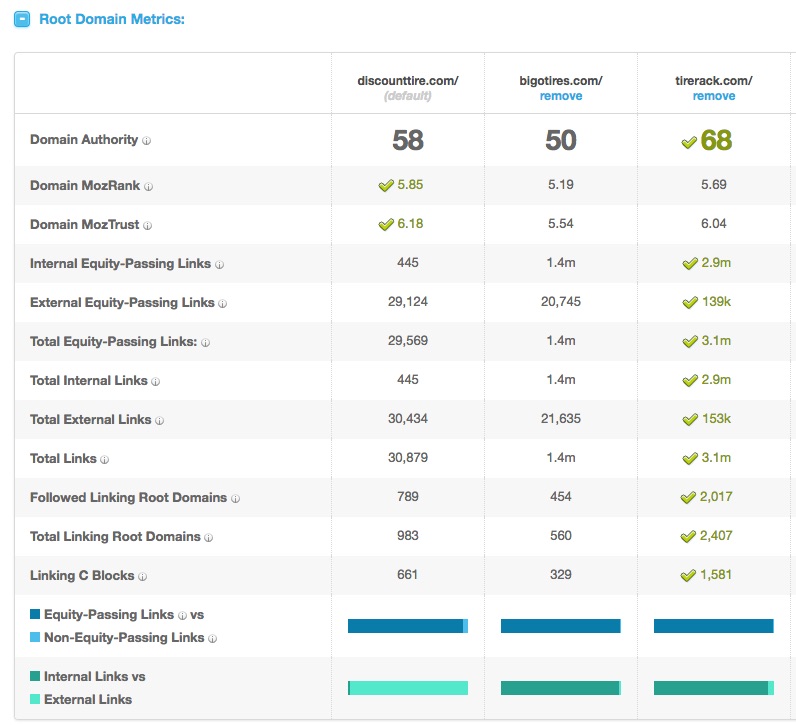
Let’s compare three random tire companies to see how this works:

  • Discount Tire
  • Big O Tires
  • Tire Rack

All else being equal, Tire Rack is the dominant competitor here.

They have almost twice as many followed linking root domains and linking C blocks as the next competitor.

That means if you’re thinking about building a Skyscraper for something related to “discount tire costs,” you better watch out for them!

Because there’s no way you’re probably going to outrank them. No matter how good your “discount tire cost” calculator is.

So what do you do in this situation?

Don’t keep doubling-down on Skyscrapers, according to Ross. Instead, tells you to go back to building up domain authority, first.

“The answer in this situation is not to create the most amazing tool post ever: it’s likely that you should build domain authority elsewhere and come back to fight another day.”

Let’s take this back to Brian Dean’s original post.

Again, this method works and I have a ton of respect for Brian.

But what he left out of that three-step sequence was a critical factor: Authority.

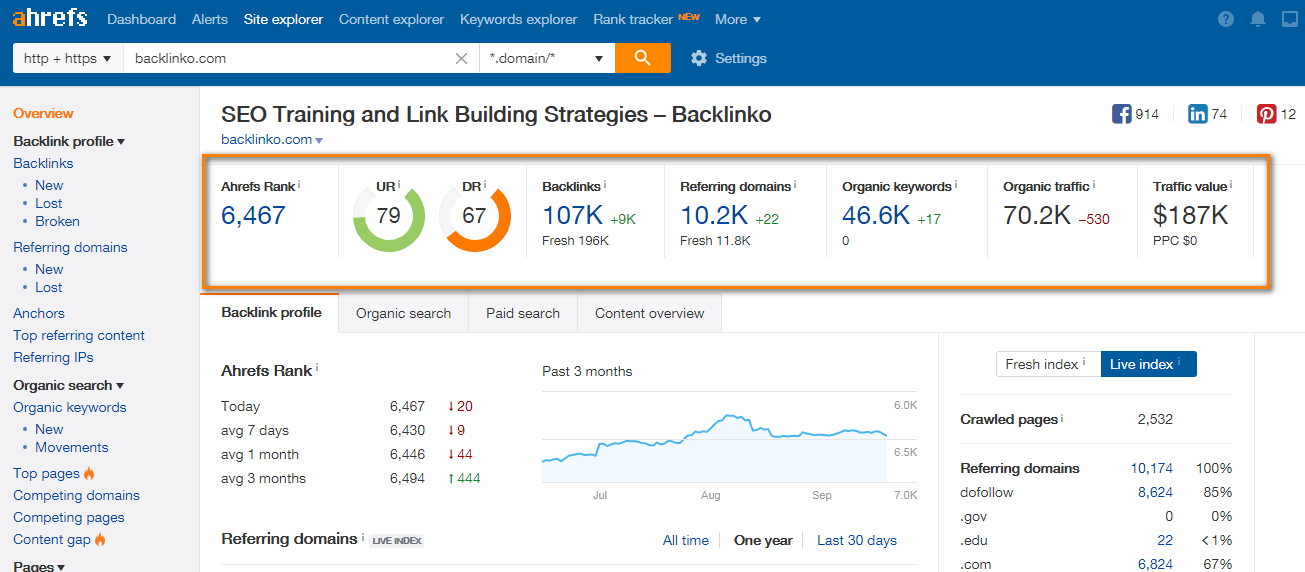
The Backlinko website has over 100,000 backlinks from 10,000+ different websites!

That means Brian can do things you can’t.

He can get away with stuff you can’t.

It might take you weeks or months of work to scratch the surface of a search query. Meanwhile, Brian can publish a post and have it above yours within hours.

The same applies to a lot of my domains.

We can publish something on Kissmetrics, NeilPatel.com, or Crazy Egg, and have it dominate the SERPs within days.

Not just because it’s the best resource on that topic. Don’t worry, it will be. ;)

But also because the overall brand recognition and authority of these websites has been built up over years and years and years.

That’s the first hurdle to clear when executing a Skyscraper.

Unfortunately, there are still a few others.

Starting with the page-level targeting that you’re going after now.

Problem #2. Page-level keyword targeting is off

Authority scores aren’t just applied to your domain and entire website.

They can also apply to your individual pages, too.

It works almost exactly like the process we just saw.

However, now it’s focused on your page vs. a competitor’s page.

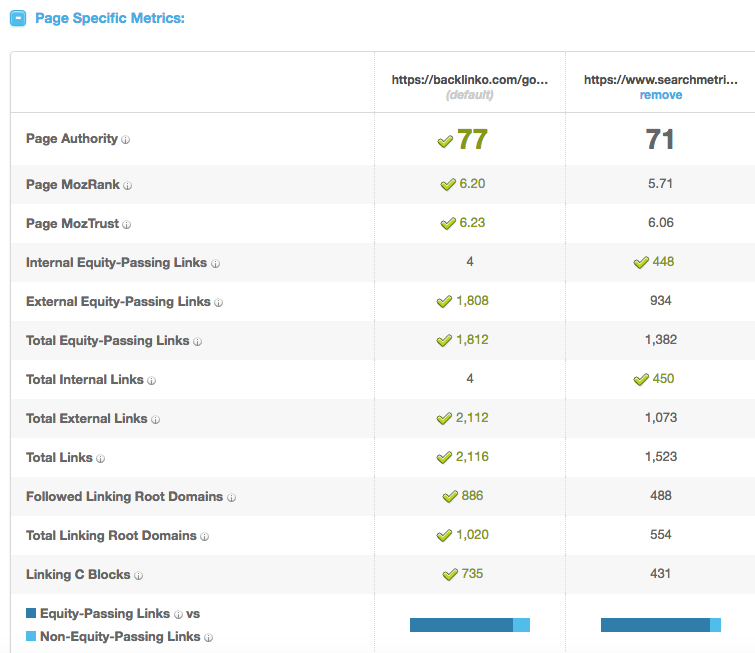
Let’s take a look at two page’s trying to rank for the same term:

  1. Brian’s Google Ranking Factors
  2. Searchmetrics Ranking Factors

Generally speaking, the website with the stronger domain and page authority will win. Not always, of course. But most of the time.

So let’s see how these two compare:

See?

Again, it’s not even close. Brian’s page authority is just too much for Searchmetrics.

So right out of the gates, it doesn’t look good for them.

It’s going to take a ton of work to try and double the sites linking to their page, for example.

But that’s not the only issue at play when you analyze individual webpages.

All along, Google wants to give users the best answer to their query.

Now, what does that mean? How do you define ‘best’?

Typically, it’s based on search intent.

In other words, Google is trying to figure out what you’re looking for. They’re trying to interpret the query — even if you don’t use the exact words.

And many cases, companies trying to compete for those keywords miss the mark.

So the content they’re producing doesn’t actually line up with what people are searching for.

Let me show you a perfect example.

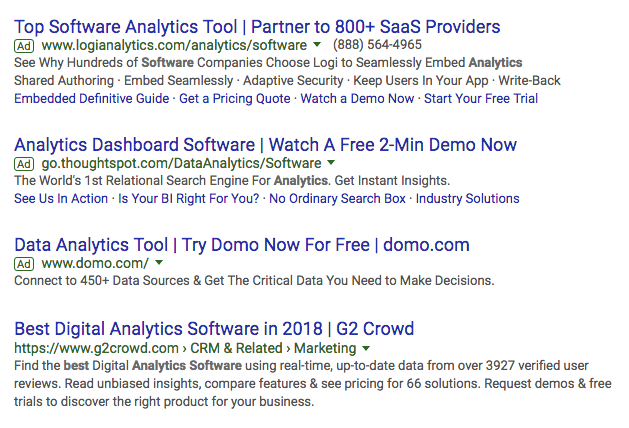
Here are the first few results you get after searching for “best analytics software.”

The first three are paid ads. So they’re paying to show up there.

The last one is actually the first organic result.

Now, here’s the problem:

The first three paid ads are all getting it wrong!

If someone searches for “best” anything, chances are, they’re looking for a comparison.

They’re trying to weigh up alternatives between different choices.

What they don’t want to see is just a bunch of tools calling themselves the best.

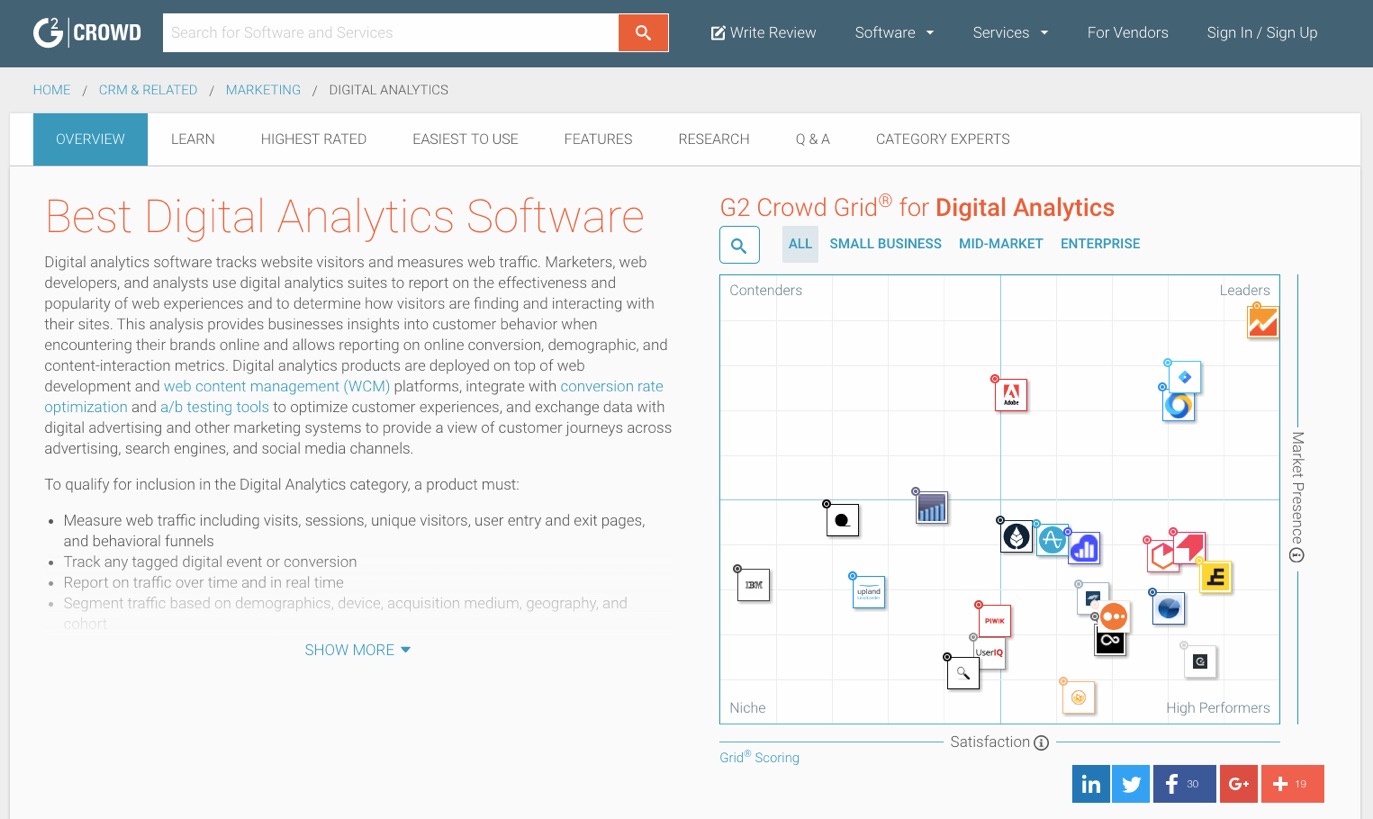
That’s why those companies are paying to show up on this query, while G2 Crowd is getting the exposure for free.

They’re the only one who’s actually answering the search query correctly.

You don’t just want to rank for a certain keyword. You want to get clicks!

And if your page content is targeting the wrong keyword, your chances of both ranking or getting clicks falls off a cliff.

There is also recent data that suggests your SERP click-through rate (CTR) can influence rankings.

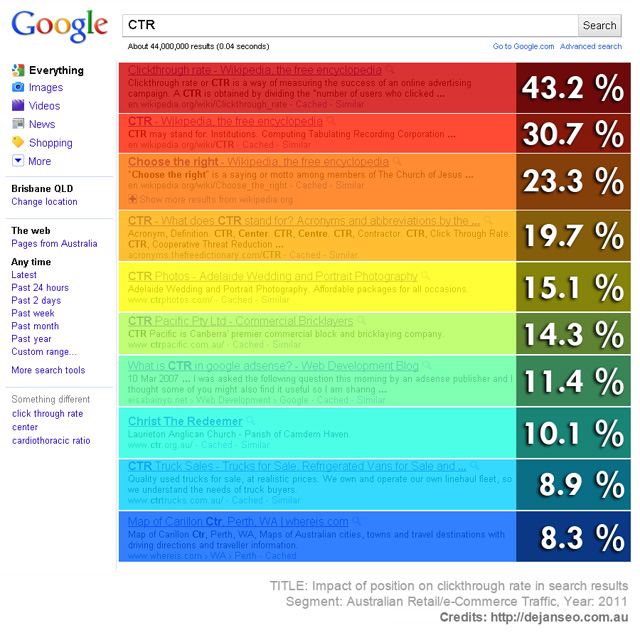
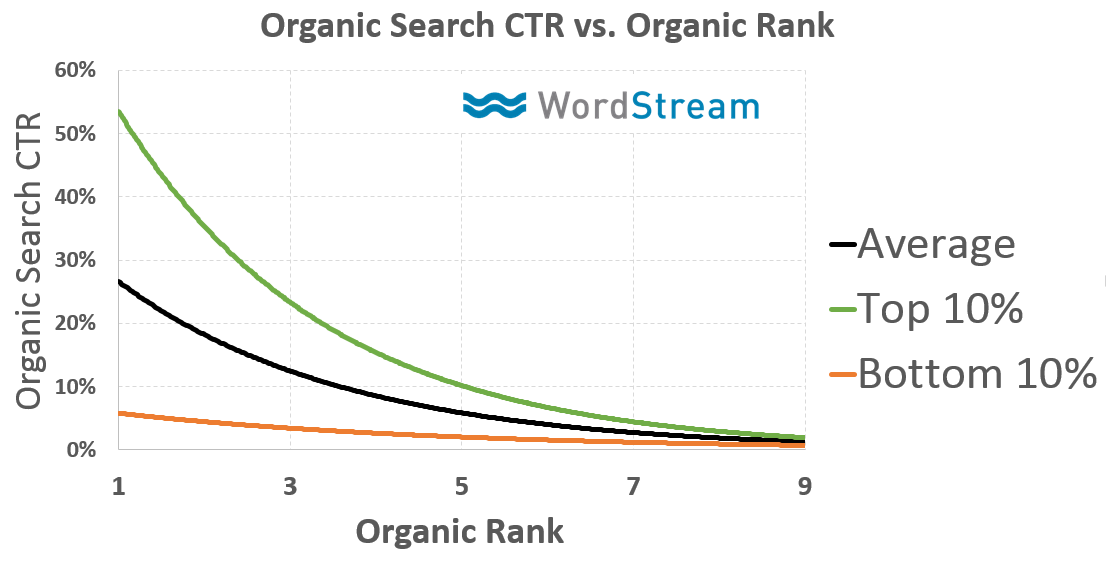
SEOs will always show you a SERP click distribution graph like this, that displays how most clicks go towards the first few positions on a SERP.

However, as you can tell, that’s an old example.

Consumer behavior has changed. We’re more willing to scroll or hunt for the right result.

So the distribution from the first position to the tenth is more balanced today.

Recently, we’ve started picking up details that Google is watching CTR as a quality measure.

In other words, they’re using click rates as a form of feedback.

If your result does a better job answering search intent, it will get more clicks.

And now we’re seeing that if you get more clicks, you might also get a better ranking.

It’s like a self-fulfilling prophecy.

Larry Kim ran another test and found that there is a correlation between CTR and rankings:

The data suggests both good and bad news.

The good news is that you might be able to compete against the big boys on a SERP if you do a better job answering search intent and getting clicks.

The bads news is that if your content doesn’t do a good job targeting search queries from the start, it’s going to be an uphill battle from here on out.

So first and foremost, make sure you’re answering that search query!

Start by understanding what people are really searching for, and why.

Sort your search queries by funnel stage to make sure you understand what they want.

That means if someone searches for “best analytics software,” you shouldn’t send them to a landing page bragging about yourself.

If they wanted to see that, they would have searched for you by name!

In this scenario, they want to see a comparison of different tools:

G2 Crowd does this beautifully.

First, they show you a helpful grid that instantly organizes different options by a few select criteria.

Next on the page, they offer to give you a personalized recommendation for the exact option you’re looking for:

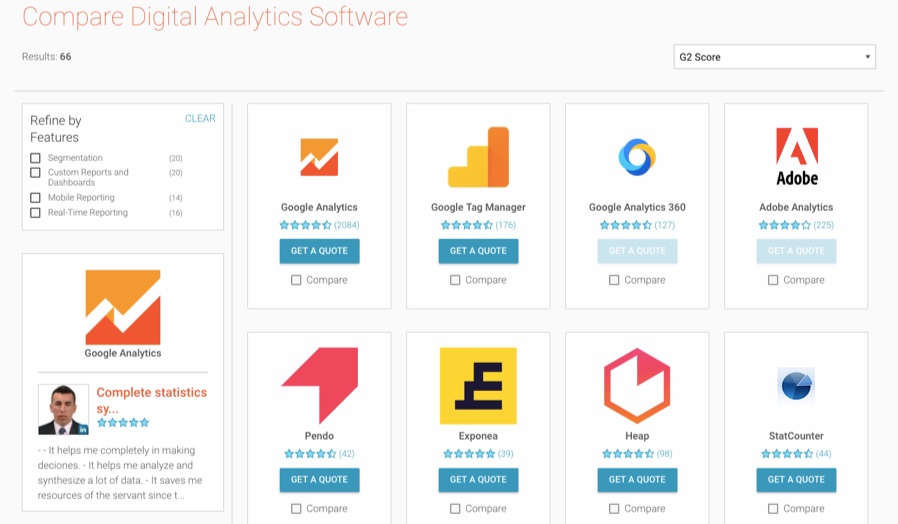
Last but not least, they’re going to give you in-depth comparisons across a bunch of different tools. You can even read real reviews from other customers to see if each meets your demands.

Not only do you need page authority that will compete with the others around you.

But you also need to make sure that the content you have will actually line up with what searchers want.

Otherwise, they won’t click. And if they don’t click, you won’t rank.

Two hurdles down, with one last one to go.

Your website strength and page-level targeting need to be on point.

But if you have any hopes of getting that new Skyscraper to rank, you need to do this one thing.

Problem #3. There wasn’t enough promotion

Most people are so focused on content creation that they neglect content promotion.

They spend weeks on creating the content or designing the image assets.

They hit publish, and then nothing.

Sure, they might send out a few tweets. But the content marketing world is too saturated.

So nobody sees them.

This last step is absolutely critical.

Especially if you’re struggling at all on the first two issues.

If you’re going up against big brands who’re doing a good job targeting the search query, you’re going to need to put promotion on steroids.

Where to start?

The first trick I like to use is content syndication.

Let’s say your Skyscraper has text, images, and even video.

There are websites out there starving for awesome content. You can repurpose some of yours and send it off to these sites.

Business2Community, for example, has a regular contributor platform. When accepted, you can submit new content and get it live often within 24 hours.

Sites like this sometimes even let you submit an RSS feed directly. So no need to manually upload your post each time it’s ready to promote.

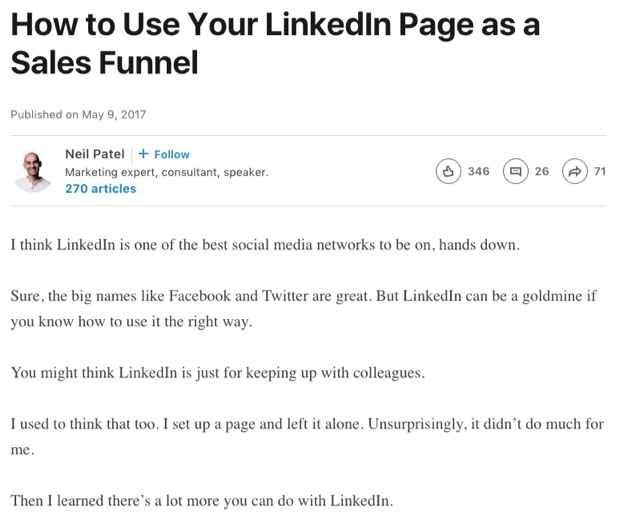
You can also summarize key findings on LinkedIn, hoping to take advantage of the Pulse network effects.

They’ll often pick up the most viewed content and show it to a much broader audience.

So you can drive views to LinkedIn from assets you own, like an email list. Or you can even use ads to help raise awareness.

Then, you’ll get the added bonus when that content ‘goes viral’ and gets shared out to the broader Pulse network.

Just like a blog post, you drop in CTAs to the original Skyscraper content to drive people back to your site.

You can also take those image or video assets and re-purpose them, too.

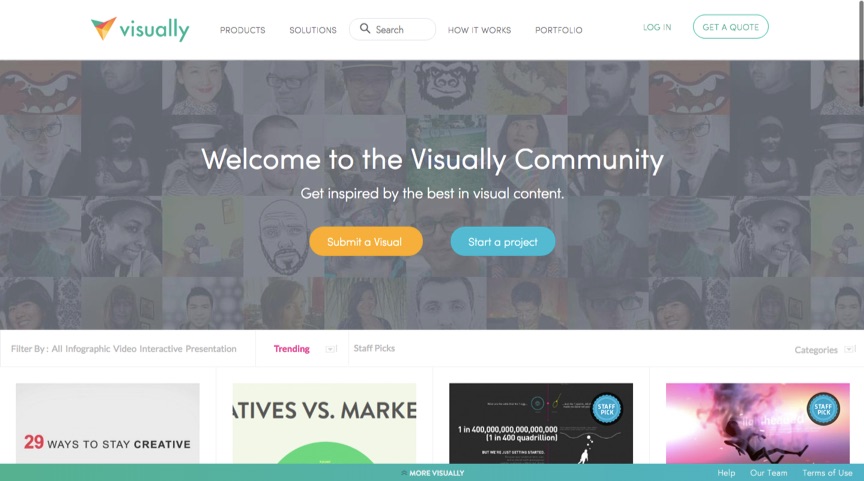
For example, Visual.ly will allow you to submit new infographics into their directory.

Once again, you’re playing the angles.

Get featured or trend on the homepage and your views will shoot up dramatically. It can also help you drive visitors back to your site.

The next step is to look for high-authority sites to promote your work.

My favorite technique is to start using search operators to get a quick lay of the land.

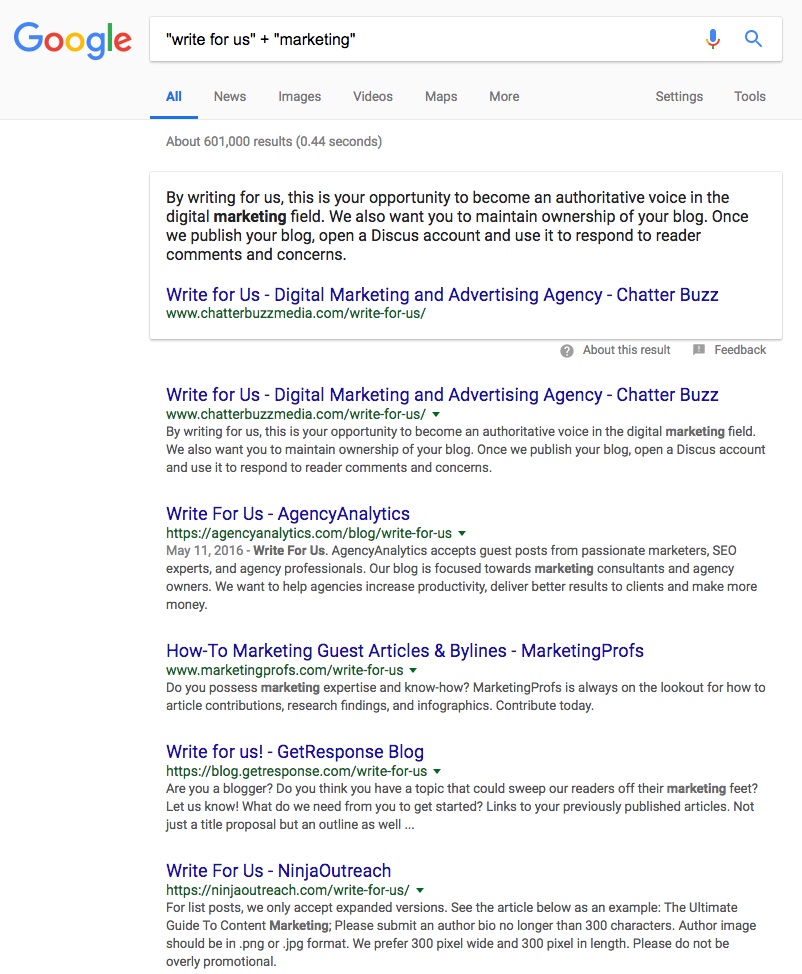
For example, let’s say you want to writing guest posts. Simply plug in your niche, like “marketing,” along with the following queries:

  • “Guest post”
  • “Guest author”
  • “Write for us”

Here’s what that should look like:

Easy, right?

You know what makes this even more powerful?

Look for lists of lists.

Smart people out there have already done all the hard work for you. They’ve already compiled the “best marketing blogs” or whatever niche you might be in.

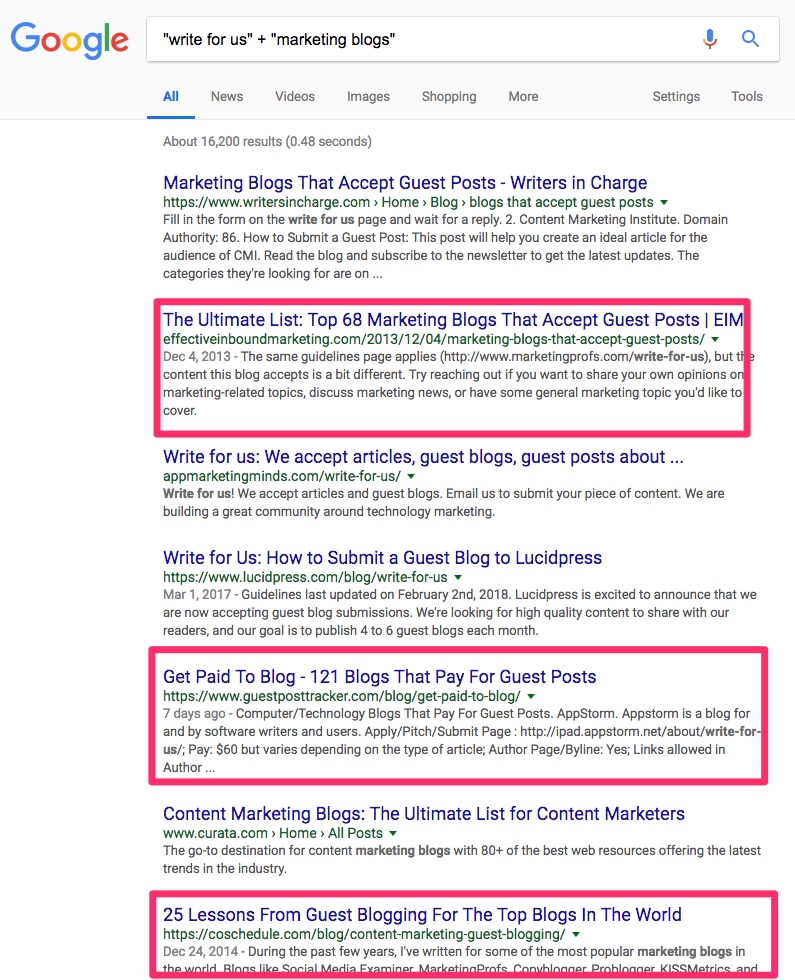
This time, just add “blogs” to your query to start finding the appropriate lists of lists.

There’s only one caveat, though. Check out the date stamps on the highlighted results below:

Lists of lists are awesome because all of the information has been compiled for you. The problem is that they’re often out of date.

Some of the results above are from 2013 or 2014.

Unfortunately, a lot has changed since then. That’s like a decade in online marketing time.

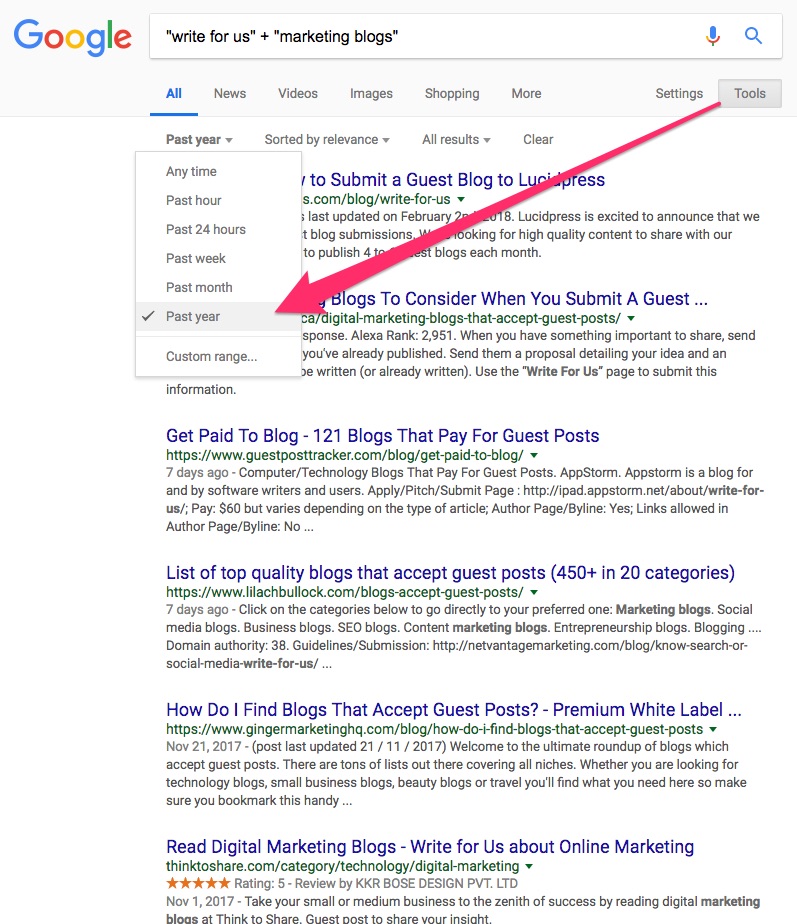
So you need to make one final tweak before you can rely on this data. Click on “Tools” over on the far right-hand side. Then, click “Past Year”:

Now the results or rankings should be up-to-date.

Of course, not every website that accepts guest content will have a “write for us” page.

Their editor might be open to the idea if your resource is good enough.

So it’s going to take a little extra leg work to get your asset in their hands.

This is where scaled outreach comes into play.

First, you need to gather email addresses.

Finding emails can be incredibly frustrating and time consuming. That’s why I like to use a web scraper to do the work for me.

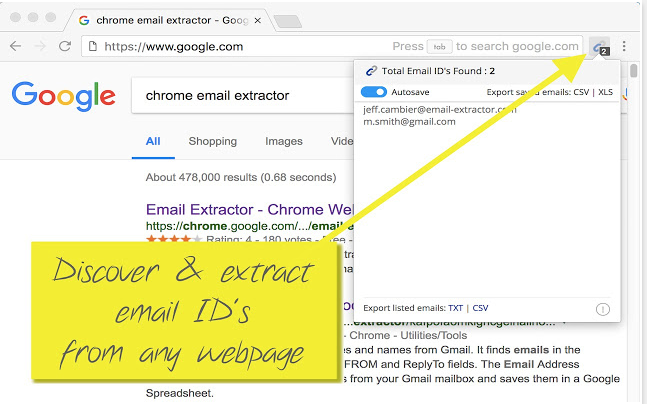
For example, the Email Extractor is a simple Chrome extension. Once installed, you can go to a website and click on the extension to start pulling data:

It will automatically scan the website’s pages, looking for anything that resembles an email address.

Even better, you can submit a list of domains up to 1000.

So perform a ‘list of lists’ search from earlier. Then, copy the data into a spreadsheet and submit to the Email Extractor.

All of the emails they find can be added back to your cloud account.

This process used to take days when doing it manually. Now, it takes a few minutes.

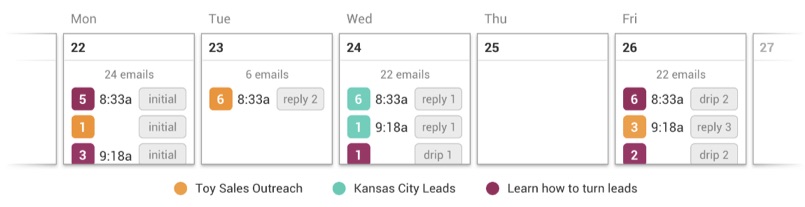
When ready, you’ll upload those emails into an outreach tool like Mailshake.

This tool will let you run several different campaigns at one time. That means you can have one going for guest posts, another for infographic submissions, and so on.

Scaling outreach like this is tricky.

It’s tempting to use the same copy-and-paste template for every single site.

However, even a little customization can go a long way.

I like to segment out those sites under each campaign.

For example, under your Guest Post campaign, you can create an “A,” “B,” and “C” segments.

I’ll often use the Domain Authority to help group related sites.

You might be able to use a copy-and-paste template for your “B” or “C” sites. But then you’d use a more personalized approach for the “A” ones.

Then, Mailshake will give you reply data after each send.

That way, you can see if your approach is working.

You can even A/B test different email templates, sending times, and more.

The point is that success isn’t an accident or a fluke. You continually test and refine new ideas until you hit the targets you want.

Conclusion

Long content tends to perform better in the search engines.

But that doesn’t mean longer content, like Skyscrapers, will always succeed.

In fact, many times they’ll fail. And you’ll have no idea why.

First and foremost, work to develop the necessary brand recognition and authority.

This alone will make everything else much easier.

Next, double-check your keyword targeting to make sure your page content answers the query it’s going after.

Finally, make promotion a habit.

You should have a systematic way to repurpose on different sites. And for conducting outreach to get access to new sites, too.

Unfortunately, Skyscraper success isn’t as a simple one, two, three-step program.

It is possible, however, if you follow these steps.

Have you ever had a Skyscraper fail? Why do you think it fell short, and what did you learn from it?

About the Author: Neil Patel is the cofounder of Neil Patel Digital.


from The Kissmetrics Marketing Blog http://ift.tt/2shyUvA
via IFTTT

How to Create Engaging Social Media Graphics (Even If You’re Not a Designer)