Monday, 14 February 2022

15 Conversion Rate Optimization Tips to Boost Your Rankings

15 Conversion Rate Optimization Tips to Boost Your Rankings

Conversion rate optimization, or CRO, is the process of optimizing your website to increase the completion of a specific action. In most cases, the desired action is an actual sale, but not always.

Desired actions could include demo sign-ups, downloading an asset from your website, trying out a new tool, or signing up for your newsletter. If it helps you grow your business, it’s a conversion—and it can be optimized.

The beauty of these conversion rate optimization tips is they work regardless of your intended conversion method.

CRO Tip 1: Add Site Search to Your Website

Up to 30 percent of visitors will use a search box if it’s offered. Unfortunately, nearly 84 percent of companies don’t optimize their on-site search to meet user expectations.

This means if your website doesn’t already include a site search, it’s time to consider adding it.

The main benefit of site search is user experience. However, data from search results can provide valuable insights into user behavior by showing you exactly what they’re searching for.

This information can help you tailor content to meet those needs or add new pages to your site to fill any gaps.

You may even be able to identify users in different parts of the funnel based on the search terms they use. This information can help you to narrow your customer’s most common questions and pain points, helping you tailor the website experience to their needs.

If you use WordPress, you can add a site search using a widget. If you use Webflow, they’ll actually let you customize it. Wix and Squarespace make it easy to add site search as well.

CRO Tip 2: Ensure Forms Are Easy to Fill Out

The average form abandonment rate is 68 percent—which means most people won’t finish filling out your form.

Website forms serve many purposes, including newsletter signup, lead magnet acquisition, and product/service inquiry.

Keep in mind: the easier a form is to fill out, the higher your expected conversion rates.

According to Hubspot research, a typical form has about 5 fields on average—and forms that are A/B tested get about 10 percent higher conversion rates.

In my experience, simple is better.
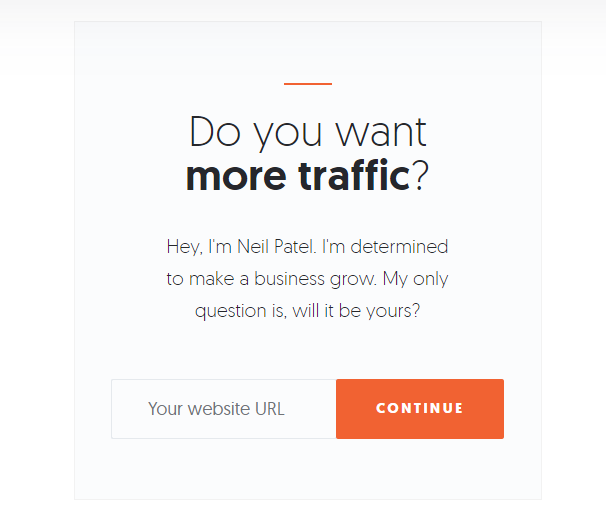
conversion rate optimization tip for forms

This is an example of a simple form I use on my blog. All the user needs to do is enter their website’s URL and the action is complete. It doesn’t get much simpler than that.

A few ways to ensure your forms are easy to fill out:

  1. make form names clear
  2. use proper HTML formatting
  3. use relevant sample placeholder text (I used “Your website URL” in the example above)
  4. have a distinct and easy-to-local submission button

CRO Tip 3: Improve your CTAs

If you want to improve conversions, CTAs are low-hanging fruit. The average CTA click-through rate is just 4.23 percent, but many factors can impact what helps your CTA convert.

For example, if you include more personalization in your CTAs, conversion rates can improve more than three times as much.

That’s why you should continually test CTAs to see what works and what needs improvement. You’d be surprised at how quickly user preference can change!

Start by testing these CTA elements:

  • copy
  • colors
  • placement
  • button shape
  • button size
  • page placement

Consider testing different types of CTAs as well. Here’s how CTA types convert, according to a study by Vye Agency:

  • button CTAs have an average CTR of 5.31 percent
  • text CTAs have an average CTR of 2.06 percent
  • designed CTAs have an average CTR of 3.53 percent

When it comes to branding, consistency is key. However, using colors outside of your branding palette for CTAs is worth trying. Colors within your palette might blend in too well with the rest of your site, making them easy for website visitors to overlook.

CRO Tip 4: Run User Testing

Poor usability can kill your business. 70 percent of online businesses fail because of poor usability.

If you’re in e-commerce, your conversion rates could increase by 35 percent by just improving the design and flow of the user checkout process.

User testing is the way to get valuable data that can help you get more conversions across your website. So it’s important to get this process started as quickly as possible.

One of the most common ways to run UX testing is with heat maps, which show how users navigate your site and what interactive elements they’re clicking on.

You’ll see if they’re looking at your links, navigation bar tabs, CTAs, and so on. Some heat maps even incorporate eye-tracking software to show where your users look first.

Conversion Rate Optimization Tips - Hotjar heat map

There are several heat mapping tools on the market, but my favorites are Crazy Egg and Hotjar. If you decide to use Hotjar, the process for setting them up is very simple and straightforward.

CRO Tip 5: Add More (Better) Social Proof

More consumers than ever read social proof. In fact, 77 percent of users say they always or regularly read online reviews before buying.

You want to leverage customer loyalty as often as you can. Why? It’s free marketing and brand exposure. Even better, reviews can drive revenue.

According to Womply, businesses with more than average reviews across earn 54 percent more in annual revenue

It is also easy to create.

Social proof is a simple and great way to leverage user-generated content for your brand. This can include positive reviews and ratings, creative social media posts about your brand shared by customers and influencers, user-submitted content like photography, and more.

The benefit of adding more social proof to your website is it shows other users that other people trust you. Trust and credibility play a big factor in getting more conversions.

To add more social proof, try:

  1. Send a follow-up email asking for reviews.
  2. Host a contest with a branded hashtag on social media.
  3. Include a card with a branded hashtag when shipping physical products.

If you want to do it on a larger scale, consider automated tools like HotFomo and OptinMonster.

CRO Tip 6: Add Chatbots or Live Chat

If you have a question, wouldn’t you rather get the answer fast? That’s the idea behind chatbots. No matter how great your customer service is, sometimes call queues get long.

The good news? Users like chatbots. The average satisfaction rate of chatbots is 87.58 percent. They can also reduce customer service costs. One study predicts chatbots will save businesses $8 billion in customer service costs by 2022.

These tools help your brand build an instant connection with customers, making them more likely to purchase your product or service. Here are a few ways to leverage chatbots;

  • answer FAQ
  • qualify leads
  • suggest related products
  • troubleshoot common issues
  • share information about new products
  • increase your email list

With so many chatbot options available, it can be challenging to find the right one. I recommend focusing on native channel integrations to narrow your search.

If you want an app with widespread integration options, consider Landbot, which offers chat features through web, WhatsApp, Facebook Messenger, and API.

Perhaps you just need to integrate with Facebook Messenger? In that case, Chatfuel is an affordable solution.

Make sure that whatever chatbot you choose aligns with your business goals.

CRO Tip 7: Review Customer Persona and Adjust Your Messaging

A customer persona is a fictional snapshot of your ideal customer. Personas are commonly used by marketing agencies and businesses to give their target audience a human face. They can help drive leads, increase conversions, and shorten the sales cycle.

According to MarTech, creating a persona can increase email CTR by 14 percent—and conversion rates by 10 percent.

The gap between who you think your ideal customer is and your actual customers may be more significant than you think.

For example, if your personas are businesswomen in their early 30s but your customer base is primarily homemakers in their 50s, there’s going to be a massive disconnect in how you approach your target audience.

Here are six steps you can take to make sure you are targeting the right customer personas:

  1. Make a list of your highest value customers.
  2. Use a customer persona template to create a new persona.
  3. Start adding details from your highest value customers. Start with demographics like location, age, budget, education, etc.
  4. What channels do your highest value customers use to find you? Add that to your persona as “methods of communication.”
  5. Look at the content they consume—what does that tell you about their motivations? Add those to your template.
  6. Repeat the process for every product or service you offer.

It’s important to realign your customer personas with your messaging, sometimes as frequently as every two or three months. In some cases, this could mean tailoring your brand approach altogether to connect with the new target audiences working.

CRO Tip 8: Use Targeted Lead Magnets

Lead magnets are a free resource (like an ebook or guide) given away in exchange for user data. The most common lead magnets are PDFs or videos, but there are plenty of media types to use.

The best part? They work.

Fifty percent of marketers say lead magnets increase their conversion rates.

The more targeted your lead magnets, the more effective they are likely to be. The key is to get creative with your targeting.

You could even consider creating some more interactive lead magnets like quizzes or online calculators. According to LeadQuizzes, the average quiz has a lead capture rate or 31.6 percent.

The way you target your magnet will depend on your product or service. For example, if you serve a geographical area, it may make sense to target leads based on location. Other websites might target leads based on industry or how they got to the site.

Here are a few other targeting options:

  • time on page
  • type of content
  • whether they’ve purchased before
  • industry
  • customer persona
  • location
  • time period (for example, a pop-up for an upcoming event)

Not sure how to add targeting to your lead magnet strategy? These lead magnet tools can help.

Whatever type of lead magnet you decide to create, be sure it aligns closely with your intended customer. Since the goal of lead magnets is to collect user data, you want to make sure the offer is valuable to your intended audience as well as your business.

CRO Tip 9: Use Pop-Ups Carefully

Pop-ups have an average conversion rate of 3.09 percent, which makes them ripe for CRO.

I have a love/hate relationship with pop-ups because they walk such a fine line between being beneficial (for you and your customer) and incredibly annoying. However, when done right, pop-ups can be an invaluable conversion tool.

In fact, Marketing 112 increased their conversion rates by 62 percent by adding a pop-up to its website.

First and foremost, your pop-ups should respect universal UX rules. These include fast load times, visible exit options (like the example from Wishpond below), and platform-appropriate size.

There should also be limits as to how often users see the pop-up. For example, a user who bypasses the pop-up once shouldn’t be bombarded with it on each page of your site they navigate.
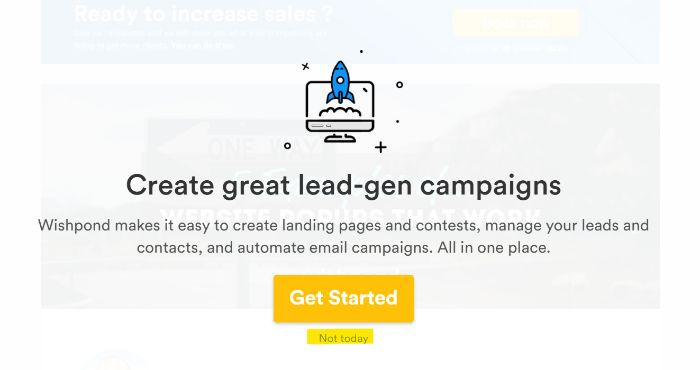
Conversion Rate Optimization Tips - Use Popups Carefully

When it comes to conversions, keep the messaging short with minimal effort to take the desired action.

You can also implement A/B testing to see how users interact with different versions of the pop-up. This is important for optimizing conversion rates across the board.

CRO Tip 10: Check Your Site Speed

If your site loads slowly, all of the conversion rate optimization tips in the world won’t make a difference. In fact, website conversion rates drop by 4.2 percent for each additional second your site takes to load.

Even more surprising? More than 80 percent of sites don’t meet acceptable speeds.

Fortunately, there are plenty of free sites and tools that let you test your site speed and troubleshoot common issues.

PageSpeed Insights and Pingdom are two of the industry leaders in this domain. These tools have been around for years and offer the most in-depth testing and troubleshooting. They first look at contentful paint, time to interactive, and total blocking time to calculate your overall score.
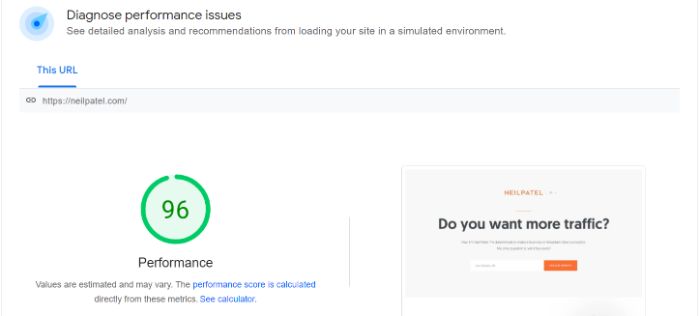
Conversion Rate Optimization Tips - Check Your Site Speed

What are some of the most common issues that slow down site speed?

  • render-blocking JavaScript
  • poorly optimized CSS
  • large media files
  • bulky code

While some of these may require a database engineer or developer to resolve, you can usually start to tackle some issues (like large media files) on your own.

CRO Tip 11: Recover Lost Sales by Following up on Abandoned Carts

According to the Baymard Institute, the average cart abandonment rate is 69.82 percent. That rate is even higher on mobile where the average shopping cart abandonment rate is 85.65%.

Recovering just a fraction of those missed sales could do wonders for your conversion rate.

If the main benefit of CRO is converting users already on your site, then abandoned cart users are the cream of the crop. They actively started the transaction but didn’t complete the purchase.

There may be some obvious reasons for this, such as a discount code no longer being valid or high shipping rates. Whatever the reason, you should always aim to recover the lost sales using (almost) any means necessary.

In fact, if e-commerce sites just fixed checkout usability issues in their process, they could increase conversion rates by 35.26 percent. This translates into more than $200 billion in recovered sales from the e-commerce industry alone.

Here are some other ways you can recover abandoned carts:

  • automated email flows
  • on-site push notifications
  • retargeting ads
  • personal outreach
  • automated social outreach

You don’t want to harass potential customers who have abandoned carts, but you do want them to feel wanted. Sending just one email could help you recover up to 29.9 percent of these sales.

You may want to play with your outreach timelines to find the right approach for your customer base.

CRO Tip 12: Make Sure Landing Pages Match Your Messaging

The average landing page converts just 2.35 percent of the time across all industries. If you want to be a top performer in your sector, you should be aiming for conversion rates above 10 percent.

So, how do you increase your landing page conversion rate?

One way is to ensure the messaging on your landing page matches the ad or copy that brought them there in the first place. This creates a more cohesive experience, showing users that your page is the right fit for what they want. It will also help improve your PPC quality score.

Here’s how to match your messaging:

  • use similar language in your landing page and ad (especially the main keywords)
  • keep branding consistent (include your logo and use brand colors)
  • use a clear CTA on both your ad and landing page

Just imagine how off-putting two distinct messaging styles can be to the user. Imagine if you agreed to a job interview for a tech company and found out it was a restaurant when you arrived. It would feel like a bait and switch, right?

While a difference in messaging between an ad and landing page isn’t quite as off-putting, it’s close. The differences can be jarring and steer users away.

When creating your landing pages and ad copy, make sure you have a clear focus in mind for. This would start with your keyword research when you select the target phrase for the page. You can include some secondary keywords on the landing page as well if you plan to use them in your ad copy.

CRO Tip 13: Target High Intent Users

High intent users are very close to making a buying decision. According to a report by the CMO Council, 87 percent of B2B buyers say that online content has a major or moderate impact on the vendor they choose.

That means there’s an extremely high opportunity to improve your content to convert these users.

How can you target high-intent users?

As previously mentioned, looking at the internal search terms users interact with on your site is one way to get an idea of content that works. Someone at the bottom of the funnel might be trying to distinguish between different options, so they’ll be looking more closely at shipping timeframes and return policies.

Here are a few other strategies:

  1. Add high-intent keywords to your ads and landing pages. Use the information from your internal search to gauge what keywords are and how your customer base interacts with them.
  2. Build content that targets customer pain points. You can often identify these pain points with SERP analysis of high-intent keywords.
  3. Pay attention to intent data. Contact users who visit your pricing page, return to your site several times, or book a demo but don’t follow up.

High intent users are ready to convert, so don’t leave them hanging.

CRO Tip 14: Optimize Your Content

If your content isn’t performing well, it’s time to re-evaluate and optimize it. The first thing to check is title tags.

According to Backlinko’s research of more than 11 million Google search results, sites that include the main keyword in their title tag are far more likely to rank higher.

Content optimization looks at a number of factors including:

  1. making sure the keyword is used several times
  2. content length variance (add or remove content)
  3. check image optimization, such as size and alt tags
  4. add stats and new research
  5. check meta and SEO titles
  6. add keywords to more headings
  7. add a frequently asked questions section
  8. make sure you aren’t cannibalizing traffic from other content on your site

For time and efficiency, you don’t have to do all of the above. Instead, research the top 10 results on Google for your target keyword and see how they are structuring their content.

Their approach is clearly having an impact on their ranking and can provide a path for you to improve your search engine rankings.

CRO Tip 15: Before You Make Changes, See What Works Now

It’s easy to see all of the things that need to be improved, but what about the things that are working?

There are likely some areas of your website that are already working. For those, look for patterns in what the data is telling you, determine what the essential parts that led to the results might be, and come up with an approach to replicate this across your site.

If you aren’t sure how to approach this yourself, you can hire a professional to audit conversions across your website and highlight what is working well. This process alone could uncover a lot of great things you’ve been doing but probably don’t realize.

The last thing you want to do is a major content overhaul that loses conversions from pages or strategies that are already working.

Frequently Asked Questions About Conversion Rate Optimization Tips

What is conversion rate optimization?

Conversion rate optimization (CRO) is the process of increasing the conversion percentage for a website or mobile application. The aim is to increase the number of people taking the desired action in relation to the number of visits by improving customer experience and testing interactive elements.

What is the most effective CRO strategy?

There’s no one way to approach conversion rate optimization. However, a good CRO strategy will focus on user experience optimization, customer journey analysis, and website performance.

Is CRO different for ecommerce?

The benefits of CRO are the same whether they’re being implemented for an ecommerce site or not. However, the processes may differ slightly. When it comes to ecommerce, the conversion funnel has a larger part to play than it might on a non-ecommerce site.

How can conversion optimization affect your return on investment?

In simplest terms, CRO aims to make the most of the site traffic you already have. By increasing the conversion of your existing traffic, you have the potential to lower your customer acquisition costs.

Conclusion: Conversion Rate Optimization Tips

When you consider the fact that customer acquisition is more than half of the battle, it makes sense to focus heavily on conversion rate optimization.

After all, converting more of your existing website traffic could drastically reduce customer acquisition costs.

You’ll notice most CRO tips focus on improving the user experience and enhancing the customer journey. That’s because they tend to have the most significant impact. However, you don’t have to implement all of these CRO strategies immediately. Think about which will have the most significant impact and test those first.

Which of the CRO tips above do you think will have the most impact on your conversion rate?


from Neil Patel's Digital Marketing Blog https://ift.tt/PhozqIY
via IFTTT

Big game, bigger ads: Which brands took the trophy in 2022?

The big game might bring out bitter rivalries at your watch party, but we can all root for the commercials. With 30-second slots costing as much as $7 million this year, marketing teams were feeling the game-day pressure as much as the players. But the blood, sweat, tears and meticulous market research that went into this year’s ads paid off, as an estimated 117 million people tuned in to cheer on their team (and their favorite brands).

With so much on the line, we used Sprout Social’s Advanced Listening tool (digging into Tweets posted between February 13 and February 14, 2022) to see which commercials had viewers taking their snack breaks during playing time.

Most valuable player

Peyton Manning is a sought-after spokesperson. From Papa John’s to State Farm, his likeness has been inspiring customers to buy since his professional football debut in 1998.

His Michelob Ultra commercial was no exception. While Peyton might have had the most screen time, Serena Williams stole the show.

Tweets mentioning Serena amassed 43.17 million potential impressions, while those mentioning Peyton trailed by almost half, with 27.6 million potential impressions.

The combined celebrity of Peyton and Serena was a big win for Michelob Ultra. While Peyton and Serena averaged 5.89 engagements per mention, Michelob Ultra only received 3.88. The athletes’ power carried the night for the brand.

Best comeback story

People associate fitness with new beginnings, like the all-too-familiar New Year’s resolution to get in shape. Planet Fitness capitalized on this with their ad featuring Lindsay Lohan starting fresh, all thanks to her gym membership. The message is clear: Planet Fitness gives you a new lease on life.

Both Lindsay and Planet Fitness wrapped social into their promotional plans. Lindsay and Planet Fitness tweeted six times between them and generated over 450 retweets and nearly 3,000 likes.

Best social media assist

A full three weeks before the big game, Arnold Schwarzenegger piqued fans’ interest with a promo poster for his next role, Zeus. Fans quickly began speculating about the project, guessing that it was a movie, show or video game. They got their answer in the first quarter when BMW ran an ad for its new electric vehicle.

Their teaser approach and celebrity tie-in paid off, with a 71% positive sentiment for Tweets about BMW on game day compared to a 60% positive sentiment for posts around electric cars in general.

Screenshot of Sprout's Listening tool, showing the sentiment of Tweets mentioning BMW during the big game in 2022.

Rookie of the year

40% of game day advertisers were new to the big game this year, with crypto companies making up a big share of the rookies. Even though they were advertising the same product, their marketing teams took wildly different approaches.

FTX used Larry David’s skeptical image to slyly mock people who aren’t ready to hop on the cryptocurrency bandwagon, while Crypto.com went for the emotional approach with Lebron James talking to his younger self. These ads were a hit on social, with over 90,000 Tweets mentioning cryptocurrency during and after the game.

Screenshot of Sprout's Listening tool, showing metrics for Tweets mentioning various crypto brands during the big game in 2022.

But the clear winner was Coinbase, with a 30-second ad of a QR code bouncing across the screen.

Coinbase’s unorthodox approach paid off, driving over 20 million hits to their landing page in a minute. The traffic was enough to temporarily crash their site–the true marker of viral success.

Making the most of 30 seconds

These ads didn’t come out of thin air. Whether they used star power, humor or a coordinated multichannel approach to draw in viewers, every ad at the big game was built on knowing their audience.

Social listening can help your brand capture some of the magic that goes into game-day commercials. Learn more about how social listening can help you identify what matters to your audience.

The post Big game, bigger ads: Which brands took the trophy in 2022? appeared first on Sprout Social.


from Sprout Social https://ift.tt/iKXqH6l
via IFTTT

How to develop a content marketing plan

Say you’re sitting on a lot of content. Product photos, blog posts and how-to videos. How are you going to get it all out there in front of prospects and customers? Do you have specific goals tied to your content? Maybe you want to increase leads? How about growing your brand awareness and social media presence?

If you can’t answer these questions, then you need a content marketing plan.

But you’re not alone. According to one recent study, only 40% of B2B marketers have a documented content marketing strategy. Whether or not you are in that 40%, it’s a good idea to establish or revisit an existing content marketing plan.

In this article, we’ll cover what a content marketing plan is and how to create your own content strategy.

What is a content marketing plan?

A content marketing plan is a documented strategy that details the who, what, when, where, why and how of your content.

  • Who is creating the content?
  • What kind of content?
  • When is the content being published?
  • Where is the content being distributed
  • Why are you even content marketing?
  • How are promoting and analyzing the marketing results?

Why do marketers need to create a content marketing strategy?

Without a plan, content marketing is done on the fly. If you’ve ever done any of the below, then you’re in need of a content marketing plan.

  • You’ve run out of things to post
  • You have multiple channels but don’t know which kind of content works best where
  • You don’t know what topics your audience really enjoys
  • You realize you haven’t posted that day
  • You don’t know what to post about

A content marketing strategy provides a framework for all of the above and much more. Plus, once you have a strategy in place, you’ll be able to use data to make sure it’s working. Content marketing spans multiple departments. Sales teams can use product sheets and case studies to nurture their leads while the marketing team can use newsletters to reach new customers.

It doesn’t matter how big your company is, you will at some point use content to help market your product or services. And if you continue to do so, having a plan keeps everyone on the same page. Instead of creating a post on the spot, you’ll have that content already completed and scheduled, leaving you more time to spend on community engagement.

10 steps to creating an effective content marketing plan

1. Set goals & KPIs

Every strategy begins with goals. What do you want to achieve with your content marketing? According to a recent survey of B2B marketers, 80% said that content marketing helped them successfully achieve the goal of creating brand awareness, 75% for building credibility and trust and 70% for educating their audiences.

b2b marketing goals

Some common goals are listed in the image above and if you need more help, check out our social media goals template to help you. For every goal, you’ll need at least one KPI to know how well you’re working towards those goals. You can explore useful social media KPIs to track goals like reach, engagement, conversion and consumer loyalty.

2. Decide on target audiences

The next step is to decide on your target audiences. Oftentimes, this already coincides with your buyer personas or social media personas. If you have multiple audiences, like most businesses do, then you’ll be matching up content topics and types to each one.

social media persona

If you’re starting from scratch, we have a few resources you can use to learn more about finding your audiences.

3. Audit your current content

How do you know where to go if you don’t know where you’re starting from? An audit helps answer this question, making it easy to assess your content.. To start, you’ll want to document all of your existing content. If there’s an overwhelming amount, set a limit such as 3 months or a year. You need to have a data set that gives a good look into what you’re publishing.

Running a content audit on your blog posts may help you find content you didn’t know existed. It may also help you identify duplicate content on your site. For social media posts, you can use Sprout Social’s social media audit template to help you assess content that is published on your social media platforms. If you’re feeling ambitious, you can add in a competitor or two to help benchmark your content marketing.

During the audit, take a look at:

  • Topics: What are you posting about?
  • Types: What types of content are you posting?
  • Channels: Where are you sharing the content?
  • Performance: How are your posts preforming? Check

After the documentation is complete, you should be able to see some trends on which content and channels are performing better than others.

4. Identify the best content channels

Usually, the distribution channels where you already have an engaged presence is where you want to start your content marketing plan. During the audit, you should’ve found some trends on the best channels that work for your content.

For extra data, take a look at your website’s analytics to see where the referral sources are coming from. Are people getting to your blog post via a newsletter or social media post? Do they find you more via search? Knowing where your audience is coming from will help focus your efforts on those channels.

social media unfollowing infographic

Fifty-one percent of consumers unfollow brands on social media because of irrelevant content. If you’re still at a loss or you don’t have enough data, explore Sprout’s advice on what to post on each social media platform.

5. Decide on content types

Not all content types are created equal and there are several different content formats to consider when planning your content marketing strategy. Some perform better on certain channels while others are more expensive to create. Common content types include photos, videos, blog posts, podcasts, infographics, and user-generated content.

content marketers social media goals

Your content will also change based on the marketing funnel stage and the audiences that you’re targeting.

b2b marketing funnel

To explore more resources on content types, take a look at the articles below:

6. Determine budget, tools & resources

Part of developing this content marketing plan is knowing how much you have to work with. This includes your budget, available tools, and staff or freelancers that you might use.

Producing creative content remotely can be challenging but it’s not impossible. In this step, figure out what resources you already have and what you’ll need (which might require approval).

For most content marketing plans, you’ll need:

  • Content creator(s): who is creating the content?
  • Content management system (CMS): where to plan, store, publish your content
  • Content manager: who’s managing topics and production?
  • Data collection: Content analyzers, reports, any digital tools you use in content marketing

7. Create a content calendar

A content calendar is vital to your strategy. You need a place to plan your content out. At the very least, it should be able to track the topics and content you want to post and when. An enhanced content calendar will also track the status of each piece of content, the distribution of it, who’s working on it and its eventual performance after marketing it.

There are plenty of content calendar templates out there for you to check out. You can also keep track of your content with your social media calendar or a spreadsheet.

8. Create content

Now it’s time for creating the actual content that you’ll be sharing. At this point, you should have a good idea of what content types and channels you’ll be using. This means that the next is content ideation, development and curation.

Sprout has plenty of resources for you to explore on content creation.

9. Publish & promote

After the calendar is set and the content is created, the next step is to publish and promote it to the various channels you decided to focus on. If you’re promoting on multiple channels, it’s best to have one tool to get a clear, bird’s eye view of your publishing calendar.

social media content marketing plan

Sprout’s social media publishing tools were created with the busy marketer in mind. Use the publishing calendar to plan and schedule out your social content. The Asset Library offers you easy access to brand-approved images and simplifies asset management in one location to access.

sprout social asset library

Remember, if your content is performing well and it’s not tied to a holiday or time-specific, repurpose it into other channels and types. Don’t be afraid to re-share the same piece of content in different ways.

10. Measure results

Finally, the last step in your content marketing strategy is to analyze. Without collecting data, you won’t know if you’re hitting the goals you set at the beginning. For channels like newsletters or your website, you’ll need either Google Analytics or any native tools analytics. To track social performance, use social media analytics tools like what Sprout offers.

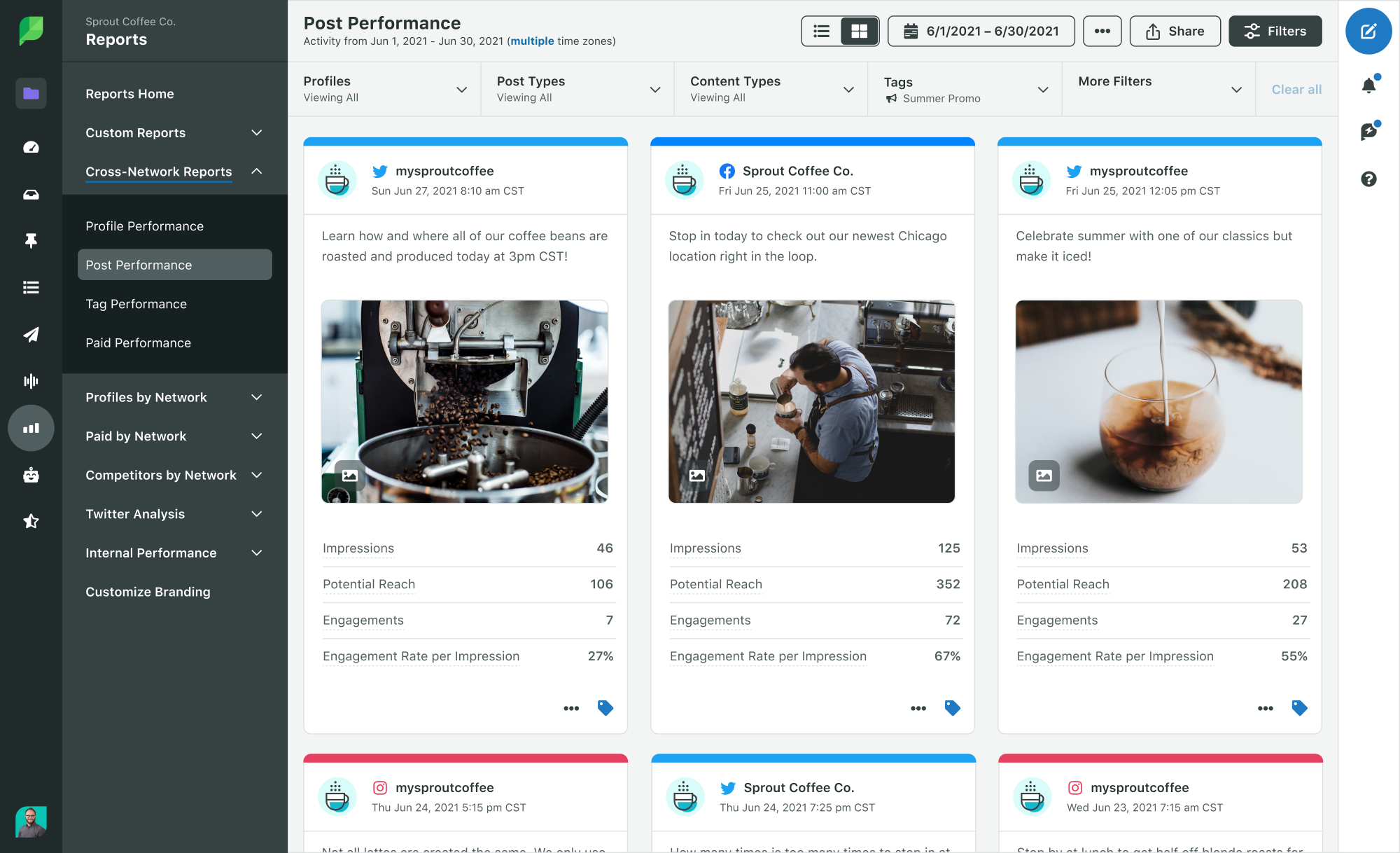
For example, the Post Performance Report shows you the performance of each piece of content published. You’ll know every post’s likes, impressions, and engagement numbers.

sprout social post performance

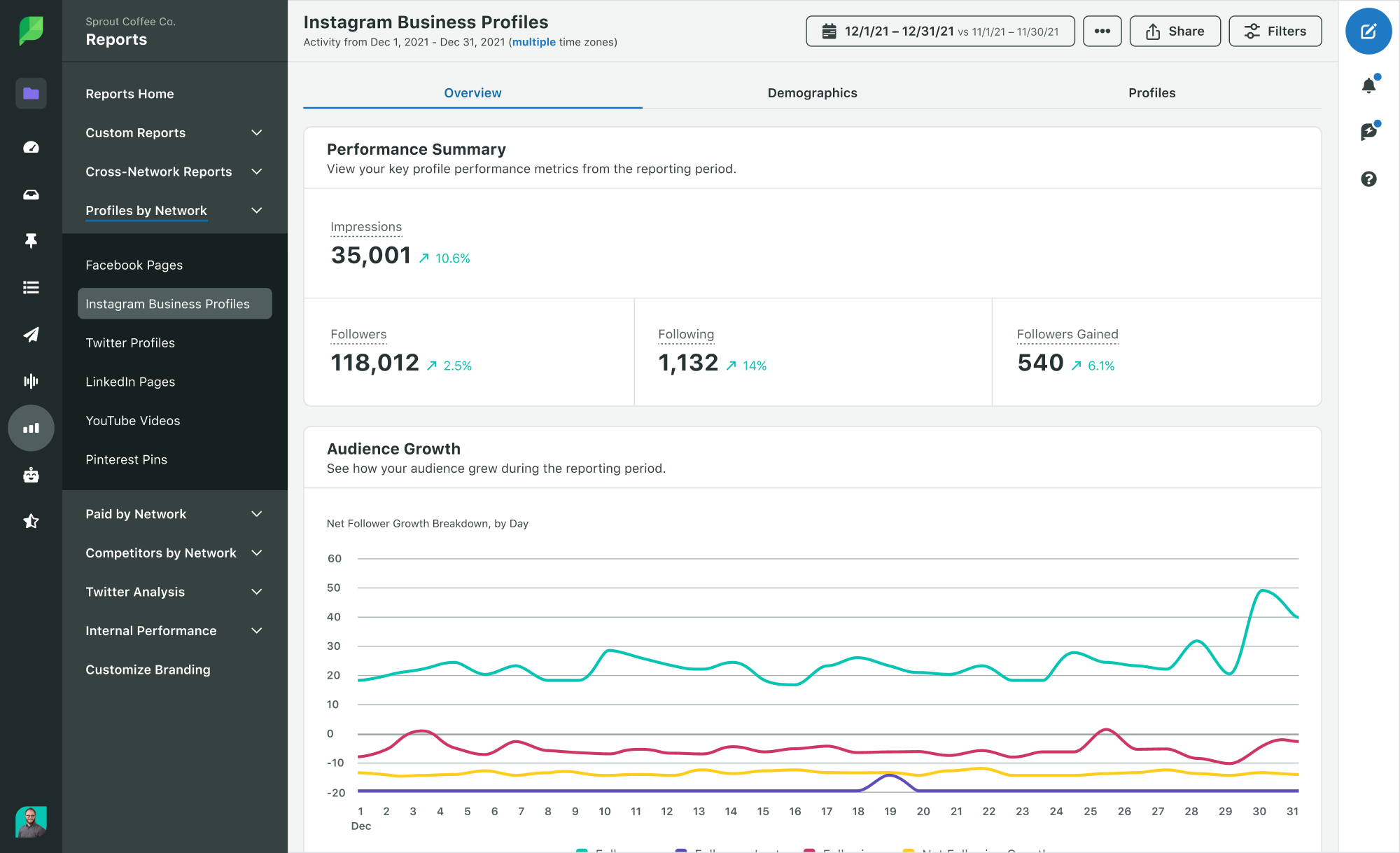
Network-specific reports like the Instagram Business Profile Report will drill down into each network’s performance. You’ll be able to see which posts performed the best and how your overall content is doing.

sprout social instagram business report

Plan your content marketing strategy

Now that you know the steps, it’s time to get to work on your own content marketing strategy. If you produce and distribute content, then you need to have a strategy in place to get the most out of it. This means documenting a strategy following the 10 steps listed above. For templates and worksheets, check out the B2B content planner, an assessment for finding your own ideal content mix, and a list of free content creation templates.

A content marketing strategy is great but you’ll still need to execute it. This is where a tool like Sprout is useful, especially for publishing and analytics. Sign up for a free trial today.

The post How to develop a content marketing plan appeared first on Sprout Social.


from Sprout Social https://ift.tt/2hHZwkO
via IFTTT

Friday, 11 February 2022

Crypto 'romance scammers' stole $139 million from victims in 2021

Clay hearts on the sidewalk spelling out the word

Even scammers are looking for love, and that's very much a problem.

That's the takeaway from an equally detailed and depressing warning from the Federal Trade Commission documenting skyrocketing incidents of so-called romance scams. The report, released the Thursday ahead of Valentine's Day, notes that the specific type of online confidence scheme is on a dramatic rise, and that cryptocurrency is at least partially to blame.

"A newly released data spotlight shows that in 2021 reported losses to romance scammers were up nearly 80 percent compared to 2020, and the total reported lost over the past five years has now reached $1.3 billion," cautions the FTC. "According to the spotlight, consumers who paid romance scammers with cryptocurrency reported losing $139 million in total in 2021, more than any other payment amount."

Romance scams, as the name suggests, often involve tricking a victim into believing they've found true love over a dating app or social media site. The thief plays out the fictitious relationship online, always having some excuse as to why they can't meet in person, until they ask for some form of payment — perhaps with the promise that the money is needed to finally travel to see their victim.

"The scammers' stories might involve a sick child or a temporary inability to get to their money for a whole range of reasons," the FTC explains. "People who lost money to a romance scammer often report sending money repeatedly: they believe they’re helping someone they care about."

Facebook and Instagram, as one might expect, are often the common denominator in these types of scams. Specifically, according to the FTC, Facebook was the starting point for 23 percent of the scams reported. Instagram raked in 13 percent.

Chart showing the growth of romance scams.
To the moon. Credit: Federal Trade Commission

The FTC notes that for victims who paid romance scammers with cryptocurrency, the median loss was almost $10,000.

Notably, this type of scam existed long before cryptocurrency. In fact, perhaps as a testament to the relatively complicated nature of cryptocurrency payments, the FTC reports that in 2021 roughly a quarter of romance scam reports involved victims sending gift cards.

So be on the lookout — especially as Valentine's Day approaches — for online love that seems too good to be true. Because if your newly found Facebook lover asks you to send them Bitcoin or gift cards, it's probably a scam


from Mashable https://ift.tt/9nHbLVR
via IFTTT

Thursday, 10 February 2022

Essential SMS and Email Tips: 5 Strategies You Can Implement Now [Free Webinar on February 15th]

Essential SMS and Email Tips: 5 Strategies You Can Implement Now

How important are SMS and email for a company’s success in 2022? Very.

78 percent of marketers say email is an important part of a company’s success.

And texting is quickly becoming another way for businesses to succeed. In fact, a 2021 survey found the majority of marketers reported increased revenue from SMS efforts.

If you are looking for new and innovative ways to engage your customers, adapting custom email and SMS strategies might be the solution you need to grow subscriber lists and improve the customer experience.

Join us on Tuesday, February 15th at 8 am PST for a FREE webinar on 5 No-Brainer SMS and Email Marketing Strategies You Should Implement Today!

Why Having an SMS and Email Strategy is Important?

By 2024, an estimated 4.5 billion people will use email. When done correctly, email marketing can increase traffic to your website, conversions, and revenue.

What do we mean by “correctly?” We mean following trends, using the latest tools, and relying on data to optimize your emails for opens and conversions.

SMS is also becoming a more effective communication channel. Texts can be used for marketing, to increase revenue, or even to offer quick customer service. In fact, close to 60 percent of consumers check their text messages within 1-5 minutes so they are a great way to get people’s attention.

The click-through-rate of SMS is also very high at 19.3 percent, better than email which has a CTR of 4.2 percent, or Facebook ads, which have a 0.05 percent CTR.

You may be wondering how can you get such a high click-through-rate with SMS as well, turning those opens into conversions and revenue? Attend our webinar to find out!

Who Will Benefit from Attending the Webinar?

  • Marketers who want to learn insider tips so they can expand their email and SMS skills.
  • Small business owners who want help launching or improving their email and SMS efforts.
  • Blog writers who want to grow their subscriber list.
  • Anyone who wants to improve their SMS or email click-through and conversion rates.

What Businesses Will Benefit from New Email and SMS Tips?

Marketers, small businesses, e-commerce companies, and B2B organizations alike will all benefit from this webinar. Need proof?

SMS is becoming just as important for all these business models. How it is used ranges from appointment confirmations, to sales promotions, to customer service, and everything in between. In case you need more convincing:

  • About 33 percent of marketers expect to prioritize mobile loyalty programs over the next year.
  • 85 percent of customers say they prefer receiving text messages over a phone call or email.
  • 64 percent of consumers think that companies who text value their time and are more progressive.

The email and SMS strategies covered in this webinar can be applied to any business model.

What You’ll Learn in This Webinar

In this webinar, we’ll first go over some of the top email and SMS trends we see coming in 2022. We will explain what each of them mean as well as the impact they can have for you and your business.

Next, we’ll provide five detailed email and SMS tips. For each tip, we’ll discuss why we think it could be a game changer for your business in 2022 and also provide some examples of how each can be used.

Finally, we’ll walk you through some step-by-step processes you can take to implement each tip and start seeing results right away.

By following the tips you will learn in this webinar, you’ll be in prime position to grow your subscriber list, create a cohesive email and SMS strategy, and get more conversions from each communication you send. We look forward to seeing you on February 15th!


from Neil Patel's Digital Marketing Blog https://ift.tt/bKP4cMF
via IFTTT

How to roll out a successful rebrand on social media

Is a social media rebrand on your radar?

The importance of thoughtful and original branding can’t be overstated.

We get it, though — sometimes a change is necessary. You shouldn’t be saddled with a brand identity that doesn’t make sense, right?

But the stakes are high for businesses looking to reinvent themselves.

Food for thought: 70% of marketers say that consistent branding is the most important element of building a community and retaining customers.

And that’s the challenge: how do you introduce a new identity without losing touch with your existing audience?

In this guide, we’ll break down how to rebrand your business on social media and keep your customers happy.

Why (and when) a rebrand on social media is necessary

Let’s kick things off by reviewing why rebrands happen in the first place.

And no, a rebrand is not just a logo update.

Rebrands shouldn’t be taken lightly given the legwork and potential risk involved. That said, they’re totally necessary and happen often for the reasons below.

Your business is shifting its focus and messaging

Maybe your business is pivoting to new products and services.

Or perhaps your current branding doesn’t reflect your voice or values.

Either way, these are legit reasons for a fresh start. For example, changes in your branding and marketing messages might reflect:

  • Simplifying (or expanding) your product offerings and features
  • A commitment to being more socially conscious
  • Going from “discount” or “affordable” to “premium” or “boutique” (or vice-versa)

Whether motivated by new leadership or customer feedback, a rebrand on social is the perfect way to communicate your updated mission.

You’re struggling to stand out in your industry

This is a problem that many B2B brands and SaaS companies face.

Branding is everything when there are dozens of companies offering near-identical services like yourself. If you’re in an up-and-coming business among crowded competition, a rebrand can cement your identity.

Heck, ongoing rebrands are popular even among established companies. Doing so allows you to modernize your business and avoid being perceived as stuck in your ways.

Mailchimp is a great example of this. Check out the evolution of the brand’s Twitter from 2014 to 2021 below. Beyond the updated imagery and naming (“MailChimp” to “Mailchimp”), the brand has pivoted from “just email” to a full suite of marketing and ecommerce tools.

Gif of Mailchimp's Twitter rebrand evolution

Your customers aren’t thrilled with your current brand

Unfortunately, this is something you’ll likely learn the hard way.

There’s no good way to ask past and present customers “Why don’t you like us anymore?” That said, warning signs of a damaged brand include:

  • An uptick of negative social comments (“outdated,” “disappointed,” “they fell off”)
  • Getting called out as being the lesser among your competitors
  • Dealing with a significant  crisis or public backlash

When done right, a rebrand on social media can be the sort of “hard reset” you need to reestablish yourself. If you’re worried about your current brand health, social listening tools can clue you in via mention monitoring and sentiment analysis.

Sprout's sentiment analysis for a rebrand on social media

“What are the key pieces of a social media rebrand?”

The short answer? It depends.

For rebranding on social media, you’ll need to create, gather and agree upon deliverables such as:

  • Logos, graphics and color schemes for your visual identity
  • Your brand name, @brand social handles and hashtags
  • Taglines, slogans and your mission statement
  • Announcement copy and posts for your various social channels
Wise's Twitter handle references its prior identity as Transferwise in its rebrand materials.

Also, consider more abstract elements of your rebranding efforts that you’ll need to communicate to followers. This includes:

  • Your brand voice
  • Your brand’s values
  • Marketing messaging
  • Your value proposition

Note that social media rebrands are typically part of a larger rebranding effort. Also, not all types of rebrands involve the same amount of legwork.

For example, a refresh might involve lighter changes such as a new logo or mission statement. A brand reboot might involve company-wide rebranding while a brand overhaul basically means starting from scratch.

This update from Discord is a good example that’s closer to a refresh:

The degree to which the elements above need to change isn’t one-size-fits-all. You’ll need to talk to your team to figure it out.

“Who’s involved in a social media rebrand?”

Rebrands often involve a lot of moving pieces.

As a result, there are usually quite a few people and departments involved.

Before you get knee-deep in your rebrand on social media, consider roles including:

  • The C-level. There are the folks making high-level decisions and signing off on the rebrand itself.
  • Marketing teams. This includes project managers and directors to plan the steps of the rebrand.
  • Social media teams. The social team is obviously essential not only for putting your rebranding plan into action but also for engaging with customers and keeping your messaging consistent.
  • PR teams. Rebrands are the bread and butter of PR pros. They’re responsible for communicating the rebrand beyond social including earned and owned media.
  • Creative teams. From designers to copywriters and beyond, the creatives on your team will be busy during the rebranding process.
  • Employees. Responsible for promoting and boosting your rebrand to their own networks. It’s important to keep all employees informed of an upcoming rebrand, whether it’s a refresh or overhaul, and why.
  • Agencies, contractors and freelancers. Non-employees might serve as consultants on your rebrand and messaging or handle some of the duties above if you’re a smaller team.

The need for these roles ultimately depends on the size of your business. Having fewer stakeholders and participants isn’t necessarily a negative if you want to get your rebrand moving faster.

5 steps to prep for a successful social media rebrand

Below is a quick breakdown of what needs to happen before you roll out your rebrand on social media.

1. Assemble your team to define your goals

First thing’s first: bring your stakeholders together and hash out the big-picture details of your rebrand. This includes answering questions such as:

  • “What do we hope to accomplish?
  • “What’s the reason for our rebrand?”
  • “How intensive does the rebrand need to be? Refresh, reboot or overhaul?”
  • “What’s our timeline?”
  • “How will we measure the success of our rebrand?”

Again, rebranding is no small feat. Your team needs to be explicit about their expectations and what they want to get out of the process.

That means setting goals! Specific to a rebrand on social media, metrics such as engagement and sentiment help assess your goals and performance.

2. Audit your social presence to assess needs

To figure out where your rebrand needs to go, you need to figure out where you currently stand.

A full-blown social media audit coupled with a competitive analysis will highlight the deliverables you’ll need. This includes logos, graphics, copy and announcement posts for your priority networks.

3. Assign roles, deliverables and deadlines

Determine who’s going to be involved in delivering the goods for the rebrand. This includes your internal team and contractors.

Depending on the complexity of your rebrand, the process can take anywhere from a few weeks to a few months.

Err on the side of caution when it comes to your rebranding schedule. Build-in time for revisions and approvals. If you set a hard date for an announcement, you’ll be tied to it.

4. Monitor and review the progress of your deliverables

Ideally, your collaborators should all work in a project management platform or collaboration tool for the sake of transparency and accountability. This will make it easier to see what’s on schedule and what’s not.

Collaborators should be comfortable checking in and providing feedback. When in doubt, consider more frequent assessments for deliverables (like logo designs) to reduce bottlenecks and unnecessary revisions.

5. Approve your rebranding announcement 

Assuming you have your deliverables ready, it’s time to decide how you’re going to announce your news.

Through your social media approval process, confirm that your messaging is 0n-point and the timing of your announcement is, too.

You obviously want to maximize the visibility of your rebrand. Consider that you might need to align your announcement timing with other marketing channels including emails, blog posts or press releases. And don’t forget to communicate company-wide when your rebrand goes live.

How to announce rebranding on social media the right way

The social announcement of your rebrand is arguably the most important part of the process.

Getting the most out of your hard work means generating some much-needed buzz and maximizing the engagement of your big announcement.

To wrap things up, here’s a quick announcement checklist for your rebrand on social media.

Hype your audience up (hint: don’t just dump the news on ’em)

Not everyone likes surprises.

But more importantly, a sudden switch-up of your branding can confuse your followers.

Whether weeks or days in advance, consider creating a preview post or two to tease your rebuild and build a bit of anticipation. Here’s a great example from Gumroad:

Prepare your “day one” social media announcement

You only get one announcement post, so make it count.

This is not the time for your images or captions to get cut off. Double-check the previews for your announcement posts across the platforms you’re publishing to. This includes:

  • Caption lengths
  • Display name and URL changes
  • File size and media types (think: video length, image dimensions)
  • External links to your website

Hint: you can use a social publishing tool like Sprout Social to ensure that your captions, media and links are all optimized and properly timed for each network you’re pushing to.

Encourage employees to boost your rebrand 

If you’re only publishing your rebrand announcement from your business profiles, you’re limiting your reach. Big time.

Employee advocacy is well-documented when it comes to helping brands earn more each. Whether it’s a simple repost or a personalized announcement, urge your employees to build buzz as well.

An employee announcing their employer's rebrand on social media

This is a great way to maximize your day-one reach and keep the hype train going over multiple days.

Promote your rebranding announcement elsewhere

Of course, social media isn’t the only place to hype your rebrand.

Don’t keep your audience and customer base in the dark. Consider other time-sensitive avenues to announce your rebrand such as:

  • An email (or newsletter)
  • Press release
  • Earned media or collaborations with other brands

Also, don’t forget about static content that customers can reference to learn about your rebrand. This includes:

  • A blog post (see below)
  • Videos (on your homepage or company YouTube account)
  • An FAQ page
Bergmeyer's rebrand blog announcement

Engage with your audience during the rebrand

Especially if you have an established following, you should be ready for people to say congrats and ask questions.

Don’t miss out on these valuable interactions: your followers will be looking at your comments and reactions. Likewise,  you may need to clarify details of your rebrand to satisfy skeptical customers.

This speaks to the importance of tools like Sprout’s Smart Inbox which not only monitors your brand mentions across multiple networks but also gives your team a single platform to respond in.

smart inbox to handle queries during a rebrand on social media

Remember: a rebrand is not a one-and-done process. You’re going to need to continuously monitor mentions and answer questions as your customers become familiar with your new identity.

And as noted earlier, you can assess the performance of your rebrand via analytics. If you’re seeing a boost in brand mentions and overall positive sentiment, you’re on the right track.

Are you ready for your social media rebrand?

Reinventing yourself on social media requires careful planning and specific execution if you want to do it right.

That said, going through the process is crucial for brands looking to define themselves versus their competitors.

Now that you know how to launch a rebrand on social media, it’s time to reflect on the latest social trends and tactics brands are using to stand out from the crowd.

If you haven’t already, check out the latest Sprout Social Index™ to learn what consumers are looking for from brands online.

The post How to roll out a successful rebrand on social media appeared first on Sprout Social.


from Sprout Social https://ift.tt/3I0mFR2
via IFTTT