Thursday, 6 October 2022

Black women started living the soft life. Then came quiet quitting.

An illustration of a Black woman relaxing in a warm cup of tea.

Before quiet quitting took corporate America by storm, Black women were quietly quitting their arduous lifestyles. 

They dubbed it the soft life: An online aesthetic movement that emerged in 2021 that called for Black women to let go of the astronomical expectation that they do it all. Rather than live a life of stress trying to be a career mogul, a style icon, and someone who’s emotionally available to friends and family 24/7, Black women called for those who have been working way too hard to take a softer approach. 

Unlike quiet quietting, the soft life isn't confined to scaling back your career efforts. Instead, the movement is about seeking peace first in all life aspects — which can include quitting your job, or giving less of yourself professionally. When explaining it to others on the internet, many creators will call back to the Urban Dictionary definition, which reads: 

"Opposite of hard life. Where you make decisions that leave you feeling stress free and vibrating higher. Less about wealth (though it helps) and more about making good choices."

The idea of the soft life is thought to have originated in the Nigerian influencer community before migrating to Western internet corners. The tag #softlife on TikTok harbors 282.2 million views and counting, and almost every video under it features Black women offering their advice on how to achieve a life free of tension. 

At a glance, the soft life looks like one of luxury: fancy meals and pretty dresses, elaborate trips and shopping sprees. And for some people, the soft life absolutely can be luxurious in practice. But its biggest proponents always call back to the mindset behind it. 

"[Soft living] is about denouncing hustle culture, it's not about luxury culture," said creator and businesswoman Kimora Brown in her video. "Capitalism is not soft living. It's actually anti-soft living." 

For lifestyle creator Elicia Goguen, the soft life is about living life with ease. "It’s to have a life that allows you to reclaim and step into your feminine energy, to connect with the parts of you that you’ve had to push to the side due to your life circumstances," said Goguen to Mashable.

Many soft life creators reference this idea of masculine and feminine energy as a key aspect of the lifestyle. The concept calls back to spiritual practices and yin and yang energies in Chinese medical theory. 

Though gendered in name, feminine and masculine energy is not constrained by gender identity, and as author and soul coach Sylvia Salow explains via Medium, it refers more to the types of energy that dominates someone's personality and approach to life. In spiritual communities, both energies are believed to be a part of everyone, regardless of gender identity. 

Feminine energy is "flowing and dynamic," and someone who leans more towards a feminine energetic approach is more open to vulnerability, creativity, and moves through time non-linearly. Conversely, masculine energy is more "stable and predictable," focusing on willpower, clarity, and focus. For the Black women who seek out the soft life, many feel that their lives have been too dominated by masculine energy, with life circumstances forcing them to turn away from their own vulnerability and emotional health to prioritize more extrinsic goals and others around them. 

The soft life movement loosened expectations, while still letting Black women dictate their own boundaries.

While we are in an era where anyone can be anything, especially online, Black women have always been expected to be everything. In a study for The National Library of Medicine, Dr. Cheryl Woods-GiscombΓ© examined the Superwoman Schema. It's the do-it-all cultural ideal that many Black women find themselves striving to be. 

The study found that to be a respected Black woman today, many feel the pressure to manifest strength, thereby suppressing emotions and vulnerability, resisting dependency, and projecting unyielding determination to succeed despite the circumstances. And they do this all while continuing to help others in their community, often putting their emotional needs last. The women in the study reported that playing this superwoman role can result in strained interpersonal relationships and tons of stress-related behaviors and health issues, like migraines, poor eating habits, and bad sleep schedules. 

It makes sense, then, why the soft life was instantly alluring. Why sacrifice your health and well-being simply because that's the way it's always been for Black women? The soft life movement loosened expectations, while still letting Black women dictate their own boundaries. "My soft life looks like honoring the fact that I'm a woman and that I run on a hormonal clock," said Goguen. "My soft life is about honoring my emotions, slowing life down, meditating, dancing, allowing love into my life, allowing myself to experience pleasure, learning how to unblock old subconscious beliefs to help me manifest my dreams, [and] becoming more aware of where I spend my money and what I spend it on." 

The relationship between soft living and quiet quitting

A soft life for many is about drawing boundaries, a social movement that’s become more popular than ever. 

As Black women began consciously uncoupling from strife, that same mentality started largely reflecting in the corporate world's quiet quitting movement. For young people in the workforce, their jobs' expectations have taken over their entire lives, as it's been for generations before them. But this generation of workers is watching wages continue to stagnate, inflation continue to rise, and workplace culture completely transform. Quiet quitters are logging on at 9 a.m. and logging off at 5 p.m. They're meeting their job expectations but not going above and beyond them. They're leaving time to cultivate hobbies and practice self-care and spend time with their loved ones. Sound familiar?

It shouldn’t go unsaid that in the case of the soft life, Black women recognized a need to take care of themselves and called for others to do the same — but it didn't become a broader cultural concern until quiet quitting applied the same concepts to the workplace.  

Though both movements seek a seemingly universal quest for peace, they both draw the same criticism: laziness. Black women trying to live a softer life are often hit with comments accusing them of wanting to take "the easy way out of life," or "just wanting to be a housewife." Quiet quitters are criticized for not wanting to put the work in or expecting to be paid for slacking off.

Women all over the world are starting to reclaim what they’ve lost, and I think the soft life is a reflection of that.

But what these critics forget is the essential nature of boundaries for mental health. It's a well-studied subject, with professionals agreeing that personal boundaries are necessary in all aspects of life. By living a softer life, Black women are choosing to finally put themselves first in a culture that demands they constantly focus on others. By redefining work expectations, young professionals are prioritizing living a more fulfilling life over giving themselves to their jobs. Together, these lifestyle movements can help create a cultural mentality that comes a little closer to collective health than collective productivity. 

"The soft life is definitely for anyone who realizes they’ve been out of touch with themselves, out of tune with their desires, disconnected from their emotions, etc," said Goguen. "Women all over the world are starting to reclaim what they’ve lost, and I think the soft life is a reflection of that."


from Mashable https://ift.tt/qPRLko4
via IFTTT

Wednesday, 5 October 2022

Halloween hashtags to kickoff spooky season

Autumn leaves are falling. Pumpkin spice lattes are brewing. Scary movies are playing. The magic of spooky season is in the air and it’s time for your brand to get in on the fun.

In this article, we will unearth trending Halloween 2022 hashtags and how your brand can create a creepy campaign to bolster your larger social media strategy.

Keep reading (if you dare).

Halloween is bewitching social media users

In the U.S., almost everyone celebrates Halloween. About 93% of Americans plan to celebrate in 2022.

For some, Halloween is a minor holiday meant for eating candy and dressing up. For others, it’s more than a holiday. It’s a lifestyle.

Social media is where everyone from casual celebrants to spellbound fanatics go to find the latest Halloween inspiration, aesthetics, trends and events. According to our data, the months leading up to this year’s Halloween season have seen year-over-year growth on social. In particular, August 2022 saw a 66.23% increase in engagement volume from August 2021.

White text on an orange background that reads, "66% increase in Halloween engagement on social media in August '22 compared to August '21.

Halloween hashtags on Instagram, Pinterest, YouTube and Twitter drive content discovery. Brands can use Halloween tags to tap into conversations their community is having on social.

Popular Halloween hashtags for the 2022 spooky season

We turned to Sprout Social’s Advanced Social Listening tool to find out which hashtags people are sinking their teeth into this Halloween. Use this list to inspire your content this year.

Black text on a white background that reads, "Popular Halloween 2022 Hashtags." The hashtags listed are: #Halloween, #Spooky, #Autumn, #Spooky, #HalloweenNeeds.

1. #Halloween and #Halloween2022

Our data from September 1-22, 2022, revealed hashtags like #Halloween and #Halloween2022 are leading in popularity.

#Halloween was the most common with over 466,000 engagements and 778,206,312 potential impressions across social platforms.

These hashtags are used on a variety of posts, from event and giveaway announcements to Halloweencore decoration inspiration. Their simplicity and prominence means they’re a perfect fit for brands of all kinds.

Beware: with such high volume, it might be difficult to find the right audience with these hashtags alone. Pair them with niche hashtags relevant to your product or service for best results.

2. #HalloweenCostume

Costumes are an essential part of Halloween. Whether you’re a fan of classic costumes like witches and zombies or pop culture and humor-inspired looks, social media is home to the best inspiration and DIY tutorials.

@laurenwolfe

Group Halloween costumes you won’t see everywhere! These are all in my amazon storefront #halloween2021 #halloweencostumeideas #costumeideas

♬ original sound – Kiera Lyons πŸ•―πŸ•°πŸ—

According to our data, #HalloweenCostume and #PerfectGroupHalloweenCostumes are the leading costume-related hashtags.

Hashtags like #Handmade, #Vintage and #ShopLocal are also popular when combined with #Halloween. Use them to help describe your content and support other year-long social initiatives.

Retailers, makeup brands and craft stores typically have the best use cases for costume hashtags.

3. #Autumn and #Fall

Halloween is synonymous with autumn coziness. Crunchy leaves. Fall flavors. Chunky sweaters. Scary movie marathons.

#Autumn and #Fall are popular hashtags that boost Halloween content. You can find them on lifestyle posts that help viewers get in the spooky season spirit and summon the magic of nostalgia.

Does your brand release a seasonal autumn line? Could you incorporate your products into a Halloween aesthetic? If so, consider using #Autumn and #Fall with #Halloween on your post.

4. #Spooky

What would Halloween be without thrills? Slasher villains, haunted mansions and supernatural entities are the cornerstone of the horrific holiday.

Hashtags that borrow from Halloween’s spooky origins are popular for promoting films/shows and sharing memes/art.

#Spooky and #MichaelMyers are the most popular scary tags.

Use tags like this when your content is meant to surprise (and petrify) your audience.

5. #HalloweenNeeds

People turn to social media for Halloween how-tos. They want to learn how to put together char-boo-terie cheese boards, fall bucket lists and Halloween movie marathons.

A screenshot of a Pinterest search for #HalloweenNeeds that includes images of Halloween snack boards, Halloween costume ideas, Halloween movie ideas and more.

Try filming an educational video for your followers and use popular hashtags like:

  • #HalloweenNeeds
  • #Pumpkin
  • #TrickorTreat
  • #CodeOrange

Top Halloween hashtags brands use to conjure holiday spirit (and tips to create your own)

Here are some unique, hair-raising Halloween hashtag campaign examples that will leave you entranced.

#31NightsofHalloween

Twenty-four years ago, 31 Nights of Halloween premiered on Fox Family (now known as Freeform) and was an instant success. The TV special broadcasts family-friendly Halloween movies every night in October.

The hashtag #31NightsofHalloween and the related Twitter account were born on social media in recent years. They’re used by the network and its many fans to hype up the seasonal programming block.

Freeform’s online community engages with #31NightsofHalloween with unparalleled enthusiasm—from sharing their love to creating memes to making educational resources.

Our data reveals #31NightsofHalloween found tremendous growth from 2020 to 2021, including a 177% increase in total volume and 2,099% increase in potential impressions.

To capture the genius of the 31 Nights special, go all in on seasonal holidays that are important to your community. Create your own annual event, challenge or giveaway to entertain your audience. Be sure to incorporate a branded hashtag to help generate buzz.

#HandmadeWithJOANN and #Halloween

JOANN Fabrics is the destination for materials you need to make homemade costumes and home decor. They use #HandmadeWithJOANN to teach their followers how to make blankets, wreaths and more. During October, they focus on Halloween on TikTok, Instagram and Facebook.

They pair all their #HandmadeWithJOANN content with #Halloween to repurpose one of their tried-and-true tags for spooky season.

Take a cue from JOANN Fabrics by pairing Halloween and branded hashtags together. Not only will you improve your reach, you’ll also zero in on the most engaged audience.

#BringOnTheCandy

Last year, Crest launched their #BringOnTheCandy giveaway. Although Halloween may not seem like the time to be thinking about oral healthcare, Crest found a unique angle for their brand. Crest reminded people to take care of their teeth during the Halloween season.

Even if Halloween isn’t a natural fit for your brand, is there a way you can incorporate it into your strategy that feels true to your identity? Don’t be afraid to think outside the box and stand out from the crowd.

Halloween hashtags are more than just a bunch of hocus-pocus

As the Halloween mayhem continues to grow, social users can’t get enough of spooky season content. Now that you know which hashtags are trending and how to create your own, plan a content strategy you can hang your broom on.

Remember to work towards your overall social goals by incorporating hashtags that are relevant to your audience, brand and unique seasonal offerings.

Want to brush up on ways today’s brands are using hashtags to their full potential? Read: What is hashtagging and how to use it effectively.

The post Halloween hashtags to kickoff spooky season appeared first on Sprout Social.


from Sprout Social https://ift.tt/W24XKO6
via IFTTT

Good work: Building careers that make an impact

If you’re a business leader, you’re probably thinking about the emergence of quiet quitting, or doing the bare minimum at work. It’s impossible–and inadvisable–not to. Only 32% of workers report being engaged at work, with the rest ambivalent, or worse, actively disengaged like 18% of workers.

At this point, there’s no disputing that the pandemic irrevocably changed the way we work. But its reach goes further than whether or not you travel to an office. Two years of collective turmoil caused us all to examine our lives, values and priorities. Without the distraction of life outside of work, many employees realized their work wasn’t working for them. For some employees, their 9-5 feels like serving hard time.

I can relate. In my first inside sales job, I wasn’t stimulated by the work. I rarely thought about work outside of office hours and I definitely wasn’t thinking of ways I could be better at my craft. I–and my coworkers–felt disconnected from the future vision of the company. Even though we were working in revenue, directly connected to the success of the business, our roles didn’t seem important. In another life, I would have been a prime candidate for quiet quitting.

Luckily, since then, I’ve had the opportunity to move into roles that excite and energize me. My job makes me want to be better in every aspect of my life. I know from experience that true happiness at work inevitably translates into more happiness outside of work.

Work shouldn’t be a four-letter word

A lot of the conversation about work-life balance focuses on the life side. Don’t get me wrong, the life side is the most important. Being active and engaged with your friends, family, hobbies and community creates a fulfilling life–which makes the work you produce that much better. But it’s important to realize that the two will never be in balance. Sometimes, you’ll need to spend more time in your personal life and other times you’ll have to step up at work. What’s more important is making sure the two are in harmony. Your work should support the rest of your life and vice versa.

I love what I do. I love the constant learning and growth that my role affords me. And the excitement my job brings shows up in my personal life. My wife can always tell when I’ve had an energizing day professionally because I bring that excitement home. Which in work from home world, means I walk downstairs more fired up than usual.

I’m a first-generation Canadian. Like many children of immigrants, I watched my parents work extremely hard. But they loved every minute of it. I never heard my dad complain about his job. It wasn’t out of pride, it was because of the sense of fulfillment his work provided. I used to see him reading industry magazines in his spare time and couldn’t understand the appeal–or why he wanted me to read the latest copy of CIO magazine. But now, as an adult with my own career, I recognize just how much joy he got out of his job and the passion he had for mastering his craft. Seeing his version of work-life harmony inspired my work ethic, and I hope my daughters are learning the same lesson from me.

Fostering an engaged work environment

Over half (60%) of workers are emotionally detached at work. As a leader, that should worry you. On a business level, companies with engaged workforces report 23% higher profits. But on a human level, you should want to create an environment where employees want to thrive. Here are some ways I try to share my excitement with my team.

Start from the beginning

At Sprout, we onboard in cohorts. This system ensures that everyone–regardless of title, experience or job function–has a common foundation from day one. We introduce our new hires to our mission, values and vision before we introduce them to our product. That’s by design. Knowing how and why we work shows our cohorts that our culture is intentional and we’re happy to welcome them into it. When I spend time with our new hires, I highlight the opportunity they have to improve the organization and the purpose that fuels it all.

Share the why

Less than four in ten remote or hybrid employees under 35 clearly know what’s expected of them. That represents a failure in leadership, not an individual. One of the most important things you can do as a leader is share why we’re doing things. The average employee doesn’t have the product roadmap memorized. It’s not their responsibility.

As leaders, we have to continually paint the picture of where we’re going and what it will take to get there. Keeping your team abreast of future plans helps them recognize their place in them. If they know where you’re going, they’ll be excited to get there with you–even if there are bumps along the way.

Embrace flexibility

I’m the assistant coach for my daughter’s cross-country team. She had a meet in the middle of a Thursday afternoon. In the days before remote work, I never would have been able to make it. But remote work brings the possibility of flexibility, so I was able to help her team, cheer her on and take her to get ice cream afterward. Later that evening, I got back online and was able finish my day feeling a real sense of accomplishment in all aspects of my life.

Before moving to a remote setup, I only spent meaningful time with my daughters on the weekends. The expectation that work had to be done within traditional work hours meant I’d leave the house before they got up and sometimes got home after they’d already had dinner. Having the flexibility to work at the times that work for me has made me a better father and husband. But it’s also made me a better employee.

Without the underlying pressure of missing out on the big moments, I can focus when it matters. Giving employees the space to be human and allowing them to optimize their own schedules makes for better results–at work and outside of it.

Encourage communication

Loving what you do is powerful but hating it can be equally destructive. We spend so much of our lives at work and that time can either be a net benefit or detractor. It’s essential to create an environment where your employees can come to you with career concerns.

If one of your team members is feeling stifled in their role, not connecting to their daily tasks or feeling like they aren’t contributing to the big picture, give them space to address it. Work with them to identify stretch projects or opportunities, evaluate how they spend their time and reinforce how their role impacts the business as a whole.

If they’re dissatisfied because they aren’t aligned with the values, mission or culture of your company, help them find out what matches up. On average, we spend 81,396 hours of our lives working. Make sure your employees are spending that time doing what resonates with them.

Live to work–but not how you think

Work is a part of life. No matter how hard you try, it’s impossible to separate the two. When I stopped viewing work and life as conflicting priorities and started viewing them as aspects of who I am, a new world opened up to me. Meaningful work has the power to enhance every aspect of your life. You just have to find out what means something to you.

Looking to create a more engaged workplace? Learn how to measure and improve employee engagement with this article.

The post Good work: Building careers that make an impact appeared first on Sprout Social.


from Sprout Social https://ift.tt/yqXVD3O
via IFTTT

Tuesday, 4 October 2022

Dictionary.com adds 'antiwork' because it, too, does not dream of labor

A sticky note that reads

For those who dream of a four-day workweek, Dictionary.com feels your pain. And to give you the language to express your woes, it's added a slew of work related terms — plus a few internet faves, climate terms, and accurate Ukrainian endonyms.

On Tuesday, the online dictionary announced 620 new entries, 700 new definitions for existing entries, and 3,100 revised definitions in its Fall 2022 update. The new additions were broken into several categories, led off with "Work and Antiwork." Funnily, almost every word in this category encourages you to not actually work. Hey, even the dictionary needs a break, OK?

"Antiwork" itself was a new term, defined as "of or relating to a social and cultural movement that distinguishes between labor, which generates goods, and work, which generates wealth, and that rejects work as artificially incentivized, while embracing or elevating labor as essential or intrinsically rewarding." Other new terms that could be used to support or educate about the growing antiwork movement included "golden handcuffs," "OOO," "churn rate," and "pawternity leave."

The dictionary also added several updates to its endonyms section pertaining to Ukraine, in which place names' proper spellings and pronunciations as preferred by Ukrainians are reflected, as opposed to those popularized by Russia. This move comes after the public became more largely aware of the preferred spelling and pronunciation of Kyiv, the capital of Ukraine, earlier this year.

And in catching up with the rest of the internet, Dictionary.com also finally added the term "simp," officially defining it as "a person, especially a man, who is excessively attentive or submissive to an object of sexual attraction." While the term has been largely used on the internet in recent years, the editors make sure to note that like most internet slang, the word "simp" draws its roots from Black culture and 1980s hip-hop. Though it may be a little slow on the slang, the dictionary does give credit where credit is due.


from Mashable https://ift.tt/3z6lHUa
via IFTTT

TikTok Shopping: What You Need To Know

TikTok Shopping: What You Need To Know

Not that long ago, it was all about Facebook, Instagram, and Twitter, but now everyone is talking about TikTok.

It seems like every top brand is on there, and even smaller businesses like Elf Cosmetics and start-ups like Vessi are taking the platform by storm.

The social media site is so wildly popular that TikTok total user spending on Google Play and the App Store exceeded $824 million in Q4 2021. With eager buyers already lined up, It shouldn’t be a surprise that TikTok has got on board the social commerce train.

Recently, the social media site announced a new feature called TikTok Shopping; the potential is obvious, given its vast audience of over one billion users.

However, is TikTok Shopping for you, and how does it work? That’s exactly what I’ll talk about here.

What Is TikTok Shopping and How Does It Work?

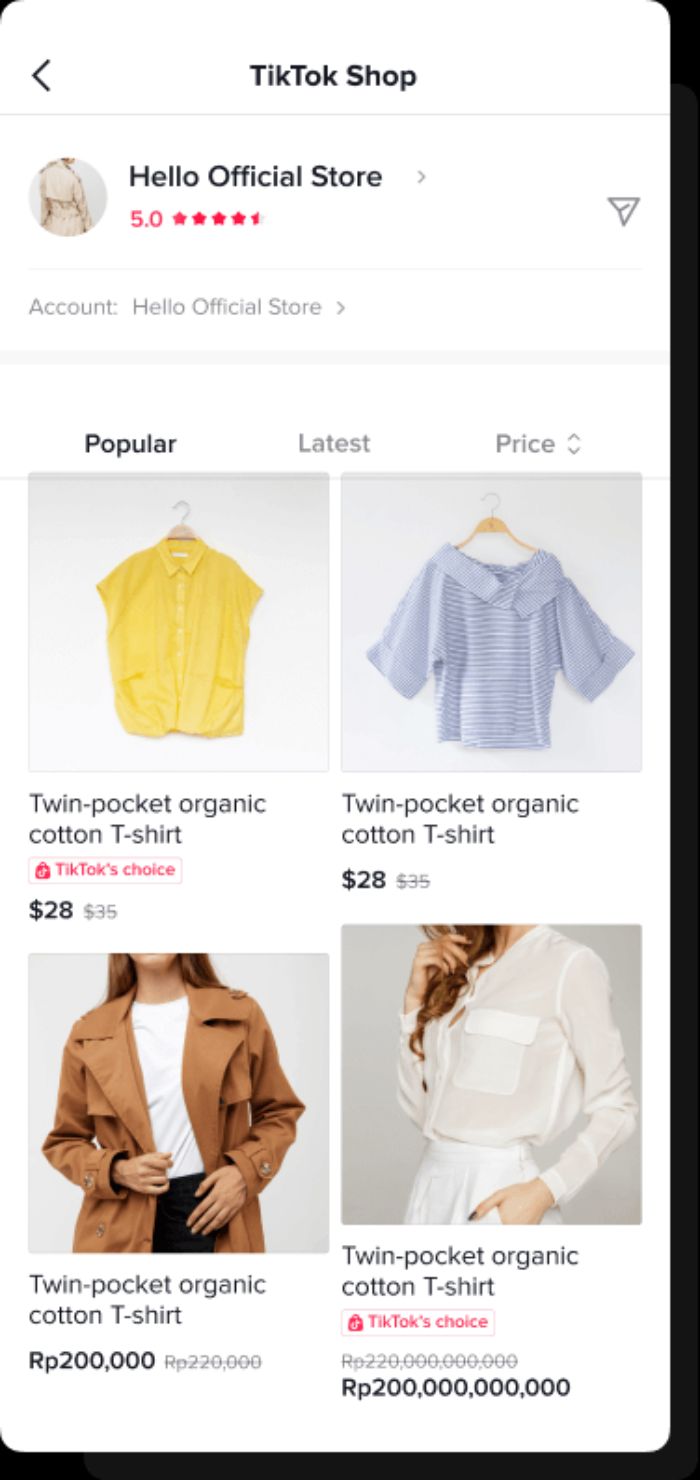
The Hello Official Store Tik Tok Shop.

If you’ve ever been on TikTok and wanted an easy way to buy a product you’ve seen, TikTok Shopping lets you do just that.

In its launch statement, TikTok explained:

“TikTok Shopping is a suite of solutions, features, and advertising tools that give businesses the opportunity to capture the full power of TikTok’s influence on purchase decisions.”

The social media site explains that TikTok Shopping allows merchants to ‘enjoy a full-service commerce solution’ with TikTok managing the retail side, from product upload and purchase to shipping and fulfillment.

Sellers have two options. TikTok’s Shopping Direct Integration creates an e-commerce experience for creators/merchants that want to run their e-commerce stores directly from the TikTok platform. This option provides a full e-commerce experience with everything, including post-payment processes, occurring inside the TikTok app.

Then, there is Partner Integration, where sellers can add product catalogs via a TikTok Business account and buyers can browse and purchase inside the TikTok app. However, post-payment processes like returns occur outside of TikTok on the partner’s app or website.

As a buyer, you find TikTok shops as a tab on a seller’s account. You place your items in the shopping bag, just like regular e-commerce sites. Once you click on it, it takes you to the product catalog.

From there, you browse the store as you normally would and add items to your basket. When you’ve finished shopping, you can check out in the app or go to the company’s website.

To make TikTok shopping possible, the social media site is teaming up with well-known shopping brands, including:

  • Shopify
  • Ecwid
  • Square
  • Prestashop

Additionally, TikTok says the likes of Wix, OpenCart, BASE, and ShopLine are coming on board soon.

Who Can Use TikTok Shopping?

Currently, TikTok shopping is open to business account holders in the following countries:

  • United Kingdom
  • Malaysia
  • Vietnam
  • Thailand
  • Indonesia
  • Philippines
  • Singapore.

If you have a Shopify, Square, Wix, or other TikTok shopping partner account, you should be able to set up a store.

Should Your Business Use TikTok Shopping?

Before you decide if selling on TikTok is for you, it makes sense to look at your overall strategy and your customer base.

First, you must ensure that your target audience is active on the platform. If they’re not, then you’re not going to get much traction selling your products on TikTok.

According to Statista, 24 percent of TikTok’s audience are women aged between 18-24, and men in the same age group account for 18 percent of its audience. Further, women aged between 25-34 make up 17 percent of TikTok’s demographic, while men in the same age bracket account for 14 percent.

Then, it makes sense to look at the most popular categories on TikTok. Fitness and sports, recipes and cooking, fashion, home renovation, and beauty and skincare are among the top categories on the site. You could be a good fit if you have a business in any of those niches.

Next, you need to have an engaging and creative sales strategy. Since TikTok is all about short videos, can you capture the audience’s imagination in minutes while saying what you want to say? You can? Great. Now you just need to ask yourself one more thing.

Is TikTok Shopping worth your while? Or could you be putting your time and energy someplace else? Often, you won’t answer this question until you give it a try. It never hurts to have additional sales channels, and if social media shopping fits with your business strategy, then it might be for you.

How Does Shopping Fit Into Existing TikTok Campaigns?

TikTok Shopping is ideal for use alongside its other advertising solutions. Here’s a look at some of TikTok’s offerings:

In-feed TikTok Shopping Ads for Online Shopping

TikTok provides three in-feed shopping ads, including Collection Ads, Dynamic Showcase Ads, and Lead Generation. Collection ads let brands add custom, swipeable product cards in their in-feed videos to promote products.

Dynamic Showcase Ads lets you advertise thousands of your product SKUs with personalized video ads, and Lead Generation appears inside in-feed video ads, letting your business collect TikTok users’ details with online forms.

TikTok Live Shopping

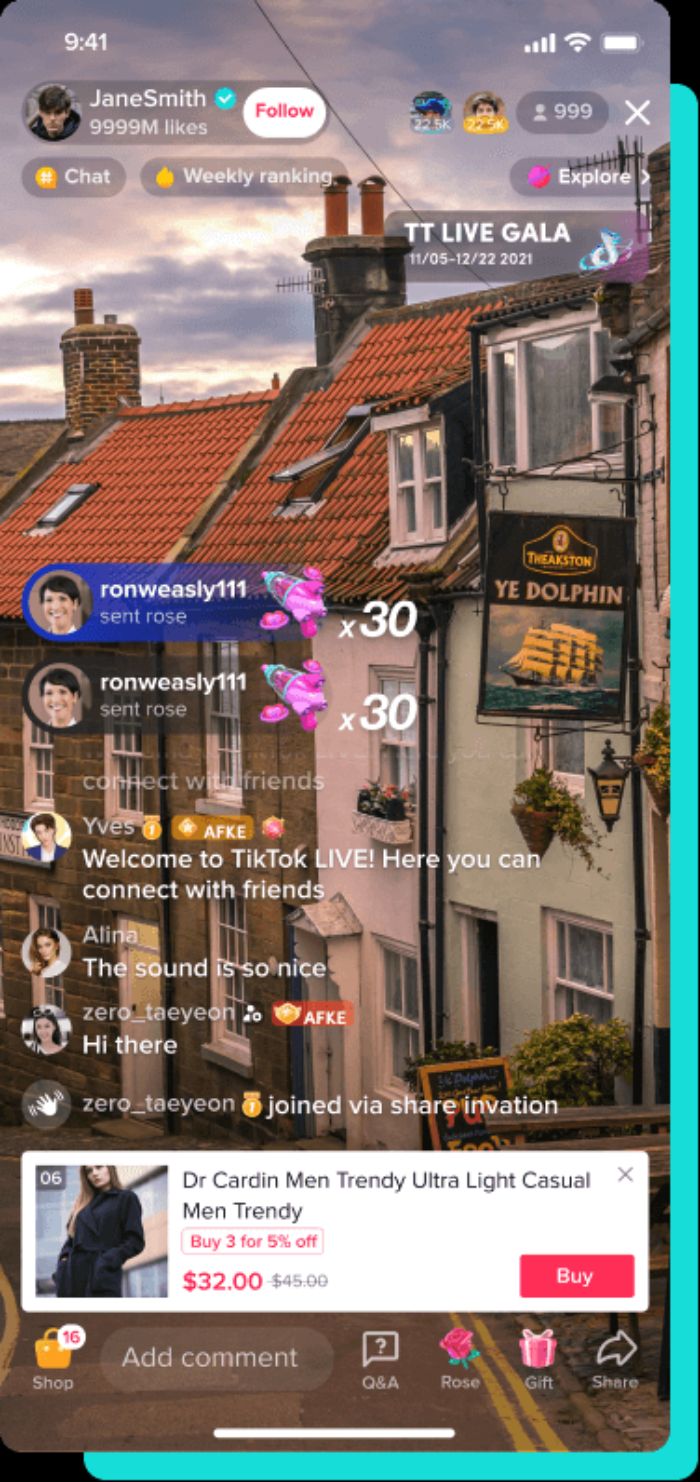
Tiktok live with shopping ads.

(Image: TikTok)

Engage viewers, build relationships, and increase conversions with TikTok LIVE Shopping. With this advertising solution, brands can integrate their products from TikTik Shopping into a LIVE session.

For you as a brand, that means real-time connections with your audience. TikTok users can then buy products they see during a LIVE Shopping stream.

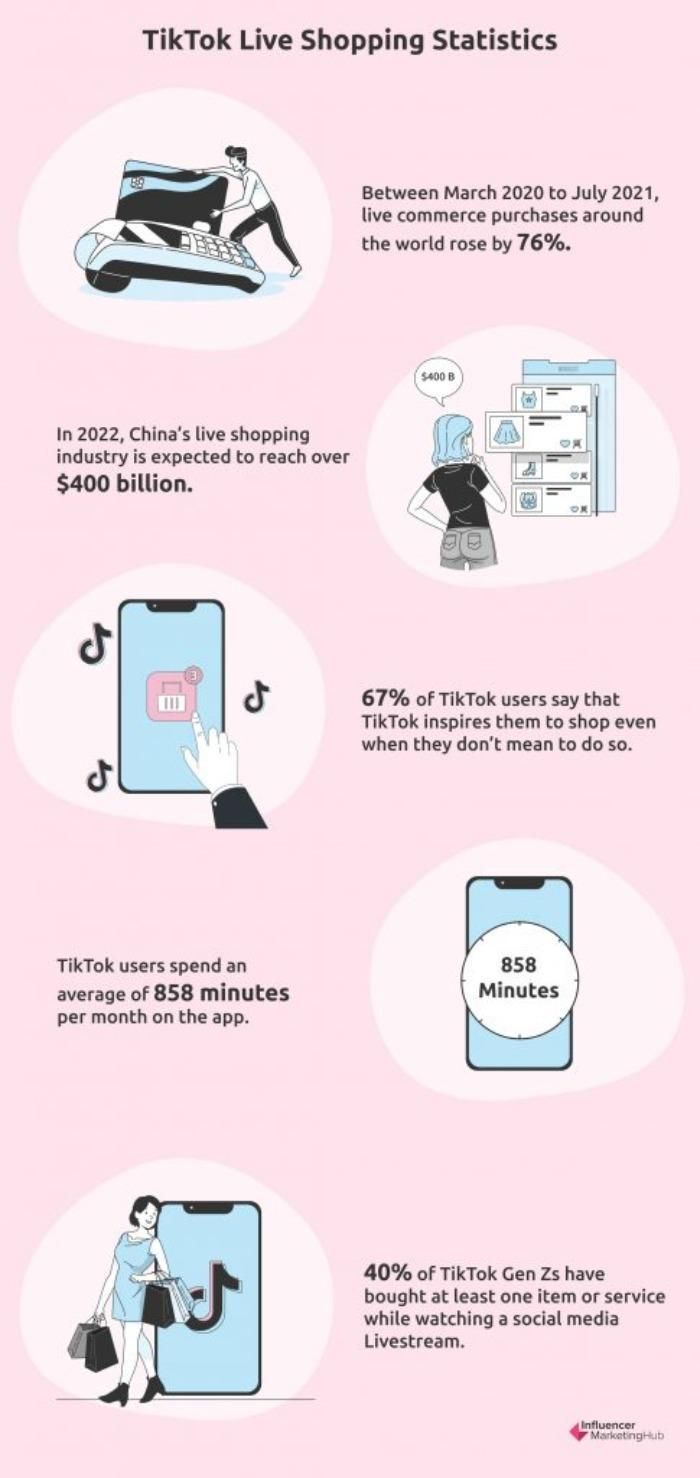
TikTok LIVE Shopping is on the up, with LIVE Shopping purchases increasing 76 percent between March 2020 to July 2021, and it’s available to business sellers.

Graphic showing Tiktok live shopping statistics.

How To Set Yourself Up on TikTok Shopping

Before you can start selling on TikTok Shopping, you need to register. Here’s how to do it:

  • Either log in or sign up.
  • Verify your phone number (only available for the UK) or email address and documents
  • Choose a shop name. It must not include special characters, and TikTok says not to use ‘flagship’ or ‘official’ in your shop name.
  • Upload your passport or driver’s license.
  • If TikTok approves your site, you’ll get an email confirming your registration, or if there’s an issue with any of your documents, TikTok asks you to resubmit them.
  • Then the review process begins and takes up to three days.
  • Link a bank account and add your bank details.
  • You’re registered!

Setting Your TikTok Shop Up for Success

With your TikTok Shopping account set up, it’s time to start getting the news out about your new sales outline. Follow these tips to get started.

Optimize Your Product Pages

Treat your product pages the same way you would any other e-commerce site. Ensure you use high-quality images, use keywords, and keep your branding consistent.

Make sure your descriptions are detailed, tell customers all they need to know, and keep titles within the 34-character limit.

Start Spreading The Word

One of the most important steps of any advertising campaign is getting the news out. That means telling friends and family, sharing the link on your other social media channels, and posting regular videos.

You could also consider teaming up with brand ambassadors and influencers for a wider impact.

Get Tagging Down To A Fine Art

Want to stand out? Then add tags. TikTok Shopping allows businesses to tag products in their videos, making it easy for viewers to learn more about and purchase the products they see. One way to find suitable tags is to see what’s trending. You can do this by going to the ‘Discovery’ tab to view the tags users regularly add.

Offer Discounts

Who doesn’t love a discount? Encourage people to come to your store by offering exclusive discounts or deals. Make discounts time-limited to create a sense of urgency and come up with unique deals shoppers can’t get anywhere else. For instance, if you’re selling cosmetics, create a bundle of branded products.

FAQs

What Is TikTok shopping?

TikTok shopping is an e-commerce platform that lets business sellers create a product catalog. It’s currently running a pilot scheme in several countries, including the United Kingdom.

How Will TikTok Shopping Impact My Business?

It’s difficult to say at this early stage. It depends on which category you’re selling in and whether your target audience is on the platform. However, it does provide a fresh outlet to sell from and a new way to reach consumers. 

How Do I Sell On TikTok?

Business sellers can register for an account, and then they have to wait 2-3 days for approval. Once you get an approval email, you can start selling on TikTok Shopping. 

Conclusion

TikTok has an audience of more than one billion users, and with the growing popularity of social shopping, it makes absolute sense that it would launch into e-commerce at some point.

Like any other platform, it won’t necessarily be right for your business. However, if your ideal customer is likely to use the platform, so consider having a presence there and see how it goes.

It’s easy to set up a store, and there’s only one real way to find out what TikTok Shopping can do for your business, and that’s to give it a go.

Will you be joining TikTok Shopping?


from Neil Patel's Digital Marketing Blog https://ift.tt/sFgWtAb
via IFTTT

Brand amplification matters: Reintroducing Employee Advocacy by Sprout Social

In the world of social media, reach is everything. But in today’s highly competitive digital environment, reaching more people at a lower spend is an ever-present challenge. That’s where employee advocacy comes in. It’s the easiest way to extend your reach on social, without overextending your budget.

Employee Advocacy by Sprout—an employee-driven advocacy hub built into your social media management platform—makes it possible to boost reach while cutting ad costs by turning your employees into brand advocates. Because some of the best advocates for your brand aren’t paid creators or influencers; they’re the people you see, in person or virtually, every day.

Amid strain put on marketers from declining organic reach and the ad spend that comes with it, employee advocacy is a key component of your broader social strategy. In fact, Gartner predicts 90% of B2B social media marketing strategies will have scaled employee advocacy programs by 2023.

Let’s get into why adding an employee advocacy program to your strategy is the secret sauce behind cooking up better business results.

Request a demo

What is employee advocacy, and why is it important?

Employee advocacy is when a person who works for a company promotes the brand or company on social media (think: posting news about the business or a selfie with company swag).

An internal program, plus a platform like Employee Advocacy by Sprout, makes it easy to encourage employees to post more and to track business results.

A green graphic that defines employee advocacy as when a person who works at a company promotes the brand or company on social media.

Social media is a crucial channel for businesses to connect with consumers. But social teams are spread thin. Leveraging employees’ voices provides extra advertising that can extend your reach and grow your digital audiences. As Sprout’s Senior Manager of Social Media Rachael Samuels explains, “Advocacy is important right now because there are a lot of challenges social professionals are dealing with, including algorithm shifts, lean teams and budget cuts.”

Encouraging employees to post about their authentic, positive experiences at your company has deep cross-departmental business benefits, like:

  • Extending sales team networks and leads
  • Creating buzz and increasing impressions for your marketing team
  • Boosting employee engagement for your HR team
  • Increasing earned media for your PR team
  • Building trust with talent prospects for your recruiting team

From brand amplification to building trust, let’s dive into three major benefits of employee advocacy.

Increase brand awareness—even on a decreased budget

Between the decline of organic reach and recession fears pressuring marketers to perform, it’s never been more important to reach more, with less.

Employee advocacy is your secret superpower—employee posts connect you to new audiences without increasing your ad spend. In fact, increasing brand awareness is the most important business outcome of these programs, according to The 2022 Sprout Social Index™.

A graphic from the Sprout Social Index depicting the most important business outcomes of an employee advocacy program

“Advocacy has driven a higher number of impressions than any single one of our social channels, driving more than 8M impressions just this year,” Rachael tells us. “Advocacy really is our social superpower. We’re able to reach beyond our core audience and tap into our team’s extensive networks.”

Employee posts boost buzz around your business from trusted voices. There’s a reason 68% of marketers report their organizations have an employee advocacy program—amplifying employee voices by making posting easier comes with massive benefits.

A LinkedIn post created by a Sprout employee sharing Sprout's yearly data report.

Build brand trust with future fans and talent

In the consumer-brand relationship, trust is everything—58% of consumers say trust is the reason they pick one brand over a competitor. This is where the voice of your workforce shines. So much so, that employee voice is about three times more credible than that of a CEO’s.

Employee advocacy posts create a steady flow of digital word-of-mouth marketing from trusted voices. People want to learn about new things from people they know and trust—after all, a friend’s recommendation is the most impactful reason consumers purchase on social.

A graphic from the Sprout Social Index ranking factors that impact consumers' decisions to choose a brand over a competitor

This can also help win trust with prospective employees—especially important since The 2022 Sprout Social Index™ found that finding qualified talent is the number one challenge marketers face this year.

When it comes to what it’s actually like to work at your company, there’s no voice more trustworthy than that of your employees—use this and empower them to share.

Maintain consistent brand messaging and fuel thought leadership

Even if you already encourage employee advocacy, there are a few common blockers that may stop them from posting, including bandwidth and anxiety.

Similarly, you may be hesitant to encourage employees posting for fears of rogue brand messaging.

A formal employee advocacy program solves both of these problems. On the employee side, ready-to-share content makes it easier for them to post about authentic work experiences, industry news, brand videos and more on social media without second-guessing their content.

On the business side, you’ll feel confident that content employees share is on-brand by providing pre-approved social messages and content to choose from.

By removing barriers and empowering your employees to post, you’re helping them become thought leaders—and thought leadership can have real business impact. About 47% of buyers say thought leadership led them to discover and purchase from a company. And with 68% of US adults online saying they don’t think companies share interesting content, a steady stream of fresh perspectives from employees diversifies the content your social team can share, too.

Stand-out features: Employee Advocacy by Sprout

Now that you know how employee advocacy can supercharge your strategy, you’re ready for the next step: get an employee advocacy platform.

Employee Advocacy by Sprout is a hub for your employee-driven brand amplification tools. On the employee side, it’s an internal “news outlet” for staff to find and share content to their personal social networks. And on the admin side, you can seamlessly curate shareable content, create internal newsletters and track ROI with analytics and reports. And with Advocacy’s deeper integration with Sprout, you can now compose and publish posts for Advocacy and your brand’s social media channels, all in one place.

A screenshot of the feed in Sprout's Employee Advocacy platform

All of this removes barriers—for you and your employees—to make advocacy a seamless part of your strategy. As Sprout’s Product Marketing Manager Rae Repanshek explains, “Running an advocacy program shouldn’t feel like a second job. It should be a natural extension of the amazing work social media managers and marketers are already doing. And that’s what Employee Advocacy by Sprout Social does.”

Let’s walk through the four stand-out features of our platform that will lighten your load while supercharging your strategy.

Integration with Sprout Social

Employee advocacy should be part of your social strategy—not another bowling pin for marketers to juggle.

With Employee Advocacy by Sprout, your social media management and advocacy efforts are combined in one hub, cutting out extra workload. You can create content for employees to share within Sprout in the same place as you would compose a social media post for your brand channels.

A screenshot showing the integration of Employee Advocacy and Sprout where you can send curated posts for employees to the Advocacy program directly from Sprout's compose window.

“Employee advocacy has become a much bigger part of our customer conversations, and our leading brands are revamping their social media and internal communications strategies to include employee advocacy programs,” Rae explains. “That’s why we’re continuing to integrate our Employee Advocacy platform even more deeply with our core Sprout platform and investing in product development to deliver valuable features our customers have been asking for.”

Improved LinkedIn post sharing for a better user experience

As the world’s largest professional network, LinkedIn is a crucial platform for sharing thought leadership and company news. Ensuring your employees can engage with your company’s content through Sprout’s Employee Advocacy platform—and that reshared posts looked natural—was a top priority.

We’ve been enhancing features to make sharing LinkedIn content through our Employee Advocacy solution more seamless. With the integrated compose experience, any LinkedIn posts you create for your brand accounts can easily be made available to your employees.

This means your employees can reshare LinkedIn posts you curate for them from the Advocacy platform, instead of having to go find the post on the network—cutting out a search step that might be a barrier for staff to repost content.

A screenshot showing a Sprout LinkedIn post that has been reshared in an employee's LinkedIn post

Diversified LinkedIn video content

Video has become more popular than ever—66% of consumers say short-form video is the most engaging content type, up from 50% in 2020, according to The 2022 Sprout Social Index™.

That’s why sharing video content seamlessly on LinkedIn was one of our top priorities. Previously the only video content you could share on LinkedIn was video content hosted elsewhere (think: YouTube videos).

We’ve updated Employee Advocacy to enable video uploads as content employees can share with their networks. This creates a more native LinkedIn experience for those posting, empowers you to share on-brand video and cuts out a step for you as the curator.

And more to come…

Like we mentioned, the tool you use to power your social strategy with employee advocacy should ease the posting process—not hinder it. From compliance-focused tools for highly regulated industries, to even more enhancements to scheduling posts, there are more features on the horizon.

As Rae says, “There’s a lot more in store for Employee Advocacy in the future, and I’m so excited to help our customers drive greater business results by empowering their employees to share their voices and experiences.”

It’s never been more important to increase your organic reach, without spending more to do so. A tool feeds two birds with one pellet: making your social media and employee advocacy strategy more efficient, while maximizing the free reach achieved by employee advocacy posts. The only thing left to do now, is to get started.

Grow brand awareness and supercharge your reach with Employee Advocacy

Employee advocacy programs have hard-hitting benefits. Internally, employee advocacy programs make curating and sharing stories you want your employees to promote easier and more efficient. Externally, all that additional promotion and buzz helps cut ad costs by giving your organic reach a major boost.

This is your sign to kickstart your own employee advocacy program. You have the why. You have the how. And that’s just the tip of the iceberg. Now, you’re ready to explore how employee advocacy can grow your strategy, reach and business results.

Use our ROI calculator to find out how employee advocacy and a platform like Sprout can amplify your company message and grow your business.

The post Brand amplification matters: Reintroducing Employee Advocacy by Sprout Social appeared first on Sprout Social.


from Sprout Social https://ift.tt/6BZHpri
via IFTTT

Monday, 3 October 2022

How digital content creators are reshaping brand strategies

Welcome to the age of the digital content creator. Today, over 50 million people on social media identify as content creators.

As the creator economy continues to mature and expand, it’s changing what it means to be a social media manager and pushing brands to rethink how social plays into their overall business strategy.

From running affiliate marketing programs to formal creator-brand partnerships, creator marketing is an essential strategy in your digital marketing playbook.

In this article, we’re breaking down how creators can expand the reach of your social media presence and some key advice for working with digital content creators moving forward.

What is a digital content creator?

A digital content creator is someone who creates content for social media platforms and other digital channels.

Digital content creators deliver professional, high-quality content meant to inform and engage their audience, including:

  • Videos
  • Photos
  • Graphics
  • Blog posts

Put simply, creators create and educate. Yet, they do so much more than that.

Creators are highly-skilled marketers who lead internet culture. They cultivate authentic communities and build unique personal brands, some even reaching celebrity status. They are the bridge between businesses and the people they’re trying to reach.

Creators should be knowledgeable and passionate, especially when collaborating with brands. Credibility is the key to their success: 50% of marketers ask them to produce educational content about their products or adjacent topics. Marketers and consumers both cite that the most important qualification for creators is their experience with the product, followed by their authenticity.

6 ways digital and social media content creators are reshaping brand strategies

Creators help you reduce the content creation burden on your team, but that only scratches the surface of the impact they can have on your brand.

Here are six ways digital content creators help you reach your business objectives, according to marketers:

1. Generate more engagement

Often, creators achieve higher organic engagement rates than brands due to their authenticity and relatability. For example, though Subway has grown an impressive TikTok presence, creator Ben Mofitt garnered over 221,000 likes and more than 2,300 comments on his video about the sandwich company—stats that eclipse their average engagements.

@benmofitt

It gets me everytime 🀝😌 #subway #fypγ‚·

♬ Mmmmmm mmmmm – Ben Mofitt

When forming new partnerships, search for creators with an average engagement rate that will help you up-level your metrics. Here are the follower counts and engagement rates you should look for to ensure your creator content reaches a sizable audience:

Graph of Benchmark metrics creators need to appeal to brands

2. Reach new audiences

Social media has something for everyone. You can find infinite subcultures that connect people based on shared niche interests and hobbies. To connect with a new community, forge a creator partnership with someone who is already seen as a trusted source.

Take JOANN fabrics. The fabric and craft retailer partnered with creator Michelle HΓ©bert on a post where she took her followers behind-the-scenes of making her latest vintage-inspired ensemble. HΓ©bert already had an established reputation as a well-known designer on social media, so the collaboration was a perfect fit.

By tapping into creators, you can extend your reach and access new audiences.

3. Strengthen communities on social

A brand community is made up of people who follow all of your content on social, share your products, services and content with others and enjoy seeing everything your brand does.

By working with creators, you can deepen and expand the emotional connection these people feel toward your brand.

According to Sprout Social’s Creator Economy report, “Successful creators don’t just churn out content, they inspire communities. They bring people together around shared interests, hobbies and identities.”

In BuzzFeed Food’s Spotlight series, they feature cooking tips from chefs-turned-creators. The videos humanize BuzzFeed’s brand and reinforce the bonds in their community.

Seek out the expert creators in your community who could help your brand bring people together.

4. Drive revenue

About 98% of all consumers plan on making a social shopping purchase in 2022. But today’s savvy social users are discerning, and they need to establish trust with a brand before buying something.

Creators gain consumers’ trust more easily than brands. A creator’s unfiltered opinion can be a powerful motivator when making purchasing decisions.

Comments on creator Trulee’s Reel that say "Sold!," "What's the name of this mascara?" and "Whaaat let me run to shoppers now lol."

As these comments on creator Trulee’s Reel illustrate, if trustworthy creators like your product and demonstrate its effectiveness, their community will be eager to buy it.

5. Promote brand values

It’s essential to work with creators who align with your brand’s values. According to the Sprout Social Index™, company alignment with personal values is 74% more important to consumers than it was in 2021.

Consumer preferences are fueled by shared values in all aspects, including the creators you work with. By working with creators who embody your values, you can make your brand seem more credible and boost your image.

@relauren

you heard me… a refillable candle! 🀯 use the link in my bio to learn more & take the fragrance quiz. use lauren15 to save 15%! #thenewwaytocandle #candleresponsibly #refill #sustainability

♬ Au Revoir – Sweet After Tears

Notes, a refillable candle company, partnered with creator ReLauren to promote their candles. ReLauren specializes in sustainability content and gives people easy tips to make their lives less harmful to the planet: this partnership helps Notes establish credibility in the sustainability space.

6. Change your audience’s perception of your brand

If you find yourself in the midst of a social media crisis or are battling a negative brand image, align your brand with creators who represent the values you aspire to embody. This is especially helpful if you’re rebranding, trying to reach a new demographic or evolving to meet today’s consumers’ expectations.

A screenshot of Victoria's Secret Instagram caption that starts by saying, "At the new Victoria's Secret, we make no excuses for the past." The rest of the caption explains how Victoria's Secret is a new company, with new values where everyone should feel seen, respected and valued.

When Victoria’s Secret launched the VS Collective, they were careful to choose founding members who challenged unrealistic beauty standards. These creators, activists, athletes and performers represented the “new Victoria’s Secret,” an updated version of the lingerie company. Creators can play a powerful role in shifting public perception of your brand.

How content creators are changing social media teams

With so many creators breaking into the social media scene, many marketers wonder what this digital renaissance means for their roles.

Will they now be expected to deliver creator-level quality content while performing other social media manager responsibilities? The truth is, it depends.

Social media managers and content creators: What’s the difference?

Social media content creators can be both freelancers and in-house team members. When working in-house, their responsibilities include focusing on content development, staying up to date with platform best-practices and serving as the “face” of the brand online (like Nuggs’ social media manager).

@nuggs

I promise they’re better this way

♬ original sound – SIMULATE

These tasks overlap with the roles of social media coordinators, specialists and managers. There are no clear-cut boundaries, and in job searches the term “creator” is used interchangeably with “social media manager.”

The blurred lines can create unfair work loads and expectations for social media professionals. Companies should be mindful of the resources they provide to support their teams, and remember that social media is a multi-faceted channel that requires creation and management.

New positions emerge as a result of the creator economy

Creator and influencer marketing has led to new positions emerging outside of content creation: creator relations managers. Now, dedicated team members are required to find and secure creators, manage a creator program budget and foster relationships.

These individuals need skills including:

  • Experience managing budgets
  • Project management
  • Integrated marketing knowledge
  • Data analysis

As the responsibilities of the social team grows, the size of the team must expand, too.

Advice for building a successful social media content creator strategy

If your company opts to work with freelance creators, remember these tips to maximize your creator strategy.

Tip #1: Choose creators wisely

Whether you collaborate with a creator on a single post or a months-long campaign, select people who support your brand’s mission and values, use your products or services and resonate with your target audience.

A screenshot of Andy-Riwan's Instagram bio where he mentions he is a @montrealtravelers ambassador.

MontrΓ©al Travels’ hospitality account shares content exploring MontrΓ©al with local experts. They selected local creators as their ambassadors, including blogger Andy-Riwan. As an established micro-creator, he was an ideal choice to help them reach their niche audience.

Tip #2: Representation matters all year

If you only seek out creators who are people of color, women, LGBTQ+ or disabled one month of the year, you are missing the opportunity to reach and relate to your entire audience for the remaining 11.

@vanessacsirias

#Cheetos_Partner Submit your video for a chance to win the prize from the @cheetos DejaTuHuellaFund. Create and post your video by 8/19 for a chance to win including #DejaTuHuellaFund and #Entry so you can leave your mark in a big way!For rules and to learn more: https://c8.io/tLEcBQ

♬ Party – Bad Bunny & Rauw Alejandro

Cheetos launched their campaign #DejaTuHuellaFund to celebrate people who are using their magic touch to transform Latinx communities. Winners will have a chance to “leave their mark” on their community with a cash prize. Cheetos recruited Latinx creators like Vanessa Sirias to spread the word about the contest.

By putting promotion in the hands of creators like Sirias, the content surrounding the campaign remained authentic. The result: #DejaTuHuellaFund received more than 125 million views on TikTok.

Tip #3: Let their creativity shine

Creators are highly-skilled professionals and social media trend setters, but some brands struggle to give them full creative freedom. By allowing creators to push boundaries, your brand will achieve a better end product.

@timhortons

Some people really get in the game. Roll Up To Win ends April 3! πŸŽ₯: @jared.vandermeer. Rules apply. Canada only.

♬ Bymyside – Official Sound Studio

In the promotional video for Tim Hortons’ contest, Roll Up To Win, creative photographer and videographer Jared Vandermeer takes viewers behind the scenes of his playful photoshoot. The video was a unique way to promote the loyalty program contest, while entertaining and educating viewers.

Lesson learned from Vandermeer: think outside the box rather than use the same tactics your competitors are using.

Tip #4: Make your partnership a part of your overall strategy

Establishing genuine, long-term relationships with creators can help you reinforce their association with your brand and build better collaborations to maximize the impact of your partnership.

Jayde Powell is a successful business owner, celebrated creator and regular contributor to Sprout’s social media presence and blog. Our ongoing partnership makes it possible for us to join forces on diverse projects and continuously brainstorm new opportunities, including our latest video series on creators.

Tip #5: Be genuine

Today, social media users can sniff out content that feels fake or “like an ad,” and will tune it out. Allow creators to showcase themselves really using your products.

In this video Dylan Mulvaney demonstrates how they use Eos shave cream as a trans woman. A departure from typical airbrushed ads of shave cream and razor commercials, this video is a solid example of why brands and creators should keep it real. To date, the video has over 450,000 likes and more than 3,000 comments.

Start building your digital content creator strategy today

Creators are key players in the future of brand marketing. Whether you work with creators in-house or grow relationships with freelancers, now is the time to launch your strategy.

Not only will creators ease your team’s content creation load, they will expand your reach and bring you closer to meeting your business goals.

To learn more about creator marketing and the future of social media, check out the Sprout Social Index™: Social Media Trends for 2022 & Beyond.

The post How digital content creators are reshaping brand strategies appeared first on Sprout Social.


from Sprout Social https://ift.tt/7zwF5lE
via IFTTT