Thursday, 26 May 2022

5 Types of Marketing Organization Structures That Will Fuel Your Growth

5 Types of Marketing Organization Structures That Will Fuel Your Growth

Successful marketing requires a focused strategy and an outstanding team to bring it all together. However, introducing an effective marketing organization structure can take your business to the next level.

With a solid marketing structure in place, your staff knows exactly what is expected of them. With everyone clear on their jobs and their roles in the company’s success, everything operates more smoothly, and it enables your team to work in unison.

However, not all business models are suitable for all companies. If you want to choose the right marketing organization structure, you need to know which type is best for your business.

How do you choose? Let’s talk about the five most common structures, how they work, and the pros and cons of each one.

What Is a Marketing Organizational Structure?

A marketing organizational structure is the setup of a company’s marketing department. It determines the leadership chain and sets out your business’s goals. It also defines employee roles, establishes employee structure, and organizes teams.

Organizational structures in marketing come in many shapes and sizes, but they all serve the same purpose: to create a system that enables the marketing department to function effectively and achieve its goals.

As Gartner’s Marketing Organization Survey 2020 notes, marketers are continuing to strive to create “more effective and responsive organizations” while minimizing disruption.

According to their research, 27 percent of marketers use functional marketing organization structures in their business.
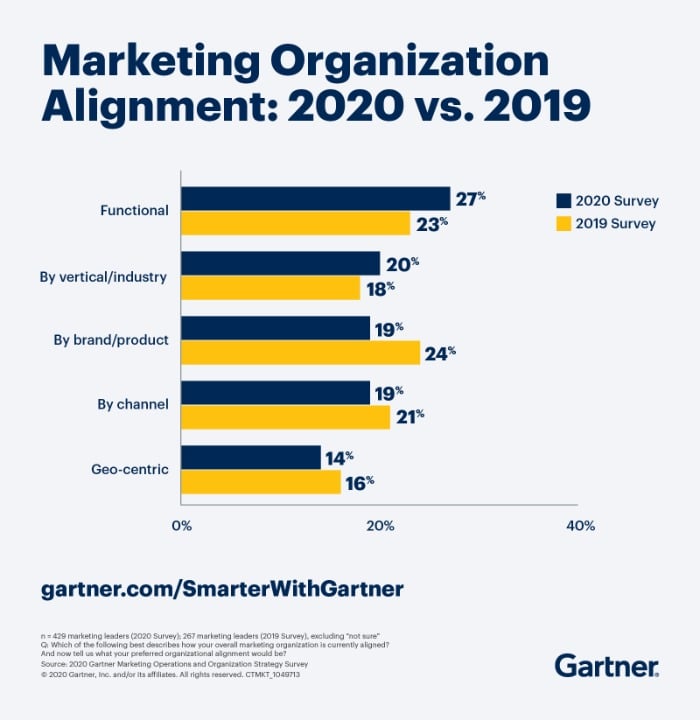
Marketing Organization Structure - Gartner survey

Why a Marketing Organizational Structure Is Important

Setting up a structure benefits your company in multiple ways, empowering employers, allowing better focus, and enabling agility. Let’s look at this in more detail.

Improves Agility

Today’s businesses need to be agile. Agility is essential in fast-changing sectors, allowing your team to enhance efficiency, prioritize workloads, create relevant products, and allocate budgets more effectively. It also makes it easier to shift when technology, trends, or Google’s Algorithms change.

Agile marketing is increasing in areas like content creation and creative services, with 77 percent of businesses taking this approach.

Empowers Your Employees

If you want your business to succeed, you need the best people for the job. A functional marketing organization structure groups your team based on skills, ensuring you have the right person for each job and they have the support they need.

When employees are in positions that fit their skills and the support they need, they are empowered to succeed—which improves loyalty and your bottom line.

Improve Employee Focus

When employees have clear goals, it’s easier for them to concentrate on their tasks. When every employee on the marketing team is working with the same focus, it streamlines the process and enables collaboration.

Additionally, focus keeps team members engaged. This is crucial because, according to Gallup, engagement increases productivity by 18 percent. Further, it increases profitability by 23 percent, while decreasing absenteeism by 81 percent.

5 Types of Marketing Organizational Structures

There are several types of marketing organizational structures. Each model has its own advantages and disadvantages, which we detail in this section. Keep in mind what works well for your business may not be suitable for someone else.

A company’s structure depends on its size, products, customers, and type. Below, we’ll cover the most common systems and who should consider using them.

1. Functional Marketing Organizational Structure

A functional marketing organizational structure describes a company’s design and is built around the marketing functions it has to perform. As detailed in the intro, research by Gartner shows 27 percent of marketers use this model.

The functional structure allows for clear communication and cooperation between different departments. It also makes it easy to identify and assign specific tasks to individual employees.
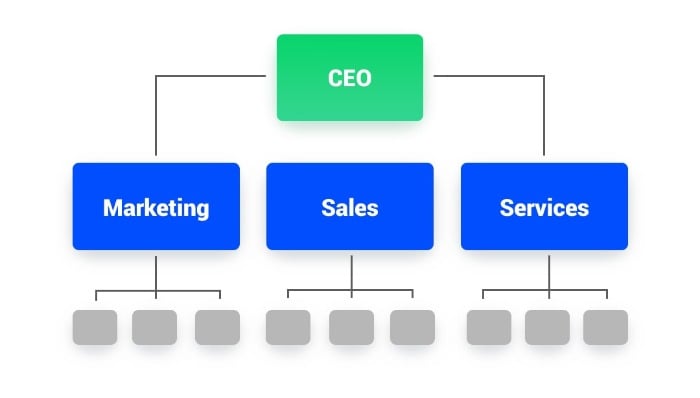
It looks like this:

Types of Marketing Organizational Structures - Functional Marketing Organizational Structure

This type of structure allows for greater specialization and expertise within the marketing function, leading to improved efficiency and effectiveness in marketing operations.

Amazon uses this structure for its e-commerce business because it’s well-suited to the sector. Additionally, the functional marketing organization structure is favored by larger organizations and is ideal for companies with a stable environment.

Despite the positives, this structure can lead to communication breakdowns, decreased creativity, and inflexibility. Additionally, it may be difficult to move people around within a functional frame, potentially impacting the company’s ability to respond quickly to market changes.

Finally, functional structures can be difficult to manage when a business grows too large.

2. Segmented Marketing Organizational Structure

Segmented marketing organizational structures allow firms to tailor their marketing efforts to specific customer segments. For each segment of customers, a different team is responsible for understanding their needs and creating tailored marketing programs.

The structure usually works well for companies with a large customer base and a complex sales process. Businesses can ensure customers are constantly engaged, and it allows the streamlining of communication between different departments.

Additionally, organizations using this model can decide how best to segment depending on their aims and the resulting customer insights.
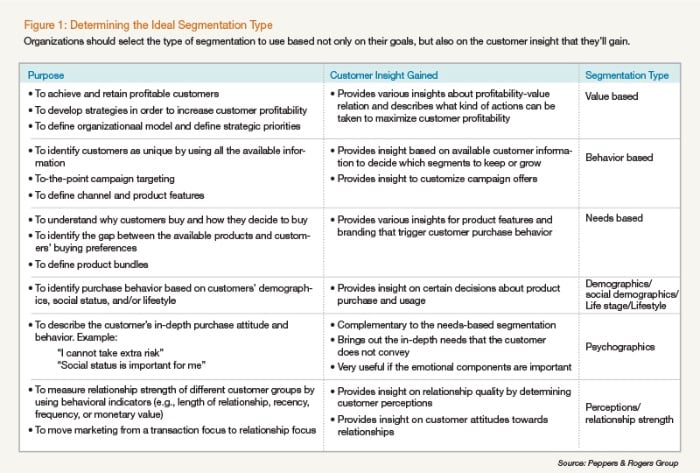
Types of Marketing Organizational Structures - Segmented Marketing Organizational Structure

Advantages of this model include:

  1. Improved customer engagement due to increased focus.
  2. Improved communication and collaboration due to smaller, more focused teams.
  3. Increased efficiency due to specialization.
  4. The ability to spot new trends faster.
  5. Customer trust through relationship building.

However, this structure can also be costly because it requires multiple teams with different skills and knowledge.

3. Product Marketing Organizational Structure

Product marketing teams have a multitude of tasks, including target audience research, content marketing, and analytics. Then there are co-branding partnerships to consider, with research showing 71 percent of consumers enjoy multiple brands working together to make a unique product.

With so much going on, what’s the best way to coordinate? By introducing a product marketing organization structure.

In this model, each group has its team of marketers responsible for developing and executing the marketing strategy for their specific product line. A product marketing organizational structure is the preferred model for businesses with different lines of products/services and looks like this:
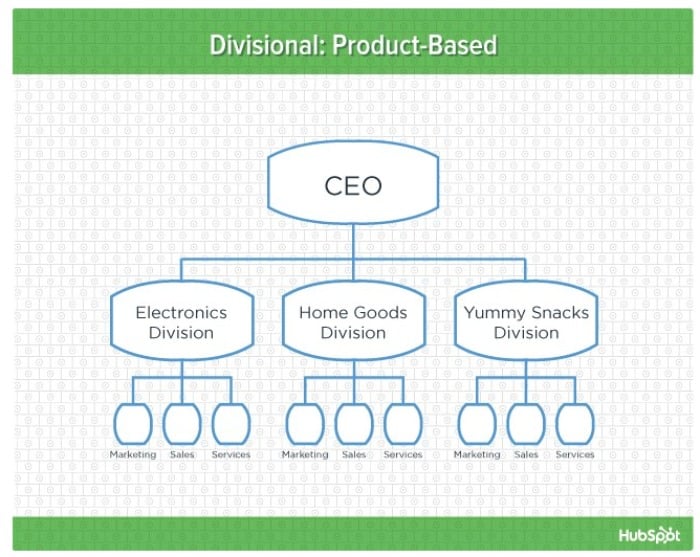
Types of Marketing Organizational Structures - Product Marketing Organizational Structure

This model allows organizations to respond to changing trends and meet customer needs while concentrating on targeted market sectors.

However, it can be difficult to track and measure the effectiveness of the marketing activities due to a lack of central control and duplicate roles in different divisions. To work around this challenge, businesses may consider grouping similar products together.

4. Digital Marketing Organizational Structure

A digital marketing organizational structure is essential for any company looking to create an online presence. If your business has a dedicated team to handle all digital marketing tasks, you can make and implement a cohesive strategy to reach your target audience.

The structure of a digital marketing department varies by company size but often includes a mix of people with various backgrounds and skillsets.

With a digital marketing organization structure, the company can have specialized teams that focus on different aspects of digital marketing, such as search engine optimization (SEO), paid search engine advertising (PPC), graphic design, and content marketing.

This specialization allows each team to become an expert in their area of focus, which leads to better results for the company.

Depending on which model you use, your structure might look like this:
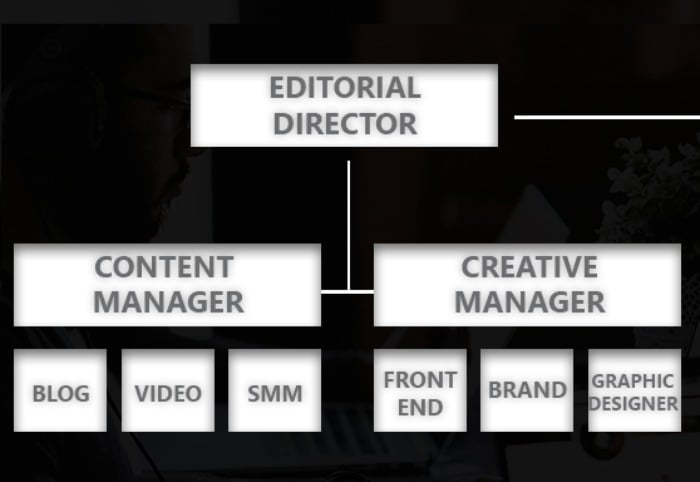
Types of Marketing Organizational Structures - Digital Marketing Organizational Structure

You might also choose to have different organizations for paid versus organic, social versus content, and so forth.

5. Hybrid Marketing Organizational Structure

In today’s business world, companies need to adapt to the ever-changing market. One way to do this is through a hybrid or matrix marketing organizational structure. This structure allows companies to have the best of both worlds by combining the advantages of both functional and divisional systems.

Both of these structures have their advantages. For instance, a functional structure works on a centralized basis, with each department reporting to a single leader. This allows for better communication and coordination between departments.

By contrast, a divisional structure is centralized, with each department having its own head and reports to a different leader. This allows for more local decision-making but can lead to duplication of efforts and coordination problems between departments.

In practice, your hybrid/matrix marketing organizational structure might look something like this:
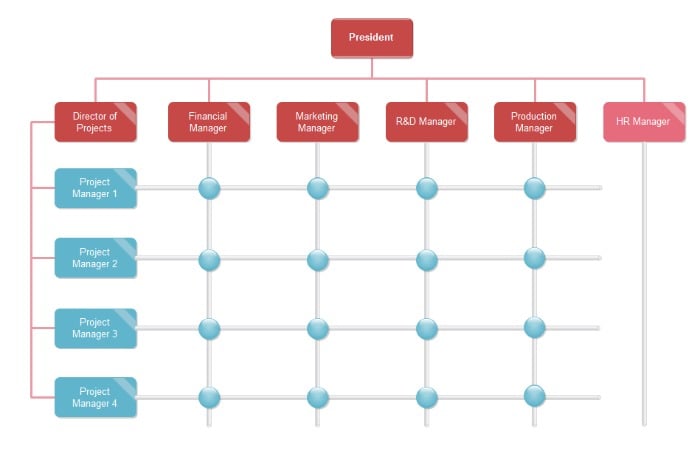
Types of Marketing Organizational Structures - Hybrid Marketing Organizational Structure

The flexibility of the hybrid model means it’s enormously popular among businesses, with 72 percent of employees working in matrixed teams.

A big advantage of a hybrid marketing organization is they tend to be more responsive to changes in the market. Because it is flexible, it can quickly adapt to new conditions.

However, a hybrid structure can lead to conflict between departments or divisions, and it’s sometimes hard for departments to coordinate. Gallup’s research also uncovered a lot of overwhelm with the hybrid model, with 45 percent of employees saying they spend most of their day responding to requests from coworkers.

Companies often use the hybrid model in dynamic environments which move from project to project.

More Tips to Pick an Organizational Structure

The market organizational structures listed above are among the most popular, but there are more you could choose from.

For instance, a linear organization structure is a management style where all employees and managers report to one boss.

Marketing Organization Structure - Linear organization structure chart

This type of organization is common in small businesses and marketing organizations. The linear organization structure is easy to understand and can be effective when the company is small, and everyone reports to the same person.

In a marketing firm, you can use the linear form to control the flow of information from the top down. However, this can also be limiting because it does not allow for horizontal communication among employees.

Finally, projectized organization structures are organizational structures in which specific, temporary projects are given to their departments that report directly to top management. In businesses with high fluctuation in workloads, this type of structure makes it possible to quickly set up and disband project-specific teams as needed.

A typical projectized organizational structure would look something like this:
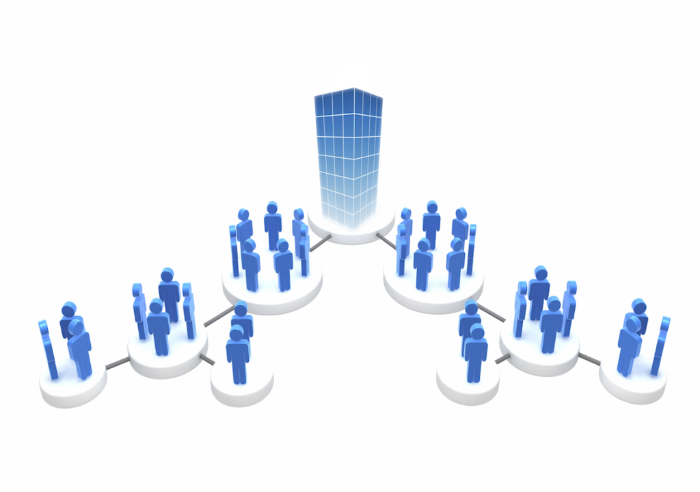
Marketing Organizational Structure - projectized organization

When choosing an organizational structure, think about both your current needs and your future needs. If you plan to launch several products in the next year, for example, it makes sense to create a product-based marketing structure from the start.

Marketing Organization Structures Frequently Asked Questions

What is the best marketing organizational structure for small businesses?

Each business works differently, meaning which system works well for one may not work for another. The linear structure, which has one leader, is the most common. You could choose from several types, including functional, matrix, or divisional.

What is the best marketing organizational structure for B2B businesses?

To keep things simple, consulting firm the Pedowitz Group suggests a basic structure for a B2B marketing organization structure to focus on tasks like content and digital services, digital demand generation, and reporting to a CMO. There is no “one size fits all” structure for a business: you need to begin by looking at your business’s overall aims and current strategy. To guide you, the Edward Lowe Foundation has some great tips.

What is the simplest marketing organizational structure?

The linear structure is the most basic model and the functional structure is the most common and also easy to implement.

How long does it take to set up a marketing organizational structure?

It varies depending on the size of your business, the type of structure you go with, your goals, and your current strategy. It can take weeks or months to get it right, and then you need to review your structure regularly to make sure it works for your goals.

Should I consider freelancers and contractors in my marketing organizational structure?

Yes, consider all options when structuring your team. This includes both freelancers and contractors. Freelancers can be an excellent option for short-term projects or for filling gaps in your team’s skill set. Contractors can be a good option for long-term projects.

Conclusion: Marketing Organization Structures That Fuel Growth

The structure of an organization’s marketing department can significantly impact its overall performance.

The best structure for your business will depend on the products or services you offer, the size of your company, and your geographical location.

Companies should carefully evaluate their options and select the format most likely to lead to success.

Popular choices include the foundational structure, product-based, or a divisional model. Alternatively, you might want to adopt a hybrid model to cater to today’s hybrid consumers.

Do you use a marketing organization structure? Which model works best for you?


from Neil Patel's Digital Marketing Blog https://ift.tt/pLjP8UI
via IFTTT

Social media messaging: how to build a winning cross-platform strategy

9 tips for designing TikTok marketing campaigns (and examples to show them in action)

We have some exciting news: As of today, Sprout Social is partnering with TikTok to launch a first-of-its-kind integration. Sprout users now have the ability to schedule and publish TikTok videos, manage and reply to comments and measure how their TikTok videos are performing compared to other social networks. Learn more here.

Fourteen hours. That’s the average amount of time TikTok users spend on the app each month.

With engagement like this, the network is quickly moving away from the fringes of the social media landscape and into the center of forward-thinking brands’ strategies. Between its rapidly growing global user base and its investments in brand features, there are a number of reasons to use TikTok for marketing in 2022.

This article will outline how brands can architect successful end-to-end TikTok marketing campaigns (versus one-off experimental videos) to capitalize on this engagement. We’ll also sprinkle in examples of brands that are already working the network to their advantage and insights from a marketer who has successfully incorporated TikTok into her strategy—Meara McNitt, Social Media Director at Online Optimism, one of Sprout’s agency partners.

@onlineoptimism

have 100% used harry styles lyrics in captions #socialmediamanager #worktoks

♬ original sound – Turbo Wet

Why TikTok marketing campaigns are so valuable

Since its launch in 2016, TikTok (formerly Musical.ly) has grown by leaps and bounds, quickly cementing its place among established networks like Facebook, Instagram, Pinterest and Twitter. The following list of statistics highlights some of the many implications of TikTok’s meteoric rise in popularity and why brands are increasingly jumping on the proverbial bandwagon.

How to plan, build and launch memorable TikTok marketing campaigns

Whether your TikTok campaign is organic or paid, there are three primary phases you’ll go through as you execute it—planning, building and launching. With the right approach and some targeted guidance, you’ll sail through each of these phases effortlessly.

Table showing the steps that go into the plan, build and launch phases of TikTok marketing campaigns

Phase 1: Plan your TikTok marketing campaign

The first step in any marketing campaign, regardless of channel, is to develop a strategy and plan based on research. The following tips will help you get your campaign started on the right foot.

Get to know your audience

Your TikTok analytics page can give you demographic details about your viewers. If you’re new to the network though, you may not have enough data to really draw conclusions. Consider using analytics from your other social profiles (Facebook, Instagram, Twitter, etc.) to make sure you have a grasp on who makes up your audience and what they are looking for. You might also consider scoping out your peers or competitors to get a look at what they are doing and what seems to be resonating with their audiences.

“A critical lesson I’ve learned from running TikTok campaigns is to try everything,” says McNitt. “Understanding your target audience and using that information to create content that you think will work is still a good place to start.”

Being featured on the For You Page is a badge of honor among TikTokers. But for brands, getting there requires a deep understanding of what people are looking for from the app. This is a great forum to attract new followers, but creating relevant and compelling content is the first step.

Brand example: Gymshark, a workout wear brand, uses their casual and relatable brand voice on TikTok to post content that empowers their core audience—fitness buffs. They’re not trying to appeal to everyone, but people who spend time in the gym get their inside jokes and rally around the motivational videos they post.

Research trends

“While other social platforms require adaptability in order to share the latest information from your company, TikTok also requires you to stay up to date on the latest memes and trends so you can incorporate them into your content,” McNitt notes.

One way to keep current is to regularly investigate the Discover feed, represented by a magnifying glass in the app. Here, you’ll find a sampling of TikTok’s latest trends and example videos you can use for inspiration. You can also use the search bar to dig into any trending creators, videos, sounds or hashtags you run across.

Staying engaged in the app as a user and following major influencers is another best practice that helps to ensure you keep tabs on the latest trends. “Don’t scroll as the brand page—scroll as a regular consumer and keep yourself rooted in that perspective rather than an advertiser’s perspective,” McNitt advises. “Remember that the people you are marketing to are experiencing the platform the same way you do on your personal account, and they’re scrolling for leisure, not business.”

Brand example: Nando’s, a UK-based restaurant chain, is known for using trending audio that (on the surface) has little to do with food. By adding context and a healthy dose of humor, they promote their menu items while making popular audio snippets their own.

Consider trending and branded hashtags

Whether branded or trending (or a combo), hashtags can help your TikTok campaigns resonate with existing and new audiences. They help to categorize content, making it easier for creators and users alike to find what they need. TikTok hashtags are also clickable, making it super easy to fall into a rabbit hole of related content, should you wish.

Some hashtags are especially popular on the network, and are thus ripe for brands to pick up and use. Keep in mind that, with extreme popularity, these hashtags also come with heightened competition. They’re typically pretty self-explanatory, but doing a quick search can help you generate ideas to contribute to these campaigns if you’re stumped.

Some notable hashtags you might co-opt include:

  • #TikTokCringe
  • #duet
  • #TikTokDance
  • #motivation
  • #goal
  • #BehindTheScenes
  • #FlipTheSwitch
  • #lifehack
  • #LearnOnTikTok
  • #HowTo

With branded hashtags, brands can encourage users to create original content or interact with the company in specific ways designed to increased engagement.

Brand example: Levi’s, a denim-focused fashion brand, took advantage of the popularity of cleaning videos on the network (if you’re unaware, check out #CleanTok for more) with its first hashtag #CleaningHacks while also dropping a branded hashtag, #LiveInLevis. These hashtags have racked up over 5 billion and 772 million views, respectively, as of May 2022. Search through the latter tag, and you’ll find a compelling mix of user-generated content as well as branded content posted by Levi’s itself.

@levis

Reply to @tollhouse11 No donuts, lattes or denim were harmed in the making of this video. #cleaninghacks #liveinlevis

♬ original sound – Levi’s

Phase 2: Build your TikTok marketing campaign

Now that you’ve planned out your marketing campaign, you’re ready to start building. While there are many techniques available for branded campaigns, the following are the most useful for new and experienced TikTok marketers alike.

Use TikTok Shopping

Especially for product-based brands, TikTok Shopping features can be a great way to expose your audience to your goods, whether directly in your videos or on your profile’s product showcase tab. Choose to showcase your inventory with product tags on in-feed videos, LIVE shopping or your product showcase tab.

TikTok has already proven to be a venue where consumers are happy to spend their discretionary dollars. One study found that TikTok shoppers are 1.7 times more likely to purchase products on the network versus other social channels. Videos using the hashtag “TikTokMadeMeBuyIt” have more than 12 billion views (as of May 2022), with creators sharing everything from small impulse purchases to larger investments. This organic partnership between brands and creators is, in many ways, unique to TikTok—a phenomenon the network has coined “community commerce.”

Partner with creators and influencers

Brands teaming up with influencers is a network-agnostic practice, but on TikTok, it’s often the rule rather than the exception. And it’s not for nothing as these collaborations boost brand recall, view rates and engagement.

If you’re not sure where to start, consider diving into the TikTok Creator Marketplace, where you’ll get a directory of influencers and be able to view specifics and stats about each to find the perfect fit for your brand or product.

Brand example: For the introduction of its new Brow Microfilling Pen, Benefit Cosmetics launched a campaign aimed at increasing awareness of the product. To expand their reach, they turned to the TikTok Creator Marketplace to find Gen Z and Millennial influencers that aligned with the brand’s values. They narrowed their search by using the marketplace’s filters for age, gender and content categories. The campaign’s 22 videos (about 4.5 minutes of creator content) showcased the product’s benefits through the lens of each creator’s unique perspective. The campaign earned more than 3,500 hours of views and 1.4 million impressions.

Try out creative effects

Interesting effects have long been part of TikTok’s appeal. Some popular effects you may have seen on the network include “Duet,” “Green Screen” and “Time Warp Scan.” To make it even easier for brands and creators to apply these effects to their campaigns, TikTok recently created its Effect House, a platform where anyone can build Community Effects and make them available to other users.

When brands leverage these effects and promote them via ad campaigns, TikTok refers to them as “Branded Effects.” At the moment, only brands that have been invited to participate can take advantage of this program, but TikTok says it will expand the program soon.

Brand example: NOS, a Portugal-based communications and entertainment company, created a Christmas-themed snowglobe effect under their #OMeuNatal campaign. The brand saw more than 33 million video views and their Branded Effect garnered 36,000+ total plays.

@afonsantos

Partilha o Natal com quem mais gostas! Feliz Natal 😄 #OMeuNatal

♬ Can’t help falling in love – Haley Reinhart

Phase 3: Launching your TikTok marketing campaign

Once you’ve launched your TikTok marketing campaign, your work is not over. It’s important to stay on top of audience engagement and keep track of how the campaign is performing.

Engage meaningfully with your audience

If you just launch your campaign but don’t maintain its momentum by interacting with your followers, you’re missing out on a huge opportunity. Be authentic, stay consistent in your brand voice and values, and humanize your account, if possible. TikTokers want to engage with real people.

If users are commenting on your videos or otherwise interacting with them, it is critical that your brand has a presence in the conversation.

Screenshot of how to reply to TikTok comments in Sprout Social

“On TikTok, you typically need to put a face to your brand, rather than relying on graphics and text,” McNitt says. “Making sure you look authentic to TikTok without being too deceptive is also key.”

Amplify user-generated content (UGC)

Another aspect of engagement comes in the form of user-generated content, often triggered by a branded hashtag campaign.

Brands can optimize on this activity by engaging with these users and sharing their content on the brand’s page. One study found that 72% of participants were more likely to trust customers’ reviews over brand-produced content. And UGC converts five times more than non-UGC.

“While it can certainly drive conversions, TikTok is a key platform for encouraging word of mouth and consumer endorsement,“ McNitt notes.

Brand example: JIF peanut butter used a branded hashtag campaign (#JifRapChallenge) and a partnership with rapper Ludacris to encourage UGC. The campaign asked JIF’s community to “Duet” a branded rap with Ludacris — with a spoonful of peanut butter in their mouths.

@tiktokbrownchick

#ad #duet with @ludacrisdtp didn’t know @jif peanut butter could give my flows this much ✨umph✨ y’all gotta try this out #JifRapChallenge

♬ #JifRapChallenge – Ludacris

Measure campaign success

“Measuring conversions from TikTok campaigns can be challenging, because you might not see many direct paths of users seeing an ad, swiping up, and making a purchase,” McNitt says. “Keep in mind that this platform excels at driving brand awareness, and it will be better to watch for correlation between flight dates, views, and sales.”

As with any campaign, keeping track of its performance is critical. Getting the data you need to be nimble throughout the duration requires the right tools. With Sprout’s new TikTok integration, marketers can zoom in on the most relevant metrics to quickly analyze and optimize their video performance. Teams have the option of seeing all their TikTok metrics in one place, comparing TikTok posts against other networks’ and digging into TikTok campaign effectiveness.

Screenshot of a report in Sprout Social showing a brand's top TikTok posts by engagements

Conquer your TikTok marketing campaigns

As TikTok continues to gain popularity, brands are flocking to the network to expand their reach and engage new audiences. But the strongest social campaigns are more than one-and-done, overnight pet projects.

Ready to start or refine your TikTok marketing campaigns? Learn more about how Sprout’s TikTok integration can help you organize and grow your end-to-end video strategy across social networks with video scheduling, comment management and presentation-ready reports.

The post 9 tips for designing TikTok marketing campaigns (and examples to show them in action) appeared first on Sprout Social.


from Sprout Social https://ift.tt/2xqbT48
via IFTTT

Wednesday, 25 May 2022

25 Ways To Drive More E-commerce Store Traffic Without Buying Ads

25 Ways To Drive More E-commerce Store Traffic Without Buying Ads

It’s no secret that e-commerce is here to stay.

With more consumers shopping online than ever before, retailers must work hard to get noticed.

What if you don’t have the budget for ads? Are you doomed to fade into the online abyss?

Absolutely not.

Over half of consumers prefer to shop online. Great news for online retailers like you, right?

With the growth of online marketplaces and hoards of choices available to consumers, it’s tough to get the attention you need to drive traffic and revenue.

Today, I’ll share 25 e-commerce tips to get more visitors to your site—without spending a dime on paid ads.

Best of all, many of these tips are easier to implement than you might think.

What Are the Benefits of Using Non-Paid Strategies to Increase E-Commerce Website Traffic?

Many marketers focus on paid e-commerce strategy because they think it’s the only way to outshine the big brands, but that isn’t always the case.

With 95 percent of website traffic hitting the first page of Google, all the traffic you could hope for is there, waiting.

One of the most obvious benefits of non-paid e-commerce strategies is you don’t need to invest money to drive traffic. You’re not trading dollar-for-dollar; instead, you’re trading time or resources for sales.

Another benefit is focusing on non-paid traffic means building a better, easier-to-use website. According to a study done by Amazon Web Services, 88 percent of online shoppers won’t return to a site they had a bad experience on.

With all the options for e-commerce shopping, why would they?

We’re completely inundated with options. The threshold for mistakes and user experience problems is getting lower and lower.

Finally, thinking outside the box helps build a real business with long-term potential.With paid ads, as soon as you turn off your budget, your traffic will plummet.

SEO, email marketing, and on-page experience are long-term strategies that pay off over time.

25 E-Commerce Strategies to Drive Traffic (Without Paying for Ads!)

Overall e-commerce sales have grown steadily year after year and show no sign of slowing down. By 2025, e-commerce sales could hit nearly 7,400 billion dollars. If you’re having trouble getting the traffic you want, there are tons of opportunities to get a piece of the pie.

Here are some e-commerce tips you can implement today to get more traffic to your site.

1. Start a Referral Program

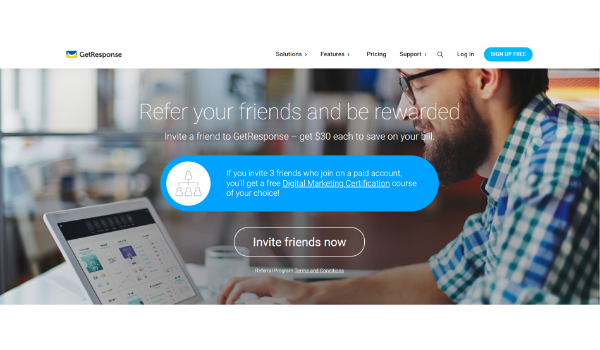
Leads that come from referrals convert at a 30 percent higher rate than any other marketing method. If you don’t have a referral program for your e-commerce store, it’s never too late to get started.

Keep in mind, it doesn’t have to be elaborate.

E-Commerce Strategies to Drive Traffic - Start a Referral Program

Take GetResponse, for example. You get a $30 account credit for every person you refer to the software.

Offer something of value to existing customers for every customer they bring to you; it’s as simple as that!

To get started, find a referral program platform, then use these tips to drive sign-ups.

2. Build Out Your Blog

Google controls more than 92 percent of the search market, which means if you want traffic, you need to invest in SEO. Investing in a blog and delivering valuable content is one of the best e-commerce tips I can offer.

Start producing content regularly whether you have to hire someone or write everything yourself. I’m definitive proof that this strategy works.

If you don’t currently have a blog on your e-commerce website, starting one is easy. Most e-commerce platforms like BigCommerce and Shopify have built-in blogging templates to help you get started.

3. Improve the On-Page Experience

Google makes it crystal clear that the on-page experience is one of the most important factors they look at when determining whether a site should rank.

On-page experience refers to (but is not limited to):

To use these e-commerce tips, start by running the reports linked above. Google will offer you tips and strategies to improve your on-page experience.

Improving these factors helps increase your e-commerce traffic because your site looks better in Google’s eyes, and it’s easier for users to navigate, which keeps them coming back.

4. Build an Email List

Repeat customers spend 67 percent more than new customers—and one of the best ways to bring them back is by building an email list.

Why?

You’ve already established trust with them, and they know what you have to offer.

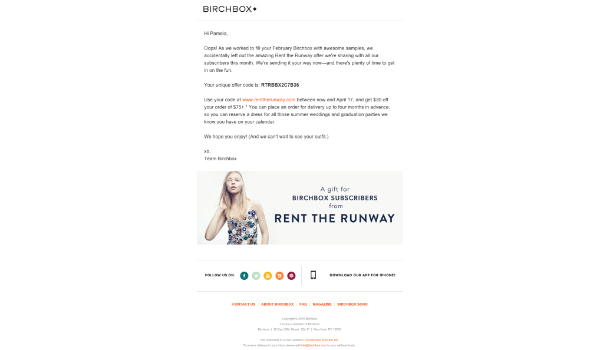
Take a look at this example from Birchbox:

E-Commerce Strategies to Drive Traffic - Build an Email List

Offering a unique promo code encourages customers to return and makes the offer feel exclusive and like they’re getting something that isn’t available to everyone.

To build an email list, try these strategies:

  • Offer a small discount (10 to 15 percent) for users that sign up for your email list.
  • Make your list feel exclusive by promoting new products only in your email list.
  • Post teasers about an upcoming email announcement on social media to encourage followers to sign up.

5. Retarget Email Subscribers

Once you’ve built out an email list, you’ll want to retarget users based on onsite behavior. Retargeting, in this case, means sending an email to someone who has shown interest in your business but didn’t take the action you were hoping for. (It can also be used for paid ads, but in this case, we’re covering non-paid strategies.)

Abandoned cart emails are one of the most effective ways to leverage email retargeting. In fact, they’re responsible for recovering nearly 30 percent of abandoned carts.

You can also send current customers suggested products related to a previous purchase. As we already covered, it’s easier to go after customers you already have than find new ones.

Here’s a quick guide to retargeting your email subscribers:

  • Look for ways to retarget users in your email marketing platform. For example, MailChimp has a retargeting email guide that walks its users through the process.
  • Implement the easiest retargeting campaigns first. Generally, abandoned cart emails and recommended products are easy wins.
  • Test other retargeting campaigns to see what works. For example, ask for reviews a week or so after purchase or suggest a new collection.

6. Optimize Your CTAs

Only around two percent of your web traffic will convert on the first visit, so capturing email addresses through your CTAs is crucial.

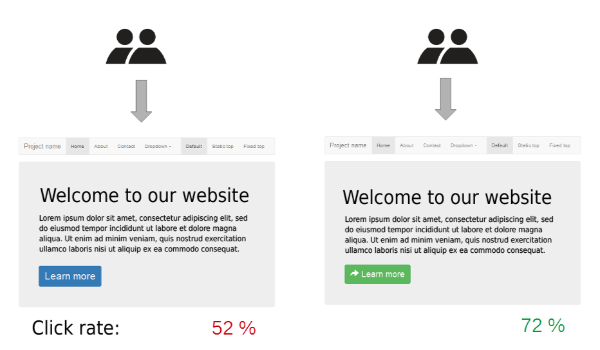
You need to experiment a bit to see what works. Even something as simple as the color of your CTA button can make a difference.

E-Commerce Strategies to Drive Traffic - Optimize Your CTAs

For example, Performable found that switching their CTA button from green to red boosted their conversion rate by 21 percent.

Try different CTA buttons and phrasing to see what works and test them side-by-side using A/B testing.

Don’t stop at colors, though. You can also test your CTA’s:

  • copy
  • placement
  • font type/size
  • including images
  • landing page
  • Offer

7. Improve Your Checkout Process

Nearly 70 percent of people abandon their cart. This can be due to hidden fees, shipping costs, too many steps, and a poor overall experience. The best e-commerce tips build on what you’re already doing, and the checkout process is a great place to start.

While people are more comfortable than ever shopping online, they also have high expectations for the process. How do you improve the process? Here are a few tips:

  • Get rid of hidden fees and be upfront about pricing.
  • Share shipping fees early in the process.
  • Limit the number of clicks to convert.
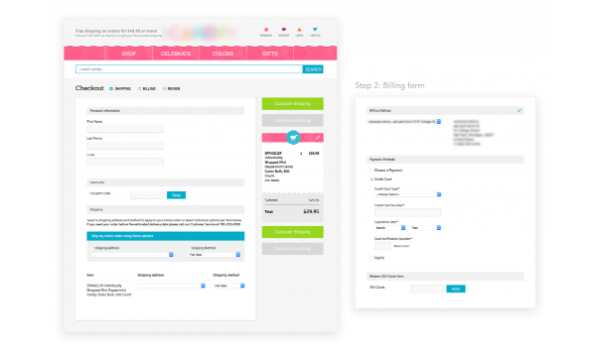
E-Commerce Strategies to Drive Traffic - Improve Your Checkout Process

Scandiweb did a great case study of the steps to improve their checkout experience. You don’t need to go nearly this far, but it’s a smart e-commerce strategy to implement no matter how big or small you decide to make it.

8. Develop a Rewards Program

A white paper by Altfeld shows that when selling to an existing customer, the probability of closing that sale is as high as 70 percent.

What’s the most effective way to bring customers back? Loyalty programs!

Rewarding customers for returning and doing business with you again is a brilliant and timeless strategy.

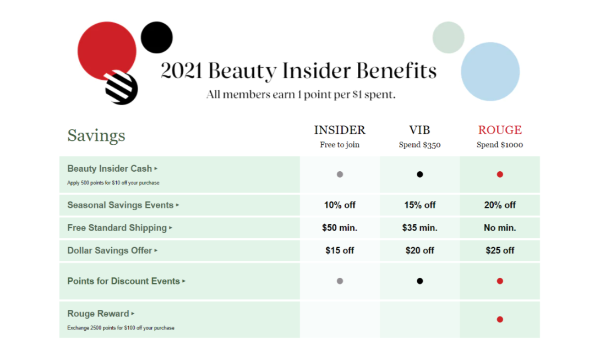
Take Sephora for example.

E-Commerce Strategies to Drive Traffic - Develop a Rewards Program

For every dollar spent, you earn one dollar in rewards. The more you spend, the more rewards you’re eligible for, including discounts and free shipping. It’s so simple when it’s broken down this way, but the hard part is coming up with a smart rewards program.

To set up an effective rewards program, you’ll want to:

  • See what your most profitable customers have in common (location, products, interests, etc.)
  • Look at data to see what drives purchases. This will help you set up a reward program. Do they like free shipping? Discounts? Access to new product lines early? Use a survey to ask customers if you aren’t sure.
  • Look for e-commerce reward and loyalty tools and plugins to implement your program.

9. Add Internal Links to Your Site

I’ve mentioned SEO already, but this step focuses on internal linking within your e-commerce website. How can this improve e-commerce traffic?

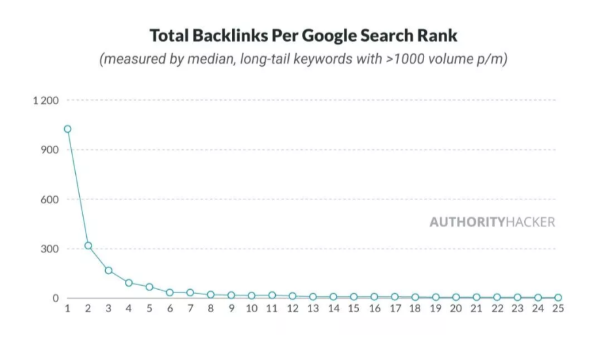
Sites without proper internal linking don’t rank as high as those with a solid link-building strategy.

E-Commerce Strategies to Drive Traffic - Add Internal Links to Your Site

By creating a web of links on your site, you’re telling Google that you are an excellent resource for what people want to buy and you’re a wealth of knowledge in whatever niche it is you sell in. That will improve the user experience while also improving your worth to Google.

Here are a few tips for adding internal links:

  • Identify hub pages—these are important pages you know your users want to see. Add links where it makes sense that point to these pages.
  • Link to related products on your product pages. If you sell tents, link to other camping gear, for example.
  • Use “breadcrumbs” in the navigation to help users quickly navigate back to core pages.
  • Use easy-to-understand anchor text, like this: Here’s more information about internal linking best practices. It’s clear what you’ll get if you click the highlighted text.

10. Get Active on Social Media

Ninety-one percent of people read at least one review before making a purchase. Where is a great place to get a lot of customer reviews?

Social media, of course.

Are you using social media to drive traffic to your e-commerce store?

Are you using it as a place for customers to land if they have something positive or negative to say about your business?

You should be doing both things because it helps show customers that you’re a real business with real people and not just some brand.

Here’s how to build a social media strategy for your e-commerce business.

11. Incorporate Chat on Your Website

You need to be there for your customers. Sixty percent of people want to connect with someone during the sales process.

Remember that one time you were in a brick and mortar and wanted help finding something, but you walked around and couldn’t find anyone to help you?

How did that make you feel? Unimportant?

As people turn to e-commerce, they expect to have the same customer service experience they get in person. That means you need to be available to answer questions and assist throughout the sales process.

There are plenty of live chat software to make this process simple. Leveraging chatbot automation, which answers common questions before connecting users to a live person, can also make it more affordable.

12. Focus on Value Upfront

Your e-commerce strategy cannot revolve around you asking your customers to do things without making them feel like they’re getting the most for their time and money.

A great example of this is email marketing. We all know we need a lead magnet if we expect anyone to give us their email, right?

We’re getting to a point where just offering a product isn’t enough to make a sale.

You need to offer free shipping, free trials, fast shipping, bonus offers, and handwritten letters to drive sales.

Whatever you decide to offer, make sure it’s clear what you’re offering upfront so people can see the value before they click to buy.

This also extends to other areas of your site, such as:

  • product pages
  • landing pages
  • CTAs
  • social media posts

13. Improve Your Product Pages By Focusing on Benefits not Features

You could be losing a lot of money due to poor product descriptions.

Want to know an easy fix?

As you write about a feature, think about the benefit for customers and center that in your copy.

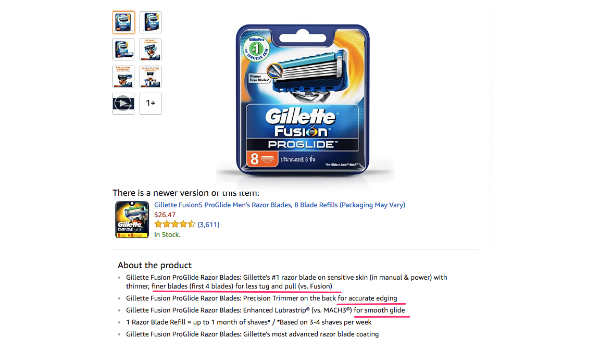
Look at this example from Gillette:

E-Commerce Strategies to Drive Traffic - Improve Your Product Pages by Focusing on Features

Every feature is tied to a benefit.

They don’t just explain what it does. It’s a razor, we know what it does, but they explain how it will make you feel.

Here are a few other ways to improve your product pages:

  • Cut the clutter so users can easily focus on what matters.
  • Use clear, concise calls to action to tell visitors what to do next.
  • Check your page speed.
  • Use high-quality product photos.
  • Add social proof to build customer confidence.

14. Implement Video

Eighty-seven percent of video marketers say that video helped increase e-commerce traffic to their website.

I could do an entire guide on video e-commerce tips because that’s how important it is right now.

If you’re not embedding videos into your product pages, you’ll want to start right now.

15. Add User-Generated Content

As much as 80 percent of people say user-generated content impacts their purchasing decision.

E-Commerce Strategies to Drive Traffic - Add User-Generated Content

User-generated content can be as simple as taking an image of a product in use that a reviewer left and putting it on your website.

People are more likely to trust you when they see other people enjoy your products. Here are a few other ways to leverage UGC:

  • Add reviews to product pages.
  • Create a branded hashtag and ask users to share their favorite products.
  • Embed product pictures from users at the bottom of your website.

16. Understand Customer Personas

If you don’t know what a customer persona is, you could miss out on one of the simplest e-commerce tips.

What is a buyer persona?

It’s essentially a representation of your customer. What do they do? How do they act? How do they think? What makes them click?

If you don’t have a specific avatar that you’re marketing to in your e-commerce business, you’re potentially leaving money on the table.

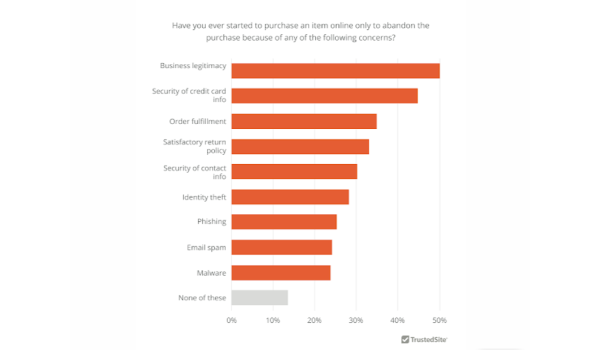
17. Use Trust Signals

According to TrustedSite, lack of business legitimacy causes 50 percent of cart abandonments.

What are we talking about when we say legitimacy?

E-Commerce Strategies to Drive Traffic - Use Trust Signals

Trust.

As someone works through the purchase process, they might start to feel uneasy. Are you a real site, or a scam? Is the quality going to match their expectations?

How do you avoid mistrust?

Add trust signals to the process. These include:

  • badges
  • third-party verifications
  • customer reviews
  • testimonials
  • HTTP

Adding a video of yourself or someone in the business is another great way to show customers you’re a real business.

18. Offer Free Shipping

Here’s a stat that could drastically change your e-commerce revenue: 66 percent of consumers expect free shipping on every single online purchase.

These people expect you to pay the cost of shipping their products no matter how much they spend. You can thank Amazon for that.

That said, offering free shipping isn’t the revenue buster you think. As an added bonus, if you do everything else right on this list, you’ve likely secured yourself that customer.

There are a few ways to make free shipping work for you:

  • Up your prices to cover the shipping cost, then make it “free.”
  • Offer free shipping as a loyalty program reward.
  • Ask for an email address in exchange for free shipping.
  • Offer free shipping only for purchases over a certain amount.

19. Keep User Data Safe (and Make Sure Your Customers Know It)

This e-commerce tip goes hand-in-hand with trust signals, but it’s important on its own.

E-commerce sites collect a lot of data about their customers, including onsite actions, banking or card information, addresses, and potentially even social security numbers on your website.

What are you doing to protect this information?

Here are a few ways to keep your customer’s information safe:

  • have an SSL certificate
  • track all orders
  • require strong passwords
  • make sure your data storage is encrypted

Make sure you let your customers know that you’re doing all of this. When asking them to input sensitive information, include all the steps you take to protect their data.

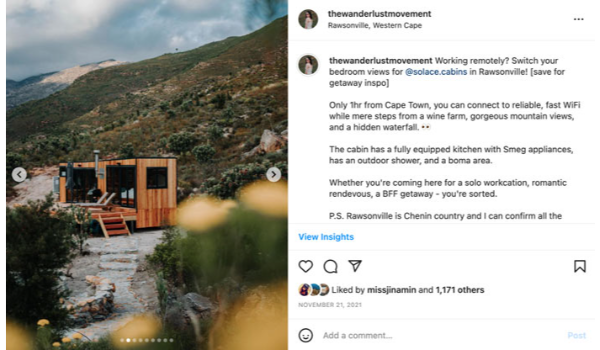
20. Use Influencer Marketing

Influencer marketing is when you pair up with another brand or influencer to help them promote your products.

We see this frequently on platforms like Snapchat, TikTok, and Instagram.

E-Commerce Strategies to Drive Traffic - Use Influencer Signals

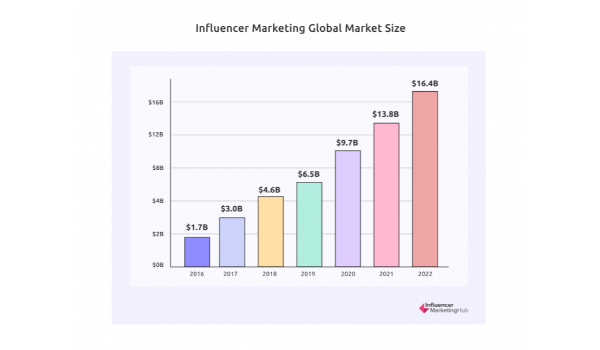
With the influencer marketing market growing to 16.4 billion in 2022, the potential is there.

Start reaching out to influencers in your niche and see if they sell endorsements. Send them free products to test out.

Dan-Os Seasoning is a great success story on TikTok, and now influencers all over the platform are using it in their cooking videos.

21. Research, Test, and Pivot

At this point, you’ve read through 20 e-commerce tips; all of which will help you drive more traffic to your site and convert at a higher rate.

If you want to succeed, you need to implement these strategies. However, not all strategies will work for every brand. Or they might work, but with a different approach.

For example, an e-commerce fashion website might get better results using influencers than a B2B manufacturing e-commerce company.

The only way to know is to research, test, and pivot. If something doesn’t work for your audience, try something new. It’s the only way to keep growing.

22. Create a Sense of Urgency

Visitors who leave your site without purchasing rarely complete the sale.

Urgency offers a compelling reason to complete the purchase now.

Maybe it’s “Act now! Quantities are low!” or “Buy now for free shipping!” or “This is a limited time offer!”

You can approach it from various angles, as long as the feeling of “don’t miss out on this” is created with your visitor.

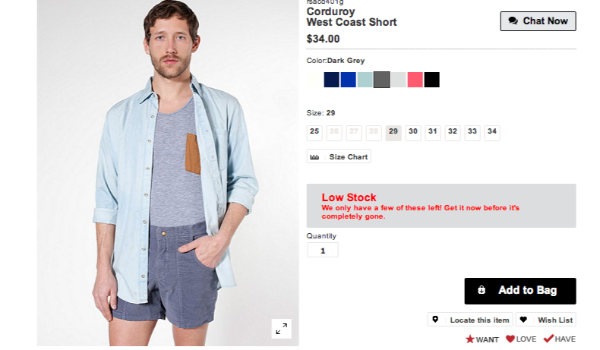
Look at this example from American Apparel:

E-Commerce Strategies to Drive Traffic - Create a Sense of Urgency

Right there in red font, they warn shoppers that they are about to run out of this item.

There are so many ways to create urgency through exclusivity and FOMO, including:

  • Use popups to show other users who have made purchases.
  • Send “last chance” emails.
  • Add a shopping cart timer.
  • Display limited stock (like American apparel.)

23. Upsell the Customers You Have

Many smaller e-commerce stores ignore one of their arsenal’s most accessible selling weapons: upselling.

There is a false impression that it isn’t worth the effort, but that’s not the case.

Upselling can increase average order value, which adds up over time.

The very first year that Amazon tested upselling on their platform, they increased sales by 35 percent.

Here are a few ways to increase upsells:

  • offer related product sections on product pages.
  • suggest products on the checkout page.
  • offer free shipping for orders over a specific amount, say $25 or $50

24. Launch New Products

According to Nielsen, 63 percent of buyers like it when manufacturers offer new products. What does this mean for you as an e-commerce store owner?

You need to launch new products and make innovations in your industry regularly. The best e-commerce tip I can offer you is to focus on making a difference for people.

See what the competition is doing and figure out ways that you can take it to the next level.

If you don’t manufacture your products, there are still ways to innovate.

For example, if you’re selling home improvement products, perhaps you could find a way to bundle multiple items together? You could even create a bundle subscription box.

25. Spend Your Money Elsewhere

While this whole list of e-commerce tips focuses on how “not” to spend money, perhaps you could take whatever you would spend on paid ads and spend it somewhere else.

Spend it on outsourcing high-quality blog content, SEO strategy, or influencer marketing.

Every business should have a marketing budget regardless of how big or small it is. If you’re currently spending money on paid ads, think about what else you could do with that budget and experiment with other paid options.

E-Commerce Tips Frequently Asked Questions

How can I increase my e-commerce website traffic quickly?

Social media and influencer marketing are the two fastest ways to get more e-commerce traffic. Other methods like SEO are more of a long-term solution.

What percent of my e-commerce traffic should be from non-paid sources?

In years past, organic traffic had some of the highest rates of conversion simply because people are finding you naturally. This means you’re likely a solution to a problem the visitor has. It’s tough to put an exact number on this though because every business is different. However, you can succeed with nothing but paid traffic if your strategy allows for it.

How do I track my e-commerce website's traffic?

There are many ways to track e-commerce traffic. You can use your site’s Google Search Console dashboard as well as tools like SimilarWeb and Ahrefs.

What is organic traffic to an e-commerce website?

Organic traffic is website visitors that find your site without the use of paid advertisements, often by searching on sites like Google or Bing.

Conclusion: E-Commerce Tips

As you read through these 25 e-commerce tips, which ones resonated with you the most? Do you feel more equipped to drive traffic to your store?

The most important thing to understand is that you don’t have to do all of these things perfectly, you just need to gradually implement them to see results.

Figure out what is currently wrong in your e-commerce store and identify the low-hanging fruit. Perhaps you simply need to ramp up blog content or update your checkout process. Most of those changes can be completed in a few days or weeks.

With all of these tips and tricks available to you, the possibilities are endless.

What are some of the ways you boost e-commerce sales without spending money on ads?


from Neil Patel's Digital Marketing Blog https://ift.tt/56sQSo8
via IFTTT

How the Sprout Social Salesforce integration strengthens your team

Have you test-driven the Sprout Social Salesforce integration yet?

If not, you totally should!

There’s a reason why more and more companies are linking their CRMs with social media management tools like Sprout.

Social media and customer relationships go hand in hand. Want to speed up internal comms and uncover valuable customer insights at the same time? Our Salesforce integration empowers your social, sales and support teams alike. That’s a win-win-win!

In this guide, we’ll break down exactly how the Sprout Social Salesforce integration works. We’ll also highlight how the integration streamlines tasks across your entire business.

Why you need to integrate your CRM with social media ASAP

The importance of social media integrations with your business’ tech tools can’t be overstated.

And your CRM platform should be a top priority.

This is especially true as customers rely on social media as a research tool, support channel and place to sound off about brands.

Looking at the top challenges of B2B marketers, the growing need for social media CRM integrations is clear. These challenges include:

  • Engaging buyers at the right time it the right channel (57%)
  • Giving the sales team relevant content to engage target buyers (23%)
  • Dealing with internal data silos and inefficiencies  (17%)

The good news? The Sprout Social Salesforce integration addresses all of the above.

Before we get into the nitty-gritty, let’s dive into some of the key upsides of linking your CRM with your social presence.

Monitor make-or-break moments in the buyer’s journey

CRMs help businesses assist leads and customers on the path to purchase.

And social media is where so many crucial moments happen during that journey.

This rings true for B2B and B2C alike. Let’s assume that the typical B2B buyer’s journey is around eight months. Social interactions are a given for folks doing their homework on a product, right?

Meanwhile, recent research from TikTok describes consumer behavior as an “infinite loop” in B2C. The modern path to purchase is far from linear when people are bouncing between so many channels.

As customers bounce between platforms and content, social media serves as a place to make valuable touchpoints along the way. This includes answering questions and publishing educational content to nurture leads.

The same rules apply to existing customers, too. Data from the 2021 Sprout Social Index™ notes that the majority of people that follow a brand on social media intend to buy from them (or buy again).

Earn (and track) more social sales

The growth of social selling speaks for itself.

Do activities such as customer care and content marketing contribute big-time to closing and retaining leads? Of course.

Still, they’re difficult to track without a CRM.

With integrations like those between Sprout Social and Salesforce, it’s so much easier to attribute sales from social. The ability to quickly answer questions and handoff cases between social, sales and support likewise makes it easier to respond to people quickly.

Gather meaningful customer insights you might otherwise miss

The more info you have about your customers, the better.

Consolidating touchpoints between social media and your CRM gives you a more in-depth understanding of your audience.

Fact: 90% of marketers say data from social enables them to differentiate their brands in the market and stand out from their peers. Also, consider how many people use social media as a place to sound off about brands.

These conversations and activities provide insights for sales and support, including:

  • Sales objections
  • Pain points and challenges
  • Wants and needs
  • Competitor advantages (and disadvantages)

With all of the above on hand, your team can approach leads and customers with a much-needed sense of confidence.

How does Salesforce integrate with Sprout Social?

Here’s a quick snapshot of the Sprout Social Salesforce integration and what you can do with it:

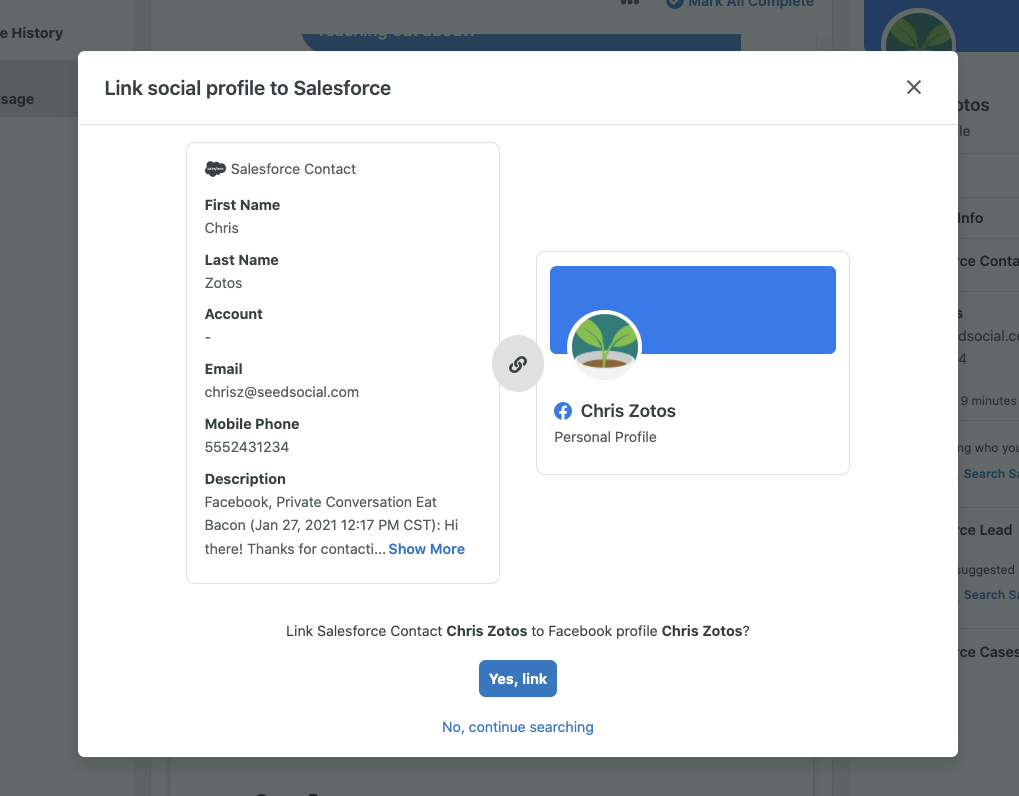
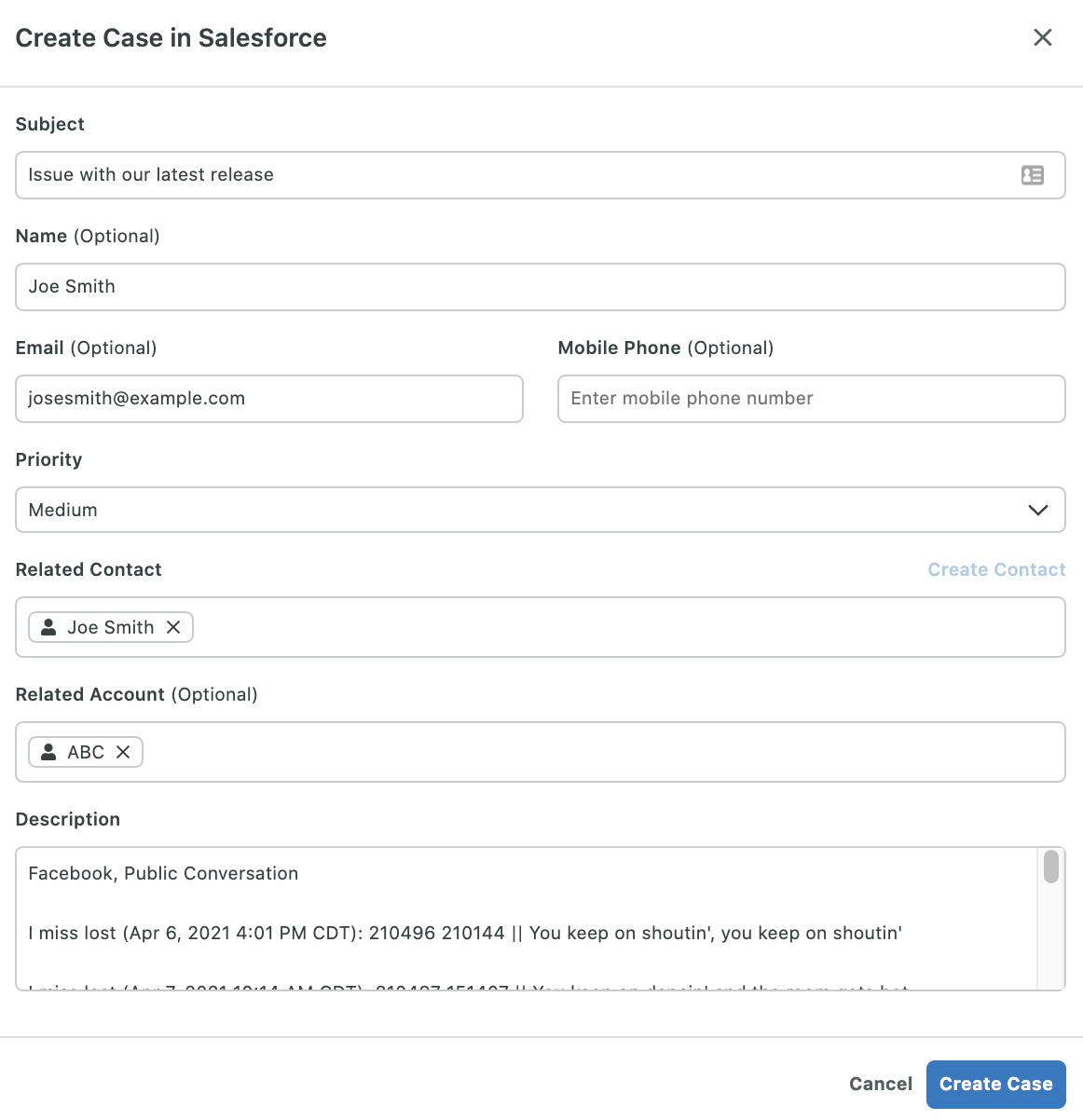
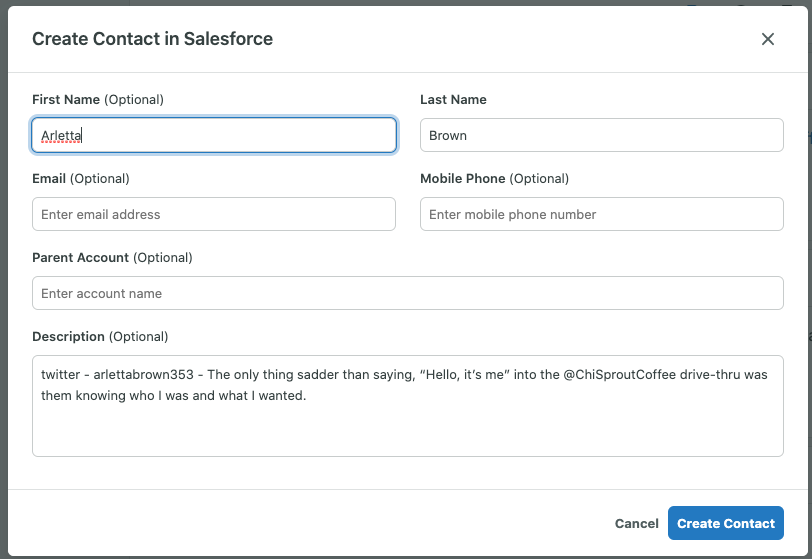
  • Create Salesforce contacts, leads and cases directly in Sprout. This means you can route social customers to support and sales without bouncing between platforms.
  • Paint a complete picture of your CRM contacts with information and conversations via social media.
  • Tie your social presence to actual business results with analytics and reporting.
Sprout social salesforce integration link contacts

As an added bonus, our Salesforce integration is available on all Sprout plans. Features and requirements below:

  • Requirements: Salesforce account
  • Data types: messages, contacts, tickets
  • Key functionality: create leads, edit contact information, create cases, edit cases, auto-sync

What entities are available with the Sprout Social Salesforce integration?

Below is a breakdown of all the entities that can be created and edited directly within Sprout:

  • Leads. Kick off the sales process by identifying potential customers through questions, comments and other social media interactions.
  • Cases. Let’s say a customer expresses a concern or raises an issue on social. With our integration, you can route them to your support team without leaving the platform.
  • Contacts. Beyond customers, you can keep track of social interactions with contacts such as company partners.

To learn more, check out this detailed breakdown.

4 key benefits of using the Sprout Social Salesforce integration

To wrap things up, let’s look at some of the specific benefits of using a Salesforce social media integration like Sprout’s.

1. Provide better customer care

According to the 2022 Sprout Social Index™, there are two specific actions brands can take to earn consumer trust over a competitor:

  1. Respond to questions and concerns in a timely manner
  2. Demonstrate an understanding of customer needs

And hey, our Salesforce integration can help you in both departments.

Again, logging social activity means a more comprehensive understanding of your customers’ wants and needs. Not having to bounce between your CRM and social tools is a huge time-saver. In turn, you speed up your response time.

sprout social salesforce integration case creation

The end result? Answering customers faster and coming up with better solutions to meet their needs. Doing so is a recipe for long-term loyalty and retention.

2. Align your marketing, sales and support teams

Consider that 36% of marketers say they struggle with cross-team collaboration.

When marketing, sales and support are aligned, each team is empowered to do their best work. There’s so much room for error if you only log your customers’ social interactions sometimes.

Think about it. If marketing or sales leaves out key customer details in your CRM, your support team is left in the dark. On the flip side, marketing should be aware of sales and objections and concerns to better speak to customers’ desires.

Here are some specific ways that Sprout’s Salesforce integration can help:

  • Save time by eliminating needless back-and-forths between vendors, managers and social managers
  • Swiftly route cases to avoid bouncing between tools
  • Provide each team the context they need to serve your customers
create a salesforce contact in sprout social

3. Boost the value behind your marketing content

Again, learning what makes customers bounce or stick around is invaluable for marketers.

Tracking these touchpoints can lead to the answers you need to create more impactful content. This includes:

  • Blog posts
  • Social posts (think: how-tos, tutorials and content you share to nurture customers)
  • Reports, white papers and other lead magnets
  • Webinars

Oh, and not to mention making your overall marketing messaging more meaningful.

For example, marketers might learn that high price points are the most common sales objection among lost leads. This information encourages the marketing side to reframe their messaging and how they speak to their audience.

4. More meaningful attribution via analytics

Perhaps most importantly, social integration with your CRM highlights the ROI of your team’s efforts.

This is an ongoing struggle for marketers, in particular. Although social media is a must-have for businesses, determining its business impact can be tricky for businesses.

That’s where Sprout comes in. Through our marketing and analytics features, brands can see how social engagements correspond with dollars and cents. Proving how these interactions contribute to revenue reinforces the value of social to stakeholders.

sprout social salesforce integration attribution

Food for thought: sales strategy is the number one use case for social data, especially as social has more impact on the bottom line. However, only 65% of marketers use social data for their sales strategy.

This speaks to the importance of integrating social with your tech stack and how many businesses still have some catching up to do.

Ready to try the Sprout Social Salesforce Integration?

From customer insights to better service, the upsides of linking your social presence with your CRM are crystal clear.

Thankfully, getting up and running with the Sprout Social Salesforce integration can be done sooner rather than later. Our platform makes it a breeze to beef up your tech stack and bring your team closer together.

If you haven’t already, we invite you to try out Salesforce features for yourself. Oh, and don’t forget to take a peek at our other business integrations to see how else Sprout can level up your company.

The post How the Sprout Social Salesforce integration strengthens your team appeared first on Sprout Social.


from Sprout Social https://ift.tt/6ENQRnJ
via IFTTT