Wednesday at 3:05 p.m. ET was the moment the eye of Hurricane Ian officially made its landfall in the U.S., by hitting the barrier island of Cayo Costa, about 89 miles south of Tampa, according to the National Weather Service. Ian was clocked as a Category 4 with 150 mile-per-hour winds, and, as of this writing, remains a very real threat to the homes and lives of Floridians on the state's west coast.
Here are some examples of the storm's impact, as it appeared on Twitter. If you are in the affected area and you didn't evacuate, we hope you're taking all necessary precautions as you attempt to ride out the storm.
Hurricane Ian batters Cape Coral, Florida
Yeshiva World News reporter Moshe Schwartz tweeted video of Cape Coral, Florida from a spot several stories high, providing a panoramic view of the widespread devastation.
Footage of Hurricane Ian as it hit Fort Myers, Florida
A few hours before landfall, the Weather Channel's Mike Bettes posted a highlight from a video feed showing flooding in Estero Blvd. in Fort Myers Beach, Florida.
Fort Myers, Florida-based weatherman Dylan Federico posted footage from WINK News headquarters, showing a neighborhood almost completely flooded, including at least one car submerged to the roof.
User @itsbethbooker tweeted concerning photos apparently sent by her mother, who was taking shelter on the second floor of her Fort Myers home while the first floor was completely inundated.
Twitter user @llizzarrdd tweeted a video of torrential floodwaters filling the bottom floor and courtyard of a condo building in Naples, Florida. The footage was accompanied by a plea for rescue.
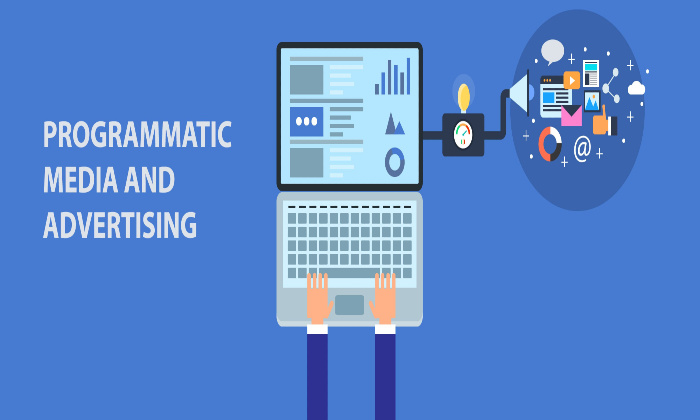
I’m going to go ahead and say it: programmatic advertising is the future. Although it’s a relatively new concept compared with other forms of marketing, spending on programmatic advertising is growing yearly.
Omnichannel marketing, audio and in-game advertising, voice-activated advertising, and 5G are just some of the factors fueling its growth, and they’re going to take programmatic advertising into 2023 and beyond.
Now, enough about the future. What if you’re not so familiar with this type of marketing? How does programmatic advertising work? How are others using it? More importantly, is it right for your business?
In this article, I discuss all of that and more, starting with the basics.
What Is Programmatic Advertising?
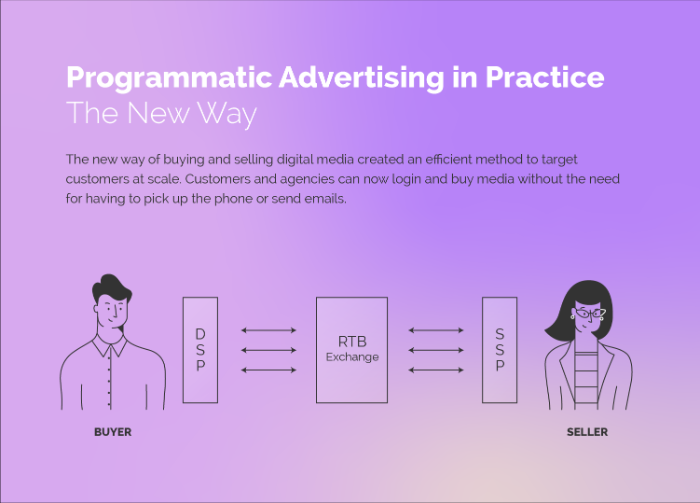
Programmatic advertising is the automated buying and selling of digital advertising space over the internet.
Here’s how it works.
Two main platforms are involved: a supply-side platform and a demand-side platform.
By using programmatic technology, ad space gets bought and sold in real-time through automated auctions on a demand-side platform (DSP). This process happens instantaneously, with the winning ad displayed on the publisher’s website or app. This means that ads can be bought and sold more efficiently and at a lower cost.
When targeting ads, marketers first identify their target audience and then set parameters, such as geographic location, age, gender, interests, etc. They also specify how much they want to pay for each ad view or click.
Aside from the ease of automation, programmatic advertising allows for better targeting of specific audiences. The golden rule with this type of marketing is it only does well if you target the right prospects with your ads.
Programmatic advertising relies on data, meaning marketers can direct their ads to people based on their interests, location, internet searches, or even what they’ve bought before. All this makes the ads more relevant to the individual, and likely results in more clicks and conversions.
For instance, if you’re selling health foods in California, you’d want to target fitness enthusiasts in the area.
Publishers also benefit from programmatic advertising because it allows them to sell ad space more efficiently. They can target specific buyers interested in their content and sell ad space on an impression-by-impression basis.
Second, programmatic advertising is efficient and effective. For many marketers, programmatic advertising is an ideal hands-off approach to buying ads; it allows advertisers to buy ad space in real-time, which means they can get their ads in front of the right people quickly and at a lower cost than traditional methods.
Third, programmatic advertising is constantly evolving. Marketers can use it to target not only consumers, but also businesses. As new technologies emerge, programmatic advertising is likely to grow and adapt, becoming even more effective.
However, perhaps the main reason behind programmatic advertising’s success is simple: it gets results.
For example, when Grapeseedmedia.com worked with Lights.com, the campaign created a Return on Advertising Spend (ROAS) of 316 percent, a Cost Per Acquisition (CPA) of $26, 179 newsletter signups, and a 25 cents cost per page visit. This is four times the industry benchmark.
Another case study shows how a campaign for Grand-Hyatt achieved revenues of $1, 647,787 during the nine months it worked with the agency. In addition, by using display advertising, Facebook, and Google, the agency gained:
A 1,017 percent ROAS.
Over 3,000 Facebook page likes
A $275 average daily rate, which is $12 higher than the overall average
Along with 2.5 times more room nights from the Hyatt.com website.
The strategy behind the campaign included:
Showing messages to people actively searching and engaging with Google’s search results.
Focusing on users depending on their travel patterns to New York by analyzing data from Hertz and American Airlines, among others.
Targeting audiences in the trip planning phase of the customer journey
Now, let’s look at the different types of programmatic advertising available.
What Are the Different Types of Programmatic Advertising?
There are three types of programmatic advertising and four main formats available:
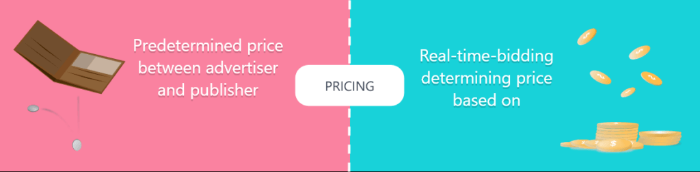
Open Auctions: Otherwise known as real-time bidding (RTB). This process is where ad inventory is bought and sold via a DSP or SSP.
Private Auctions: These are sometimes called ‘closed deals’ and are only open to invited bidders.
Preferred deals: Rather than auctioning ads, these provide programmatic advertising at a fixed price to a buyer.
Typically, programmatic advertising comes in four formats: display, video, banner, and in-app ads.
Video advertising is ideal for grabbing people’s attention through imagery, narratives, and sound.
Banner ads consist of a graphical image or animation placed on a web page, along with a URL to direct visitors to a website.
Native advertising is a form of online advertising that matches the form and function of the platform on which it appears. Native ads are less intrusive than banner ads and other online advertising, and can appear in various formats, including in-feed content, search results, and recommendations.
In-app ads are a type of advertising shown within an app. This can include banner ads, interstitial ads (full-screen ads), video ads, and native ads. In-app ads can be a great way to monetize an app and generate revenue.
Is Programmatic Advertising the Right Fit for Your Business?
You’ve read all about the benefits, but how do you know if programmatic advertising is the right fit for your business? That depends on a few factors, such as your target audience and marketing goals.
Below are some reasons why you might want to consider using programmatic advertising:
Volume targeting: if you’re looking to reach a large audience quickly and easily, programmatic advertising may be a good fit for you. Through automation, programmatic platforms allow you to focus on specific audiences according to interests and behaviors to reach more people in less time.
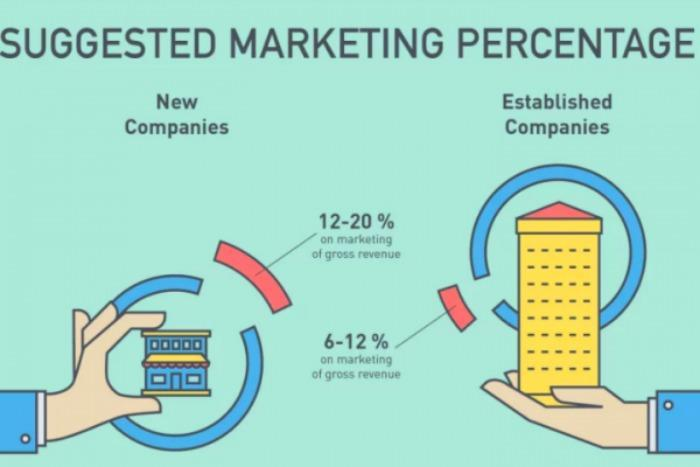
Managing your budget: As programmatic advertising lets you target specific groups, it can be budget-friendly. However, depending on the size of your business, the advice is to spend no more than 6-20 percent of your overall marketing.
What are your goals? Programmatic advertising can help you achieve various marketing goals, such as increasing brand awareness, generating leads, or driving sales.
What type of media do you want to use? Programmatic advertising offers you a variety of media types, including digital and in-app ads.
You need to be comfortable with the idea of automation and trusting algorithms to make decisions about where your ads should run.
Additionally, there are occasions when programmatic advertising may not be for you. If view-through-conversions aren’t of value to you and you haven’t tried display advertising before, then programmatic advertising may not be the ideal match.
How Much Does It Cost?
Programmatic advertising uses cost per mile (CPM), meaning you’re charged per 1,000 impressions.
However, other factors impact the cost of programmatic advertising. These depend on several factors, such as the type of system used (real-time bidding or private exchange), the amount of competition for ad space, and the quality of the ad space.
How Do You Integrate Programmatic Into Your Existing Ad Plans?
Suppose you’re looking to introduce programmatic advertising into your marketing mix. In that case, you can do a few things to help get your campaigns off to a flying start, like:
Defining your objectives: What do you want to achieve with your programmatic advertising? Do you want to increase brand awareness, drive increased website traffic, generate more leads, or improve your ROI? Once you know your objectives, you can start setting specific goals and determine how to measure them.
Set realistic goals: It’s important to set achievable goals; otherwise, you’ll only be setting yourself up for disappointment. Be sure to consider factors like budget and available resources when setting your goals.
Decide on your Key Performance Indicators (KPIs): KPIs measure if you’re on target regarding your business goals. For example, if you were working on SEO, featured snippets might be a desired KPI. Everyone wants something different from their programmatic advertising campaigns. Therefore, the KPIs you choose stem from what you’re hoping to achieve and what success means to you. Some key performance indicators to keep an eye on include:
click-through rate (CTR), which is a metric that measures how often people who see your ad click on it. A high CTR means that your ad is relevant and interesting to your audience.
cost per click (CPC): CPC is an important metric for measuring the success of online advertising campaigns. By understanding how much each click costs, advertisers can better assess the ROI of their campaigns and make necessary adjustments to ensure they are getting the most bang for their buck.
conversion rate, or the percentage of people that make a purchase when they visit your website.
cost per acquisition, which is the cost of acquiring a new customer through an ad campaign.
Decide on the type of ads to use: You can select from In-app ads for getting more downloads, banner ads for brand awareness and retargeting, video advertising for engagement, and native advertising for brand awareness and engagement in a user-friendly format.
Sign up for a DSP: Examples include Amazon DSP, MediaMath, or RocketFuel. However, there are plenty more, and it’s best to do your own comprehensive research before you decide which platform is right for you.
Create your budget: Some networks have pre-determined budgets, while with others, you work to your budget. There are a lot of different resources out there on how to optimize your budget.
Decide who to target: This is when it gets personal. Ideal customers are identified by many factors, including interests, buying behaviors, location, languages, operating systems, and plenty of other factors.
Choose your SSP: Turn to options like Google Ads Platform, AdSuite, or OpenX to get you started in your search.
Next, upload your creatives and set up your ad markups.
Use the above only as a guide, and follow the step-by-step instructions for your chosen platforms.
Once you’ve launched, analyze your data and keep tweaking until you get the results you’re looking for.
Finally, I’ve got another article for you if you’re looking for more ways to implement programmatic advertising.
Programmatic Advertising Success Stories
Now you see the potential of programmatic advertising, here’s a look at some success stories.
Agency Pubmatic worked with a Chinese mobile app games developer with an audience of 40 million. The developers sought a suitable in-app monetization solution to improve the overall customer experience and scale demand.
Pubmatic’s solution was an Openwrap SDK, which allows advertisers to optimize their in-apps earnings. The result was:
A 10.6 percent daily average fill rate lift
A 16.4 percent daily ARPU lift
A 14 percent eCPM lift
For another example, World of Warcraft is one of the most popular online video games with a turnover of $6.9 billion. However, that doesn’t mean its makers, Blizzard, didn’t want to reach out to new audiences. It wanted an advertising campaign that would:
Improve brand awareness and drive qualified traffic.
Enhance awareness for upgrades and game launches.
Develop a healthy return on ad spend.
Increase traffic away from usual sources like Google, YouTube, and Facebook.
To achieve this, Advent Technology used in-app advertising in the form of rewarded video advertising. It also:
Created a full-funnel retargeting solution.
Allowed Blizzard to own the data.
Used retargeted strategies to enhance re-engagement.
The campaign led to an 8.6 percent click-through rate, compared to YouTube’s average of 0.33 percent for audible and viewable on complete (AVOC).
FAQs
What is Next for Programmatic Advertising?
In the fast-approaching cookieless society, we’re likely to see more focus on customer engagement through impactful and engaging creative media based on quality over quantity, with more emphasis on engagement-driven metrics. Artificial intelligence is also likely to play a role in programmatic advertising in the future.
How Does Programmatic Advertising Work?
Programmatic advertising is a type of online advertising that uses computerized systems to purchase ad space in real-time. Advertisers bid on ad space through an auction system, with the highest bidder winning the ad spot.
What is Programmatic Display Advertising?
Programmatic display advertising is a type of online advertising that uses programmatic technology to purchase ad space and target audiences.
When Did Programmatic Advertising Start?
It may sound like a new development, but programmatic advertising has been with us since 1994. The first banner ad was for AT&T’s ‘You Will’ advertising campaign.
Conclusion
If you’re looking for an effective and efficient way to reach potential customers, then programmatic advertising could be your answer.
Not only is programmatic advertising affordable and it can deliver you a high ROI, it automates buying digital ad space, saving you much-needed time.
Programmatic advertising also lets you target your ideal customers with precision, while delivering ads in real-time, potentially saving you money.
However, this type of advertising may not be suitable for everyone, especially if you haven’t started with regular digital marketing and don’t have a lot of data to go with.
Do you use programmatic advertising? How does it compare with other methods?
from Neil Patel's Digital Marketing Blog https://ift.tt/SZ9qsRU
via IFTTT
As social media becomes more and more prevalent in our lives, we continue to see studies showcase the effects that it has on our well-being, mental health and self-perception. One recent study in particular discovered the impact that Instagram likes can have on adolescents.
If we start to compare ourselves or base our self-worth on the amount of likes we receive online, especially compared to popular influencers and celebrities, we’re going to have a bad time. Which is why many Instagram has toyed with the idea of hiding likes in the past.
However, Instagram decided to settle on a happy medium—giving users the option to hide likes themselves, either from their own posts or from other Instagram posts.
Throughout this article, we’ll talk about the different ways you can hide Instagram likes, as well as why you might want to.
Why would you want to turn off likes on Instagram?
In the study mentioned earlier, researchers took a group of 182 students between the ages of 13 and 18 and had them imagine a situation where one of their Instagram posts got a lot of likes and one got very few likes. The participants who imagined getting few likes had far greater negative sentiments than positive, especially in those more susceptible to feedback.
It’s true that, social media likes can have a negative impact on a user’s mental health. Like it or not, social media has a proven impact on our brains. So keeping your followers from seeing the number of likes your posts have can help combat that comparison—especially as an influencer.
However, even as a brand, there can be benefits to turning off likes.
Firstly, the likes you receive is a vanity metric. There’s very little importance when measuring the overall performance of your Instagram marketing efforts. Liking as we scroll has become second nature, so it doesn’t mean much beyond that.
Instead, you want to pay attention to Instagram metrics like comments and shares. This shows that your post resonated enough for users to take intentional action.
How to hide likes on Instagram
You can hide likes both on your own Instagram posts as well as likes on Instagram accounts you follow.
Note: Even as a social marketer, you may also be a parent, older sibling or know of young social media users. This may be a great setting to change if you have teens or young adults on Instagram. Encourage them to make this update so there’s less comparison online.
Let’s go through how to hide likes on Instagram step-by-step.
How to hide likes on others’ Instagram posts
If you want to hide likes on others’ Instagram posts in your feed, you can easily do so in your settings. This can help keep you from comparing personal accounts or competitor accounts to your own. It will also force you to look at more than just like counts as you scroll.
Follow these steps to hide likes on others’ Instagram posts:
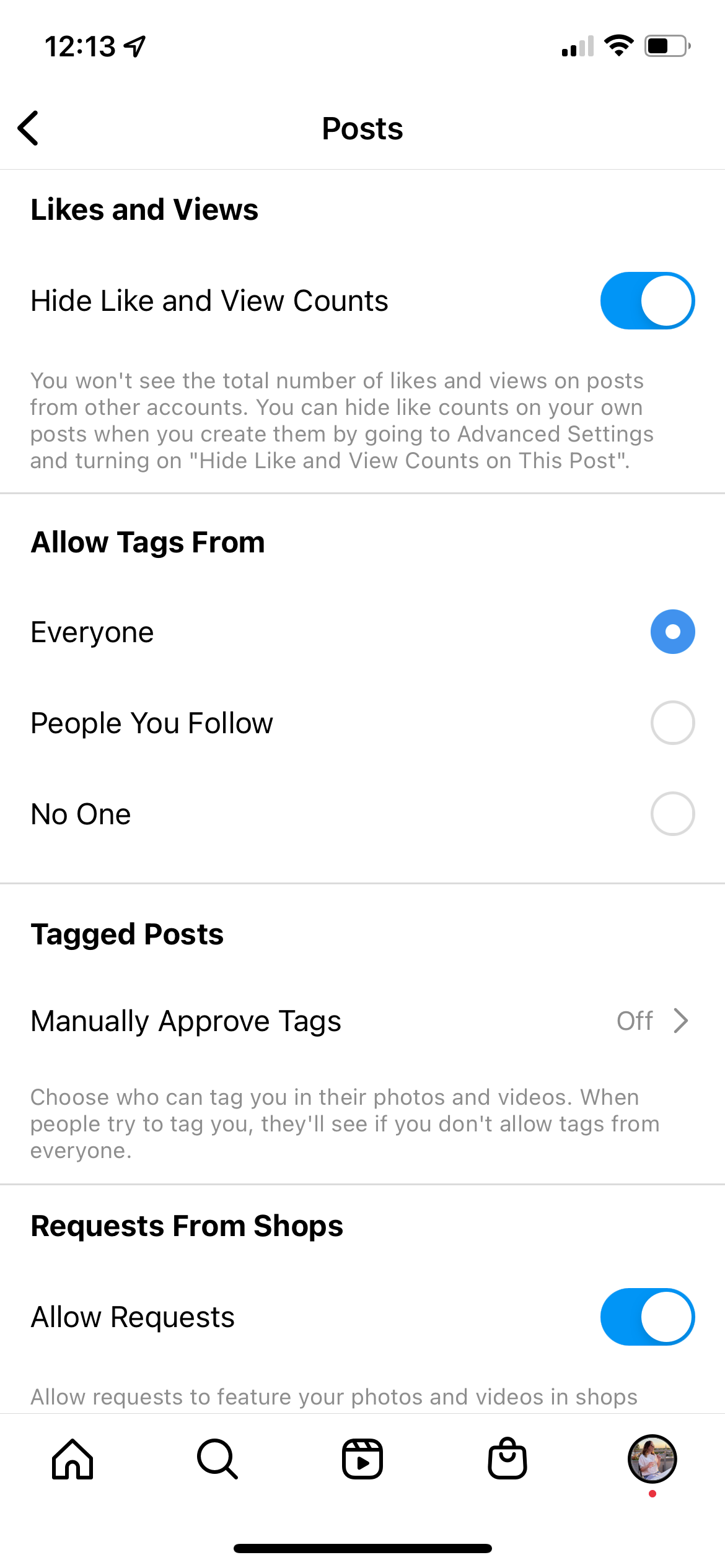
Step 1. Tap the hamburger menu on your profile, then tap Settings.
Step 2. In the Settings menu, tap Privacy.
Step 3. In the Privacy menu, tap Posts.
Step 4. Toggle the Hide Like and View Counts option on.
You’ll now see something like this on Instagram posts:
Instead of seeing “Liked by username and 11,034 others,” you’ll see a simple “Liked by username and others.”
How to hide likes on your Instagram posts before publishing
Now let’s cover how to hide your own Instagram post likes. Unfortunately, there’s no setting that automatically hides all of your Instagram likes—you’ll have to do it for each individual post. But, you can make this change either while you’re publishing the post or after you publish.
Step 1. Start creating your next Instagram post as usual. When you get to the section to write your caption, tag products or add a location, tap Advanced Settings.
Step 2. Here, you’ll see the toggle option next to Hide like and view counts on this post to make sure your post’s likes are hidden. This will also hide view counts for videos posted to your feed. However, this option is not available for Reels.
Step 3. In Advanced Settings, you can also make even more changes before you publish, like adding alt text to your Instagram post for those using screen readers or even turning off commenting.
Here’s an example of what hiding Instagram likes would look like in action by home decor brand ettitude, which has likes and view counts hidden on nearly all of their Instagram posts:
How to hide likes on your Instagram posts after you publish
If you’ve already published your post and realized that you forgot to hide the like count, don’t stress—you can just as easily toggle this off after you’ve shared your post with your audience.
Step 1. Head to the post that you want to update and tap the three dots menu icon to access more settings and preferences.
Step 2. Then simply tap Hide like count to ensure that no one can see how many likes your post has gotten.
Step 3. This menu also gives you other options, like retroactively turning off comments, pinning the post to the top of your profile and more.
How to see your likes on Instagram even if they’re hidden
Even though neither you nor anyone else will be able to see your likes publicly, you can still track them internally to track your growth. Likes are a vanity metric, but you can still track them as your account grows to measure your reach.
There are two ways you can view your Instagram likes, even after you’ve hidden them in your feed.
First, you can access your likes data within the built-in Instagram Insights. As long as you have an Instagram Business Account, you can access your analytics by heading to your profile and tapping the Insights button.
Within your Instagram Insights, you can look at the recent content you’ve shared and see how many likes, comments, impressions and reach.
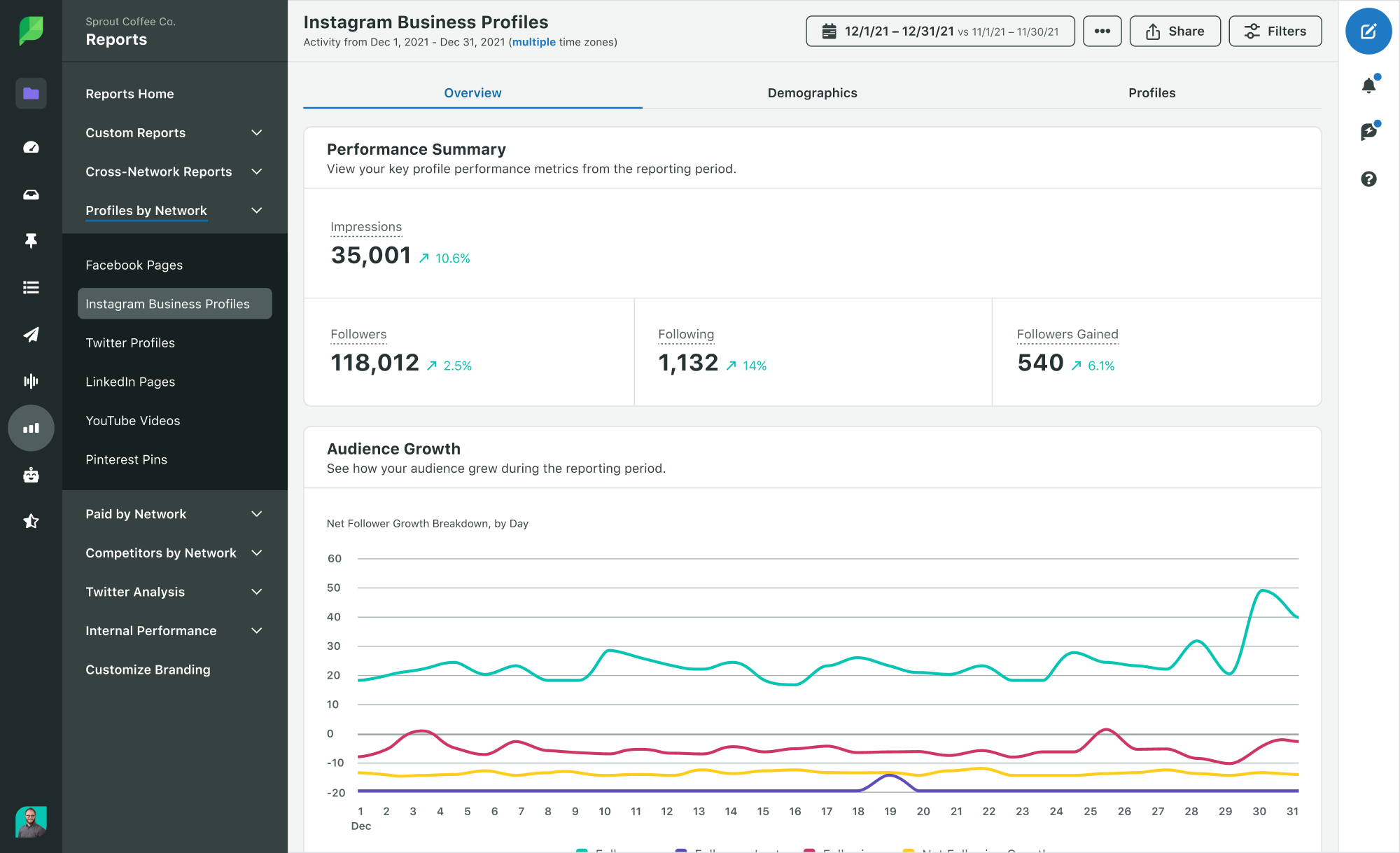
You can also use your Sprout Social account to check in on your likes and other analytics. Within the Instagram Business Profiles Report, you’ll find how many impressions, followers, likes and more your account has received during the specified time period.
You still have access to important data to input into your monthly report without fueling the numbers fire on Instagram.
Consider if hiding Instagram likes is right for your brand
Should you start hiding Instagram likes? This may be the right choice if you’re targeting a younger audience with your products or services. Or, if you simply want to ignore those numbers as likes are a vanity metric, anyway. Track more important metrics such as overall engagement, like comments and shares, to gauge whether people are resonating with your posts.
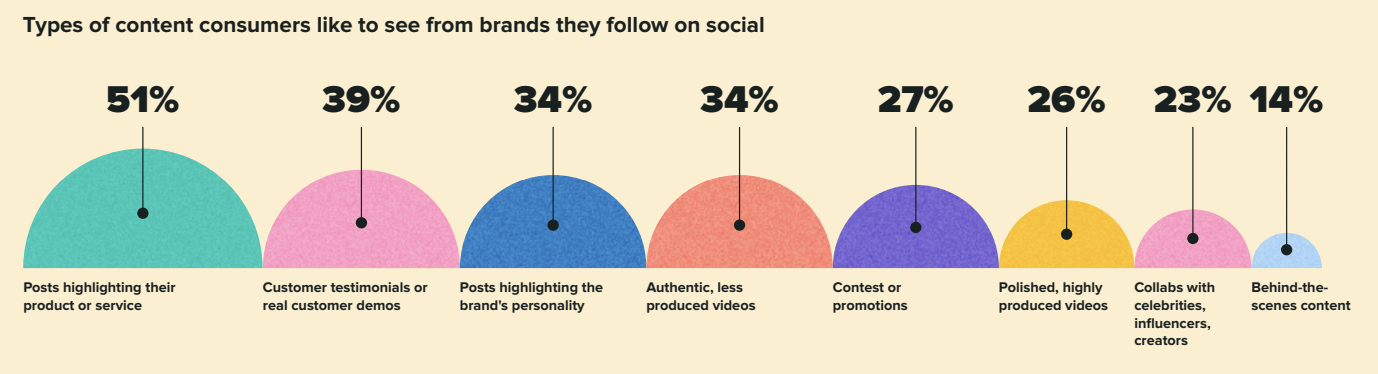
And to learn even more about how to create content that your audience will find engaging, check out our most recent Sprout Social Index™. Use this research to fuel your social media strategy and discover what social media users prefer to see from brands and business.
However, let’s not get too carried away, because I’m here to explain all the basics today. I’m also going to discuss the best practices, give you tips for creating Twitter carousel ads, and show examples, all to improve your chances of success with the format.
Ready? Let’s get started with the fundamentals.
A Quick Explanation of Carousel Advertising
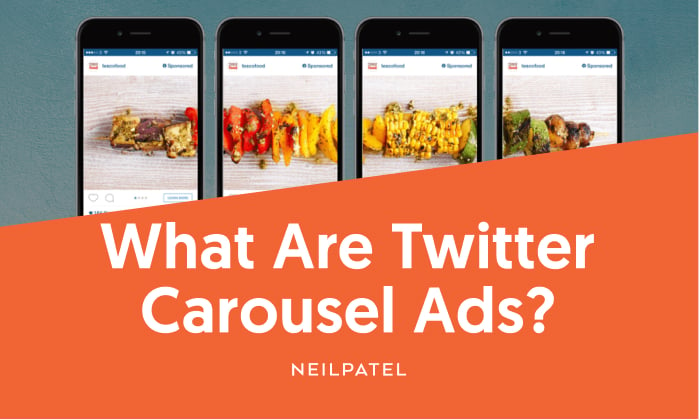
Twitter carousel ads are a newer form of advertising that allows businesses to showcase multiple images and videos in a single ad.
Marketers can use these ads to tell a story or highlight a product or service, while users can swipe through the edge-to-edge images. Advertisers can also use carousels to direct visitors to landing pages and apps and combine images and videos for greater versatility.
You create Twitter carousel ads like regular PPC ads on the platform, and you can target them to specific users based on interests, demographics, and behaviors.
Carousel ads offer businesses an easy tool to increase engagement and connect with more customers on Twitter, helping increase brand awareness, drive website clicks and conversions, and generate leads.
Why Use Carousel Ads on Twitter?
The possibilities are endless when it comes to using carousel ads on Twitter. You can also use Twitter carousel ads for:
Sharing short stories, customer testimonials, or even behind-the-scenes footage.
Promoting a sale or new product or simply introducing your company to potential customers.
Highlighting multiple features/products/services and promoting multiple offers.
Showing off multiple products or images in one ad.
Additionally, suppose you’re looking for a new way to grab attention. In that case, this is another reason why you should use Twitter carousel ads. This model offers many advantages, including:
More precise marketing: Everyone who uses Twitter knows that the character limit is 280 characters, which doesn’t always give advertisers enough space to sell their products adequately. However, adding multiple images and videos means advertisers can convey more information in a single Tweet and provide a unique URL/headline to encourage the type of customer you’re looking for.
More installs and click-throughs: When Twitter tested its carousel ads, it found it boosted average click-through rate by 15 percent and installs per impressions an average of 24 percent compared with its regular single asset ads. With Twitter’s multi-destination website carousel ads, beta testing showed a 20 percent increase in click-through rates compared with single-asset ads and a 25 percent increase in click-through rates for ‘campaigns that optimize for site visit conversions relative to single-asset ads.’
Access to analytics: Twitter offers analytics and metrics, so you have a clear illustration of how your carousels are performing, and then you can adjust your campaigns according to the data.
Ease of use: You can create Twitter carousel ads by following step-by-step instructions and adding your media.
Engagement: The carousel’s design allows users to swipe seamlessly across images for added engagement.
Achieve your objectives: Do you want more app downloads and video views or to create awareness? Well, you can set your campaigns to achieve all of these things and more.
How To Set Up a Twitter Carousel Ad
Even if you’re new to the world of marketing and you don’t know how to advertise on Twitter, it’s simple to get going with this ad format. Just follow these steps:
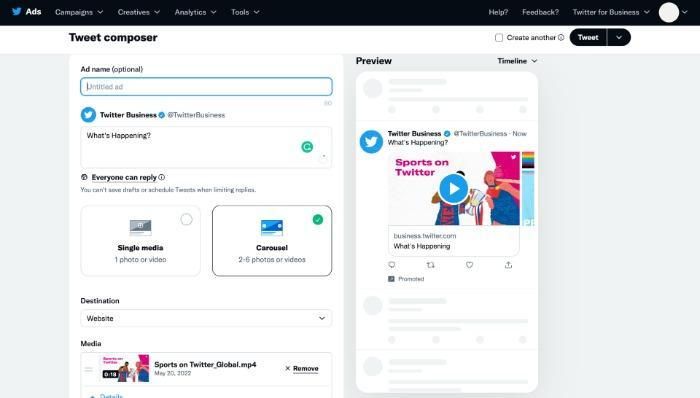
To set up Twitter carousel ads, begin by navigating to ‘Ads Manager.’ From there, select ‘creatives,’ and ‘Tweet composer.’ Then:
Add your text using the Tweet composer.
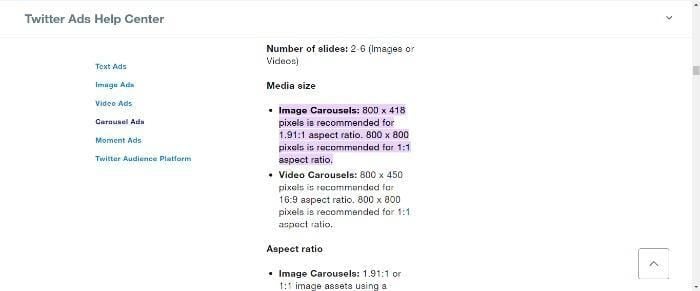
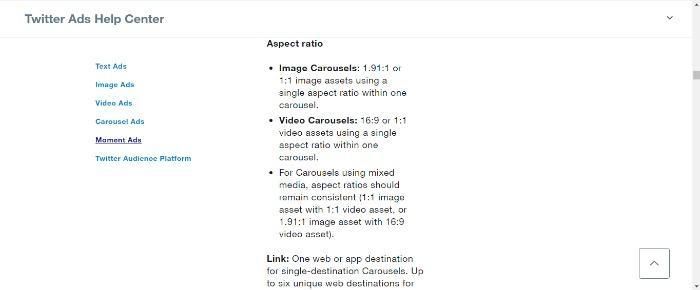
Next, go to ‘add media.’ You can upload any creatives (images and video) with a maximum of six of your images, or choose from the Twitter stock library. For this step, ensure you follow Twitter’s media guidelines:
If you want to tweet your carousel organically, uncheck the ‘promoted only’ box.
Now, customize the ad destination. For the same headlines/URL on a carousel, choose the ‘Apply this headline and URL to the entire carousel.’ Alternatively, select the ‘Customize a destination’ and select a unique headline/URL for your individual media assets.
Publish your Tweet by pressing the black button on the right side of the page. Alternatively, you can go to the drop-down menu and choose ‘Schedule’
Finally, there’s Twitter carousel ads printable templates available if you want to brainstorm and practice before hitting ‘Tweet.’ You can download this from the ‘Twitter media guidelines’ page above.
Twitter Carousel Ad Examples
Comic book app Comico specializes in content like comics and manga; one of its main forms of income is in-app purchases. The Japan-based company uses Twitter carousel ads to share teasers of its most popular content.
By posting teasers on Twitter, Comico engages social media users and encourages them to click through and read the rest of the story.
Twitter’s carousel ads are also perfect for showcasing items. Hyundai is just one company using this format to highlight its latest vehicles with design reveals to intrigue prospects, display videos, and news.
Hyundai combines its ads with engaging, enticing text and a URL to get people to click through to its website.
Skincare brand CeraVe is no stranger to Twitter advertising, using takeovers, which offer a mass reach, allowing your brand to build brand awareness and promote tweets.
However, CeraVe used Twitter carousel ads to detail the stories of four nursing staff. When CeraVe used these ads in combination with its other advertising, it achieved a 59 percent increased engagement and +19 percent higher impressions than Twitter’s usual internal benchmarks.
Best Practices for Twitter Carousel Ads
When creating a carousel ad, there are a few best practices to follow to ensure that it’s effective.
First, check that all your carousel’s images are high quality and relevant to your product or message. Also, use a strong headline and call to action for each image. For instance, to spur people into action, you can offer a discount, use the word ‘free’, or create a sense of urgency with time-limited deadlines.
You can also do the same with headlines. Don’t forget to stress the uniqueness, use power words, and include ‘you’ to personalize your tweets.
Second, make sure that your carousel is well-designed. The images should be easy to navigate, and the text should be easy to read.
Third, make sure that your targeting is accurate. Only target likely users of your product or service.
Finally, test and optimize your carousel ad campaign regularly. Try different images and copy, and see which combinations work best for you.
Include visual storytelling. Like every good story, each carousel should incorporate a narrative with a beginning, middle, and end. The difference here is that you are doing this purely with visuals.
Target your audience according to the funnel stage. For example, if consumers click through to product pages, add product images, or appeal to prospects with general top-of-the-funnel images to build product/service awareness.
Highlight the benefits and ensure your product is clear and visible.
Customize your headlines and URLs to different landing pages and headlines using Twitter’s multi-destination carousels.
Don’t just rely on images. Include solid and captivating headlines, detailed descriptions, and compelling CTAs to spur leads into action.
FAQs
Can You Do Carousel Ads on Twitter?
Yes, Twitter started carousel ads in 2020 and introduced multi-destination Twitter carousel ads in 2021.
What is Carousel Advertising?
A carousel ad contains several images or videos that rotate (or “carousel”) as you scroll through them.
Can You do Organic Carousel Ads on Twitter?
Organic carousel ads are possible on Twitter. Just deselect the ‘promoted only’ box in the Tweet composer.
What Makes a Good Carousel Ad?
Relevance and A/B testing should be at the top of your list. However, you also want attention-grabbing imagery with a clear call to action, and detailed descriptions that detail the features and benefits.
Conclusion
Twitter carousel ads are a great way to showcase various products or images in a single ad. This type of ad is especially effective for e-commerce businesses or companies with multiple products. You can use carousel ads to tell a story, highlight different features of a product, or show off different products in a collection.
They are eye-catching and allow a lot of information to be conveyed in a small amount of space. In addition, Twitter carousel ads are interactive, which makes them more engaging for users.
It’s difficult to find a brand that isn’t active on social media in some way, shape or form. This mass adoption makes sense when there’s so much that social can do for your brand in the short and long term.
Retail, food, entertainment and real estate are just a few industries that can benefit from having a social media presence. Brands are leveraging social media to support their lead generation and business goals, but the beauty of social media is that it encompasses several purposes.
Here are 11 social media management benefits that often fly under the radar for modern businesses.
1. Uncover industry trends in real-time
Social media is a goldmine of business intelligence. Think about the transparent nature of it. We’re able to see unfiltered, real-time conversations between consumers and brands alike. If you want to know what a brand is doing well or what customers are complaining about, it’s out there in the open.
Also, your target audience’s social activity and shared content can clue you in on industry trends. For example, Instagram hashtags such as #summerootd can highlight everything from relevant influencers and content creators to fashion trends.
You can also use social listening to tap into those trends via social conversations.
For example, Sprout has a trend reporting feature that enables you to hone in on what customers are saying about your brand. You can track key terms and hashtags associated with your business, but these mentions and hashtags represent more than online chatter.
For example, social conversations can reveal everything from customer favorites to areas where your company is falling short. A flurry of praise or customer complaints can spur you to take action based on follower feedback. In turn, brands can come up with real-time solutions and products that their customers will buzz about.
Perhaps one of the most valuable social media business benefits is the ability to study your competitors. You can use competitor analysis tools to help you understand your competition.
What are they currently promoting? What sort of ads are they running? How is your content strategy different from theirs?
By conducting social competitive analysis, you can uncover opportunities to experiment with your own content or advertising.
For example, maybe you notice that your competitors are crushing it with Facebook Ads but their Instagram presence is lacking. In turn, you might explore influencer marketing or user-generated content campaigns for the sake of standing out from the crowd.
You can look at your competitors’ social performance in a cinch with Sprout’s tools. Our competitor and sentiment analysis reports allow you to monitor growth and engagement to ensure that you aren’t falling behind.
Through this analysis, you can also discover which pieces of your own content are earning the most engagement. Understanding your top-performing content is key to understanding how to break through the noise in your industry.
3. Provide better customer service
Whether it’s listening to feedback or addressing specific concerns, social media gives you the ability to provide quick, quality customer care. According to the Sprout Social Index™, 53% of brands say customer service contributes to the organization’s social strategy.
Unlike phone calls or emails, social customer service is quick and to-the-point. But it still allows brands to have meaningful, forward-facing conversations with customers.
Prospects, customers and competitors alike can see how you interact with your audience online. Putting positive interactions front-and-center is a huge plus for any business.
Social media also provides a prime channel to gather customer feedback. Responding to questions and concerns signals that you’re invested in serving your audience.
But how do you know if you’re truly making an impact on your customers? Sprout can help you measure the quality and success of your social customer care. Our suite of Social Listening tools includes sentiment tracking to monitor your brand health based on positive or negative social mentions. An influx of complaints or questions could signal big-picture problems with your customer success strategy. On the opposite side, a flurry of positive sentiment could indicate your brand is meeting or exceeding expectations.
Monitoring sentiment can also give you insight into what your audience enjoys seeing, which leads us to our next social media benefit for businesses: creating customer content.
The ability to quickly share customer content and stories is another great social media business benefit. Customer photos and success stories go hand-in-hand with higher engagement and conversion rates.
For example, monitoring your mentions and tags can help you uncover positive customer interactions that you can share with the rest of your followers. Many brands and retailers even curate customer photos to use throughout their marketing campaigns.
This is why having a branded hashtag is so important. By encouraging your customers to tag their content, you can uncover shareable posts that your followers will love while also making a connection with your customers.
For example, the fashion brand Pretty Little Thing is known for embracing user generated content and has a branded hashtag customers can use. They encourage customers to post their outfits and tag the brand for a chance to be featured on Pretty Little Thing’s page and/or Instagram Story.
Social proof in the form of customer content not only shows that you have satisfied customers, but also provides your brand with a sense of authenticity.
5. Positioning power for your brand
Simply having an active presence on a social channel represents positioning power for your business. Let’s say your closest competitor has an Instagram account that’s booming with customer photos, Stories and sleek snapshots showing off their product.
On the flip side, you have an Instagram profile that’s gathering cobwebs. Not a good look, right?
Consistently publishing on channels relevant to your business signals that you’re active and open to new customers.
You can also have positioning power of social media in search engines when someone looks up your brand. Your Facebook or Instagram could very well be your business’ first impression on a customer versus your website. This again speaks to the importance of maintaining an active presence.
6. Build backlinks and a better search engine presence
The impact of social media on search engine optimization (SEO) has been debated for years.
That said, the relatively recent concept of linkless backlinks signals that there is a correlation between social media and search performance.
Shares and click-throughs via social represent positive search signals to Google, making social a sizable traffic source. You can track your social traffic with tools like Google Analytics.
Don’t neglect social media as a content distribution channel. A popular piece of content scores hundreds of likes and shares can drive serious referral traffic to your site. Plus a piece of content that ranks high on the Search Engine Results Page (SERP) can bring in traffic too. You can optimize your social scheduling with Sprout’s patented ViralPost technology that ensures you’re utilizing optimal send times.
7. Appeal to younger, social-savvy customers
To say that social media has transformed the traditional advertising landscape would be an understatement. Social media is an advertising channel capable of reaching customers of all ages. According to social media demographics, the vast majority of users on Instagram are under the age of 30.
Younger audiences like Gen Z are shaking up marketing by responding less and less to traditional advertising. Younger customers are growing up with social media and making the rules for their online experience on their own terms. Brands will need to adapt beyond in-your-face commercials and ads.
As younger consumers hop from platform to platform, brands should expect to experiment with new ad channels. For example, many major companies have joined the metaverse, hosting brand activations to connect with their audience in an innovative way.
Also, the popularity of user generated content, influencers and content creators highlights the authentic, experience-focused advertising that appeals to younger consumers—which leads us to our next social media benefit: it humanizes your brand.
8. Humanize your brand
According to the Sprout Social Index™, consumers are seeking authenticity when it comes to brands’ social media content. Businesses today want to show off their personality. Many brands have benefited from dropping the hyper-professional “suit and tie” vibe in lieu of getting personal with customers on social media.
Social media is all about connection, offering brands a unique opportunity to display their human side from their employees to their values.
Chubbies is a great example of a brand with a humorous, meme-heavy social presence. Although this sort of approach to social isn’t for every brand, Chubbies understands their target audience, which helps them drive and maintain engagement.
According to Index data, company alignment with personal values is 74% more important to consumers than it was in 2021, so brands can benefit from showcasing their values through philanthropy and activism.
We’re in an age where half of consumers want to see brands take a stand on social and political issues. Brands like Patagonia do a brilliant job of highlighting their human side.
Although the clothing brand has a history of activism, founder Yvon Chouinard recently relinquished ownership of the company in an effort to support environmentalism.
Hey, friends, we just gave our company to planet Earth. OK, it’s more nuanced than that, but we’re closed today to celebrate this new plan to save our one and only home. We’ll be back online tomorrow.https://t.co/fvRFDgOzVZ
Securing more top-of-funnel leads is another key social media business benefit. Billions of people are active on social media daily and there’s a large chance your audience is already online. Whether through paid ads or content promotion, you can reel in more top-of-funnel leads by raising awareness for your brand.
Having a social presence introduces people to what you’re selling and represents another way to score more sales. Even if these leads don’t make purchases directly through social, raising awareness could lead them to becoming full-fledged buyers later on. After all, they can’t buy until they know your brand exists.
10. Stronger talent acquisition
More than half of marketers say finding experienced talent is their number one challenge this year, but social recruiting can make it easier.
Applicants are using social to network and conduct research on companies. Many candidates also follow brands to stay on top of potential job opportunities.
Leveraging social media platforms allows for stronger talent acquisition because it widens your sphere of applicants. Employee advocacy can make your company even more attractive to candidates.
When current employees rave about your company on networks like LinkedIn, it strengthens your brand’s reputation. When a company publishes a “we’re hiring” post on social media, many candidates use social to research the brand’s culture, values, etc.
11. Extend your media and investor relations efforts
Social media has transformed so many industries, and communications professionals are familiar with the impact of these online spaces. Brands aren’t limited to traditional mediums like radio and print newspapers—you can use social media to supercharge your media relations and investor relations strategies.
Journalists use networks like Twitter for finding sources and potential stories, so meet them where they are. Follow and engage with journalists who report for your publications of interest to build rapport. Then when the opportunity arises, you can pitch to them.
Along with connecting with journalists and publications, you can bolster company announcements and accomplishments through social posts to catch the eye of investors. Similar to job candidates and reporters, investors use social media to learn about brands.
Disadvantages of social media
Okay, maybe we’re a bit biased when it comes to talking up the benefits of social media. But, it would be remiss of us to not discuss the disadvantages of social media management, so here are a few to consider:
Time-Consuming
Social media often gets a bad rap for being a time sink (many of us are guilty of scrolling for hours on end). Similarly, it can take some time to reap the benefits of social media management.
For example, measuring your ROI from social media can be difficult versus more straightforward marketing channels (think: PPC, email marketing, etc).
Although using social media for marketing, media or investor strategies is a long-game, it’s well worth the wait.
Reputation Management
The beauty of social media is the ability to reach and communicate with a plethora of people online, but it can transform into a disadvantage if you’re not careful. Brands need to practice reputation management to please their customers online and in real-life.
One well-intentioned post can quickly lead to a brand crisis in a matter of seconds. This is why mastering the pillars of brand reputation management is so important.
What are the biggest benefits of social media for your business?
A social media presence has become an expectation for brands rather than an exception to the rule. And we totally agree that businesses shouldn’t latch onto social media “just because.”
Instead, businesses should assess the potential benefits of social media themselves based on specific, actionable goals. Although the impact of the benefits above varies from brand to brand, there’s no denying the business implications of having a social presence.
To fully understand the opportunities of social, sign up for aone-month trial.
At Sprout Social, Diversity, Equity and Inclusion (DEI) is not only one of our core values, but a guiding principle for how we structure our team and business. Our DEI mission is to pursue diversity, equity and inclusion in the way our people experience the workplace, in the way we build our teams and how we cultivate allyship for historically marginalized communities.
To support this commitment, we’ve partnered with the United Negro College Fund (UNCF) to establish the Sprout Social Scholarship Fund. Each year, eight Black/African American college seniors will be awarded an $11,000 USD merit-based scholarship. Selected recipients will exemplify strong leadership abilities and demonstrate interest in computer science or software engineering.
This is our second year contributing $100,000 USD to the scholarship fund, which was established in 2021 as a means of increasing access to STEM education and opportunities in the technology industry for the Black/African American community. Scholarship recipients also receive the opportunity to apply and interview for a full-time role as an Associate Software Engineer at Sprout, and earlier this year we welcomed two recipients to our engineering team.
“The Sprout Social Scholarship significantly supported my pursuit of higher education, enabled me to study a field that I longed to attain a degree in and relieved the financial burden that so many students face,” said scholarship recipient Sean Walker, Associate Software Engineer at Sprout Social. “It has always been my desire to use software to provide useful tools to people, and this scholarship’s support of my academic career has helped prepare me for my future as a critical thinker and problem solver, which are skills I now use in my current role as an engineer.”
“I am honored and more than thankful for all the ways the Sprout Social UNCF Scholarship Program has changed and empowered my life,” said scholarship recipient Thomas Reese, Associate Software Engineer at Sprout Social. “The scholarship helped me complete my last year of school and become a first-generation college student. This is so important to me because I have set an example to my peers and family of what is possible for us to achieve through education. I really hope the scholarship fund can continue to help the Black/African American community by making tuition more affordable, allowing someone like me to focus more on education and becoming better leaders in software development.”
Increasing access to education and career opportunities for the Black/African American community is just one part of the work we’re doing to further our DEI recruitment and retention efforts. In addition to the scholarship fund, we are supporting a number of conferences for underrepresented genders in technology, such as Technica, as well as hosting workshops for DEI-focused student organizations to help them prepare for technical interviews at Sprout and other companies.
For those interested in the Sprout Social Scholarship Fund, applications will be open through October 17, 2022.
That number can be tough to hit when I can’t think of creative designs, but thankfully, there are a ton of free (or crazy cheap) image editing tools that make you look like a professional.
And that means you can shave time off your day with just a few minutes of image editing.
Thankfully, almost all of them are easy to use even if you have little-to-no experience with graphic design.
Here are six image editing tools that make you look like a pro and will drive your social shares through the roof.
1. VistaCreate
VistaCreate is an all-in-one online platform for designing literally anything a marketer or small business owner may need — no design skills necessary.
You can use it to create posts and stories for socials, make email designs, ads, presentations, and even print materials.
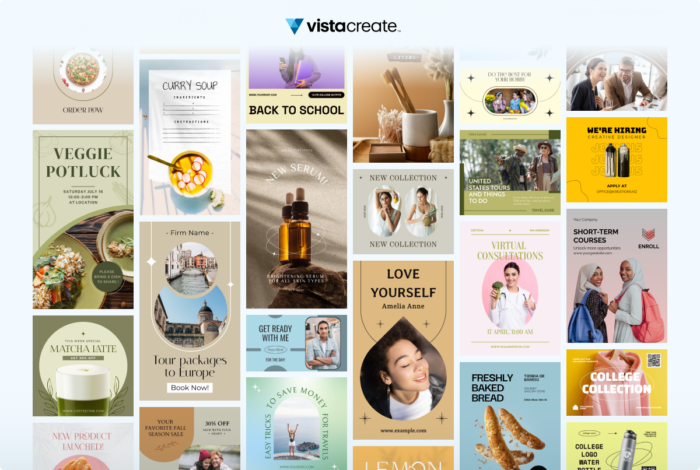
The editor offers thousands of premade templates that already look great, so you can just quickly customize a design and use it right away.
And unlike other graphic design platforms, ALL their templates are free.
In addition to templates, you access a huge library of royalty-free stock photos, videos, vectors, objects, animations, fonts, and music tracks.
With all these tools, you can make videos and animated visuals in addition to static designs.
If you want to publish your design right away, you can post it directly from VistaCreate to your Facebook and Instagram business accounts, and Pinterest. Handy, right?
I like that most of their tools are free, so that you can create a cool design on a budget.
To start creating, log in or sign up to VistaCreate.
So I’ve talked a bit about what VistaCreate can do for you, but let’s show it in action. Here’s a real-life look at me putting this great tool to use.
To begin, I decided to create an Instagram video story for an event I’ll be speaking at.
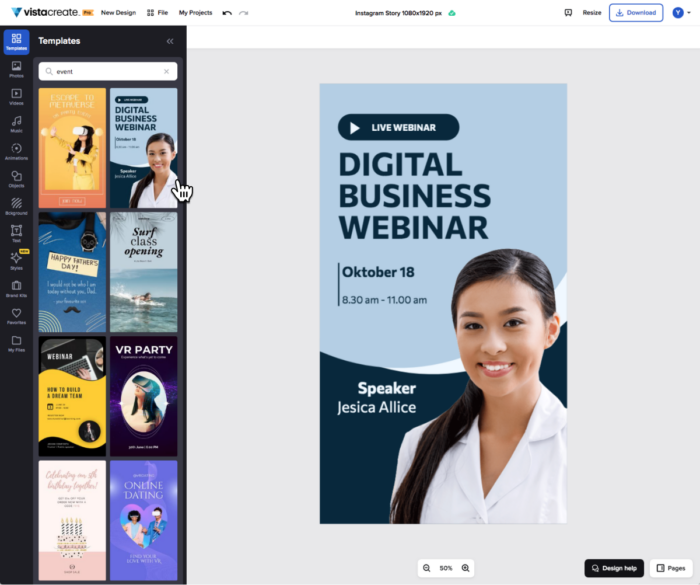
So, I chose a template first.
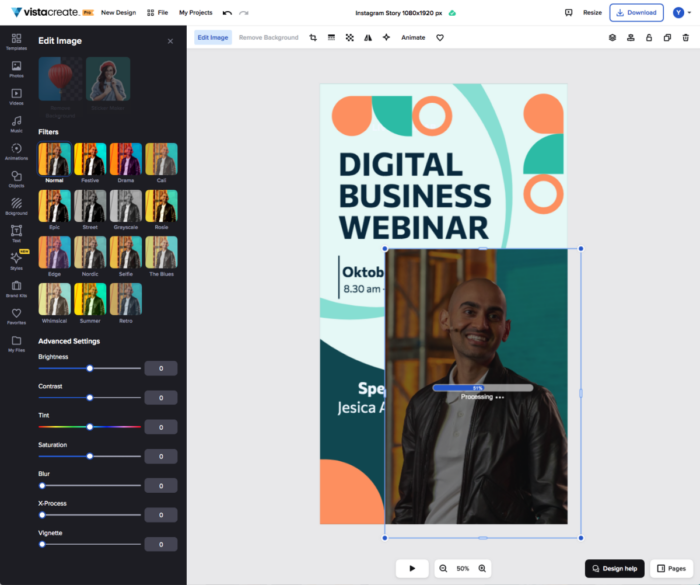
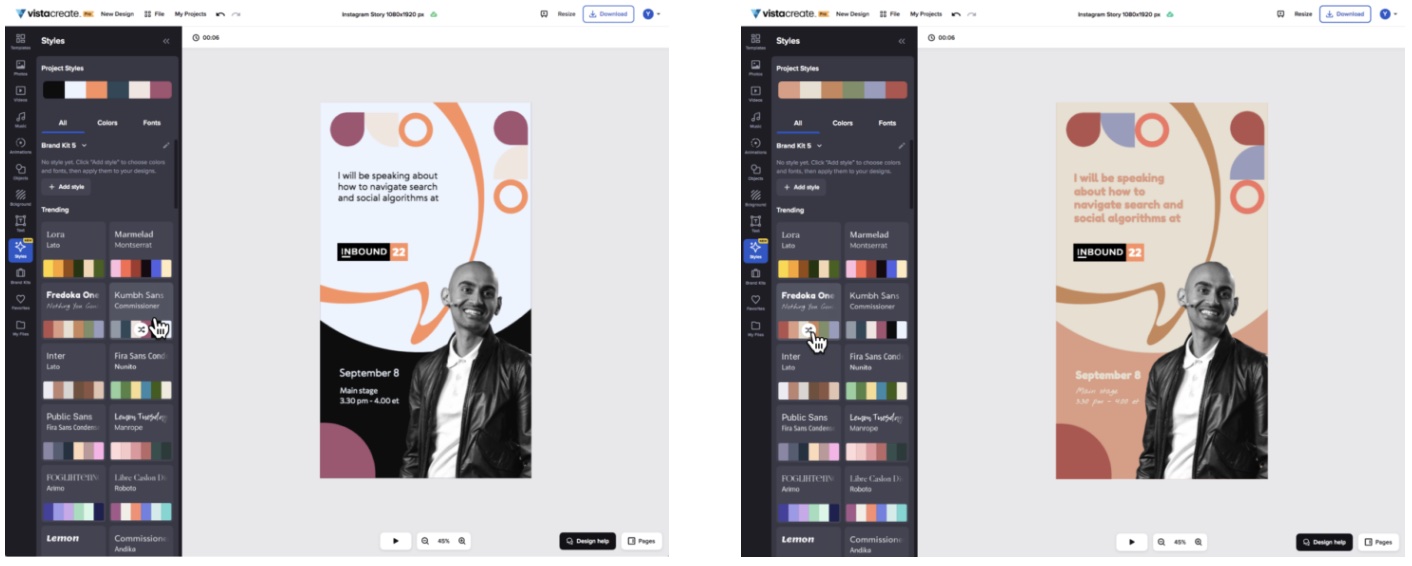
I changed the colors, added objects and my photo, and used the Background Remover to erase the background in one click.
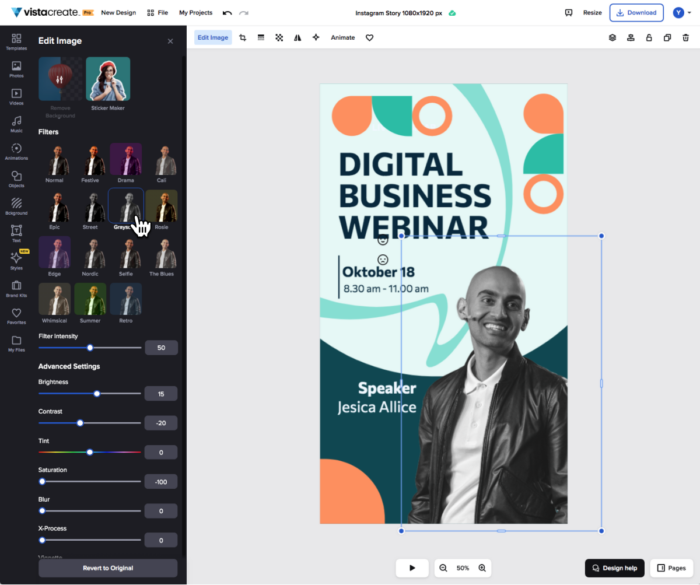
Next, I applied a black-and-white filter to make my photo match the style of the conference.
It’s pretty cool!
Next, I animated my photo and objects.
I added all the information about the event and tried different styles to see which color scheme worked best.
After that, I’m ready to post!
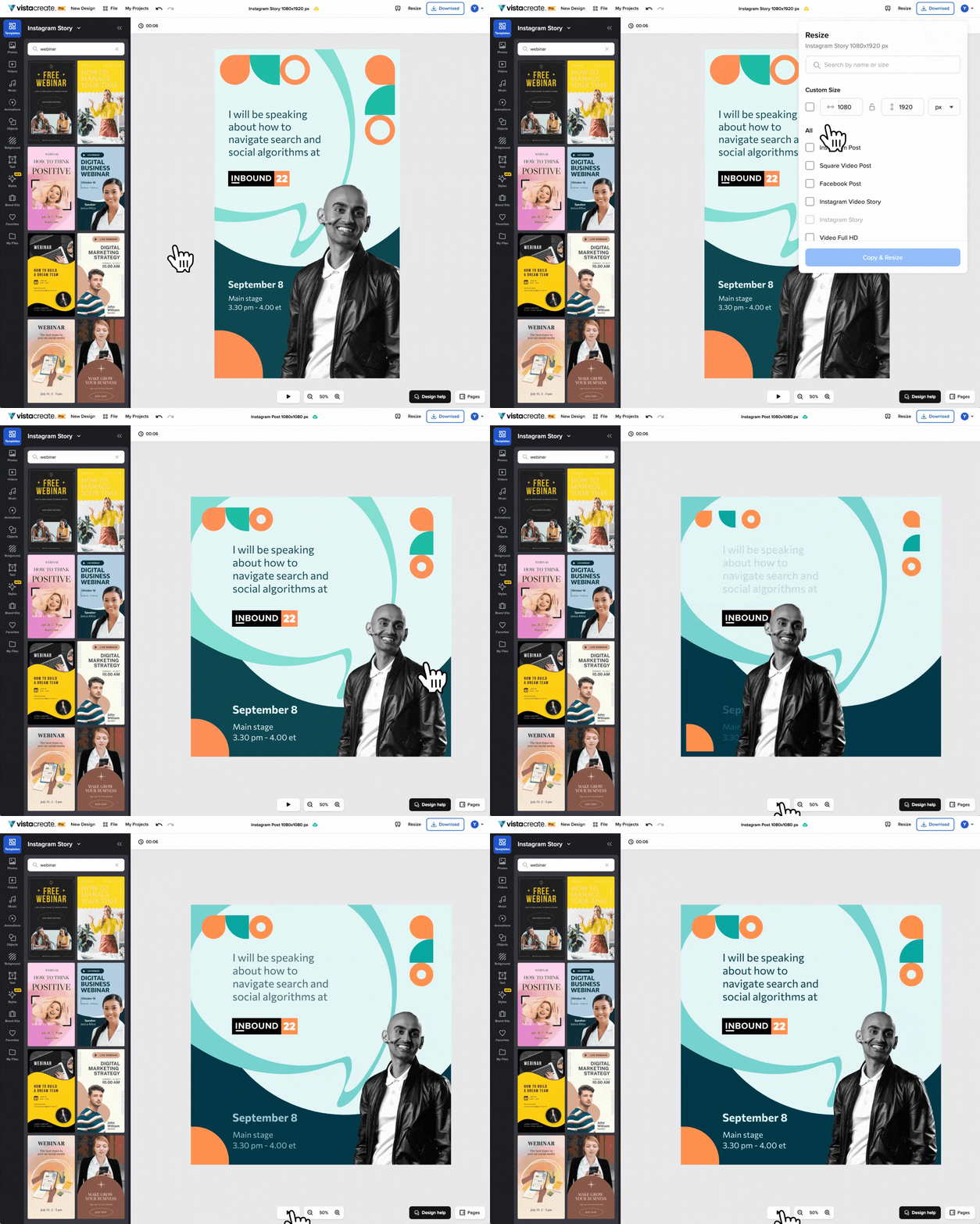
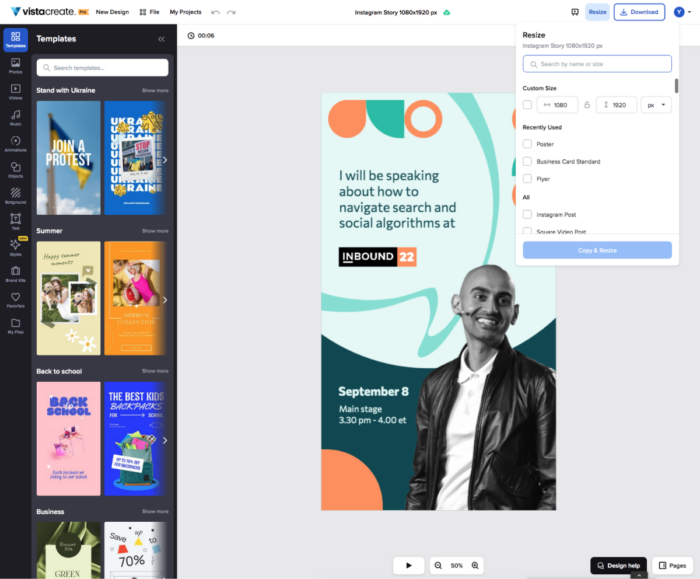
VistaCreate also has a resize feature that allows you to make one design and resize it for different platforms in just a few clicks:
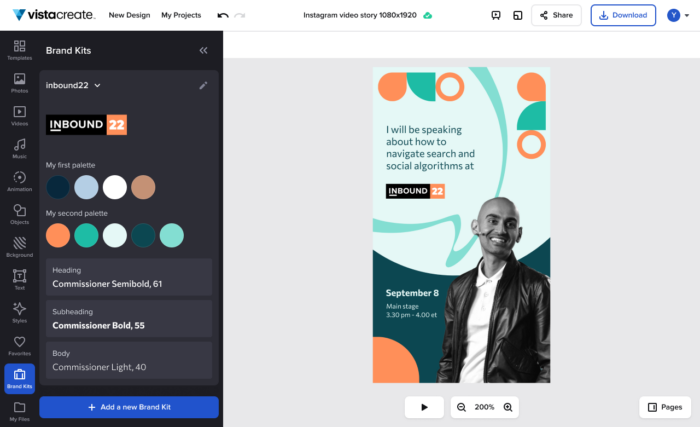
Speaking of branded designs, you can build a brand kit in VistaCreate and use it to create a cohesive look for your branding.
Add your business’s colors, fonts, and a logo to your brand kit — and apply it to a template to create your on-brand design.
Having a brand kit is very convenient, especially if you work with many different companies and want to simplify your workflow.
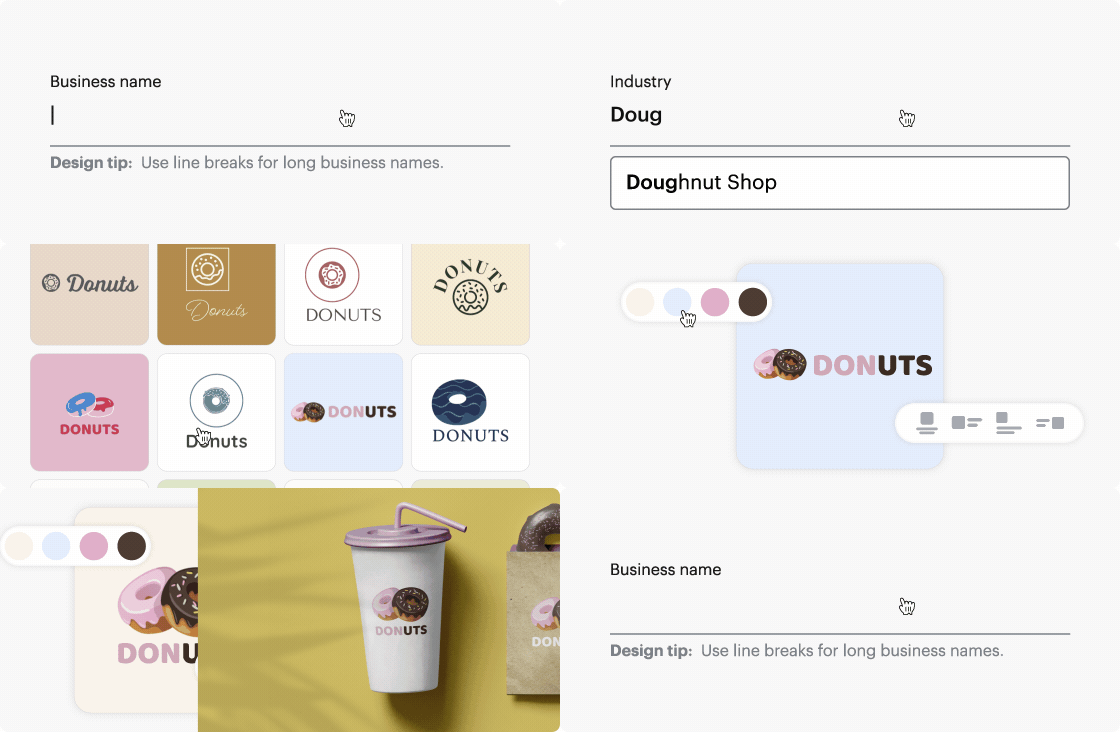
If you work for a new company that doesn’t have a logo, you can create one right from the Brand Kit page using the Logomaker tool.
Click on “Create a logo from scratch”, select an industry, type in your company name — and the Logomaker will offer tons of logo designs.
On top of that, I like that VistaCreate works for both digital and print, so that you can make business cards, flyers, posters, postcards, and other printables in one place.
If you live in the US, you can even use VistaPrint (both companies are part of the Vista family) to have your designs printed and delivered to your door.
For now, you can use them to print posters, flyers, and business cards, with more formats coming soon.
In short, VistaCreate covers all the needs marketers might have — creating branded content for social media and ads, making a brand kit with a logo, and designing print collateral.
You can access it on both desktop and mobile, with the app available for Android and iOS.
2. PicMonkey
PicMonkey is another helpful tool to use for image editing.
If you aren’t a graphic designer but want crystal clear images with high production value, PicMonkey is one of your best bets.
PicMonkey has a slew of diverse features.
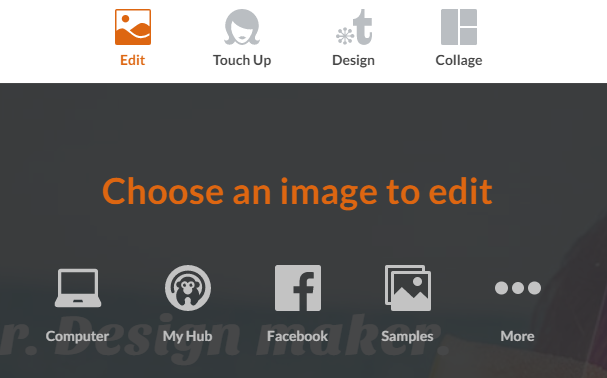
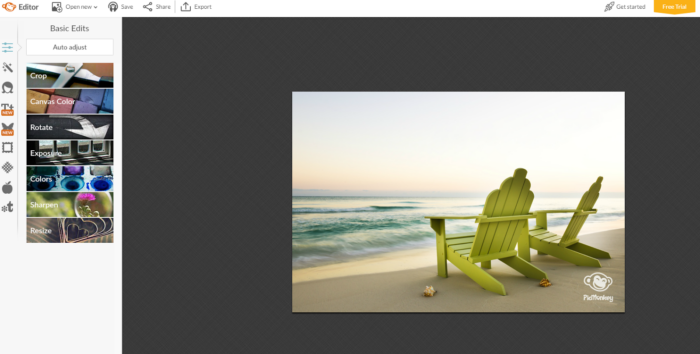
For example, you can edit existing images that you have on Facebook, your computer, or anywhere else:
You can also touch up specific photos with new effects.
Also, you can easily start a new design from scratch or with a preset template.
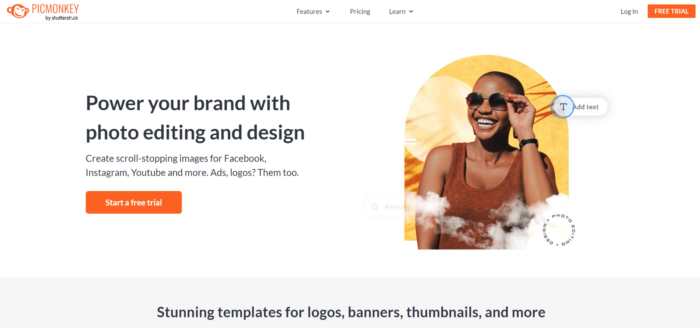
To get started, click “Start a free trial” and create your free account:
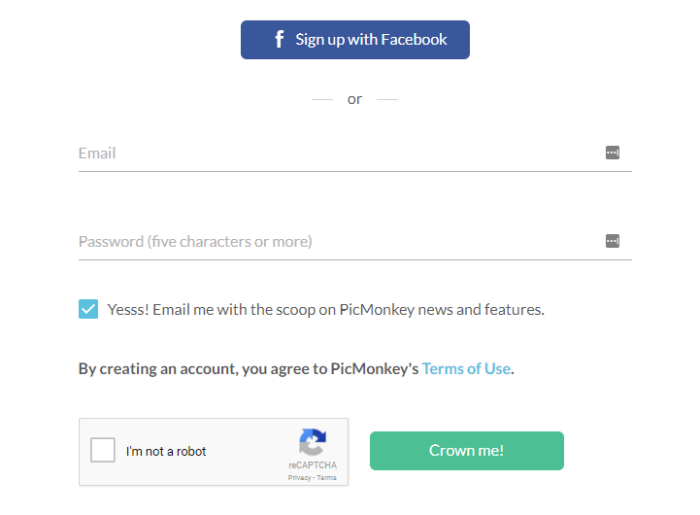
You can set up your new account with an email or by signing up directly with Facebook:
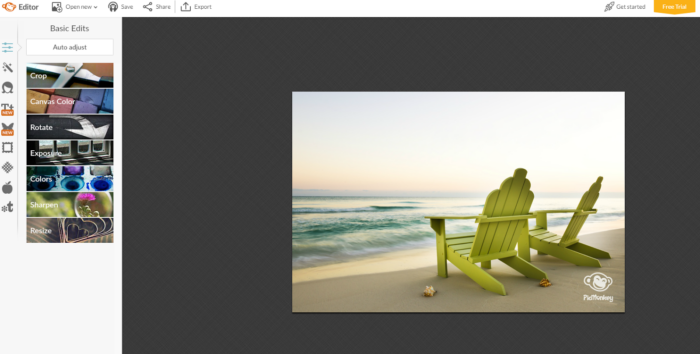
Once you’ve created a free trial account, you should be directed back to the dashboard to edit content:
One of the best benefits of PicMonkey is the actual photo editing ability.
For example, other platforms focus more on social media and content marketing images.
But PicMonkey allows you to use diverse filters that you’d find in an expensive application like Photoshop.
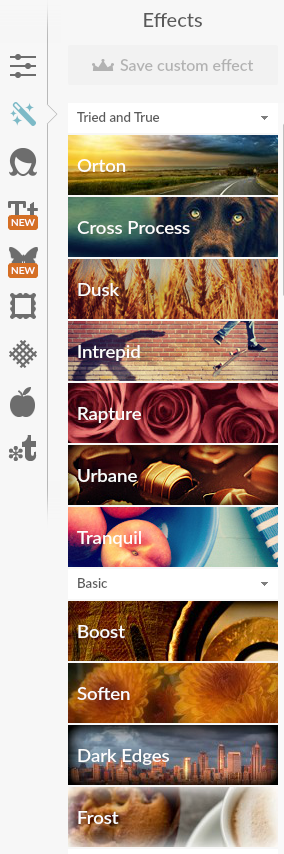
For example, you can edit things like filters, sharpening, and blurring:
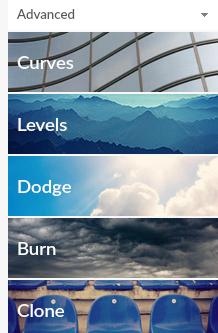
You can even tap into more advanced photo editing tools like curves and levels:
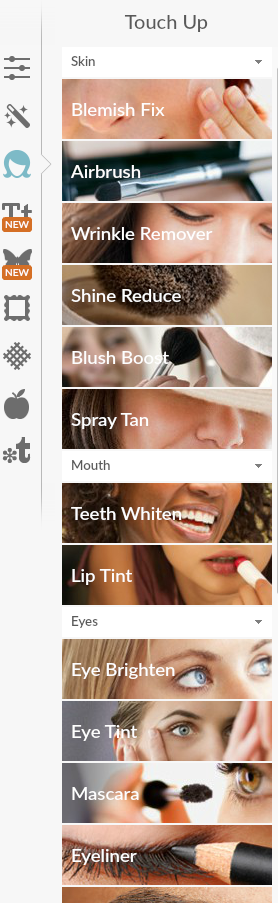
On top of that, you can touch up real-life photos of yourself or your company—if stock photos are not ideal—using awesome image editing tools:
Want to add a spray tan? Who doesn’t?
The portrait photo editing tools are great and allow you to perfect any headshot for your social media or team photo for your website.
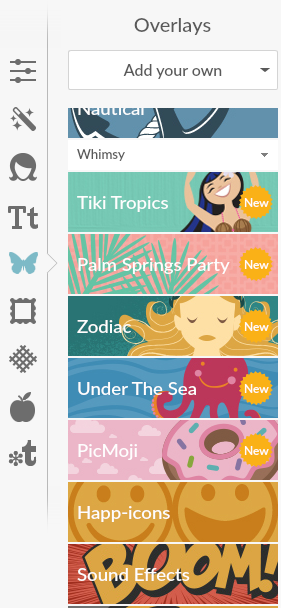
On top of that, you can add tons of cool overlays to your content.
For example, if you wanted to add emojis in your picture, simply click the “PicMoji” option and click any emoji to instantly add it:
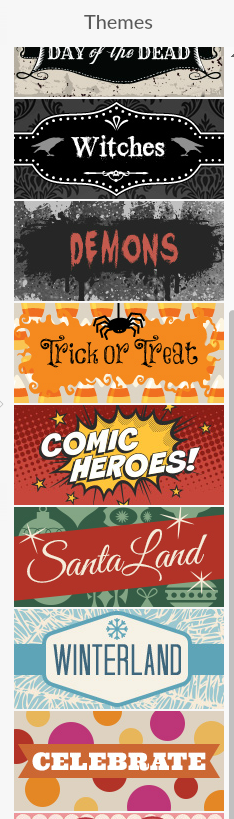
You can also pick from a bunch of different existing themes and templates if you are lacking inspiration or creativity:
PicMonkey is similar to other tools but lacks the diverse template and preset options some offer.
What it lacks in templates, though, it makes up for in diverse image editing capabilities.
The ability to edit things like curves and levels or touch up portrait-style photos really stands out.
PicMonkey is a great tool for the everyday person who needs detailed image editing but doesn’t want to get bogged down by advanced, technical programs.
If you want to create a beautiful photo in just a few minutes that is less focused on text and templates, this is your go-to tool.
Now that we’ve covered some of the best image editing tools on the market, it’s time for one of my all-time favorites.
This tool isn’t for the faint of heart, though.
It’s meant for more experienced users who want deep customization options and who have a basic background in graphic design.
If you don’t have experience developing graphics out of a blank canvas, you might find this tool a bit frustrating.
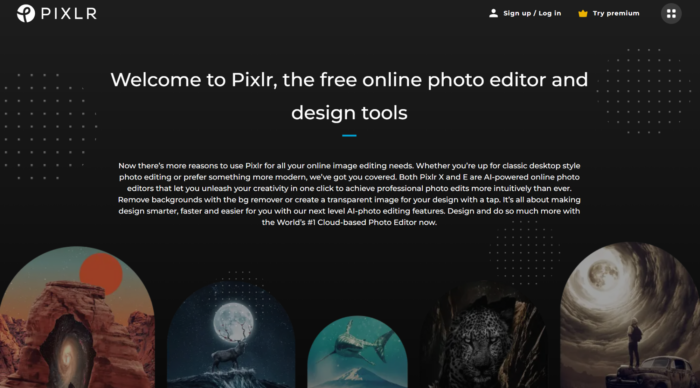
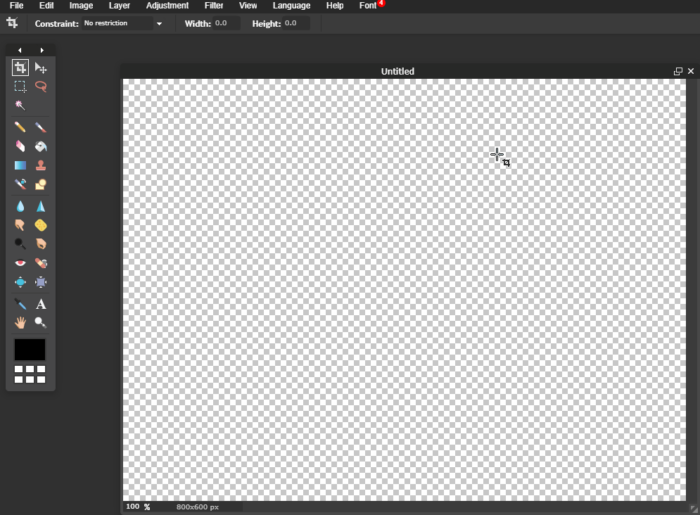
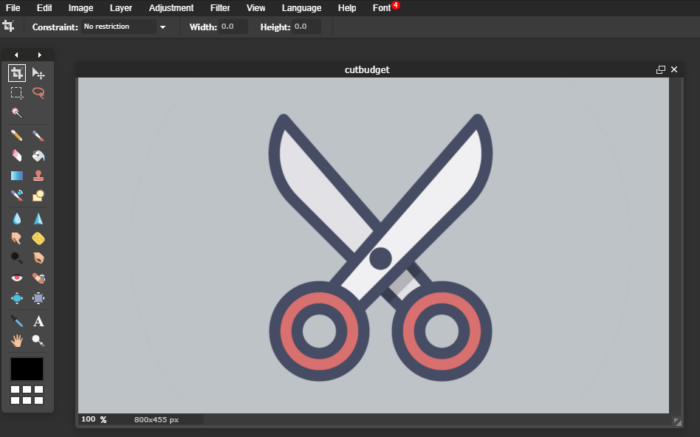
Pixlr’s photo editor resembles Photoshop almost exactly. It has just about every editing feature you’d find in a paid tool.
It’s a completely free tool with incredible customization options you’d expect in a high-quality, expensive application.
To get started, head to Pixlr and create a new image from scratch or open an existing one from a URL or your computer.
If you aren’t comfortable with creating designs from scratch, then Pixlr probably won’t be your go-to tool.
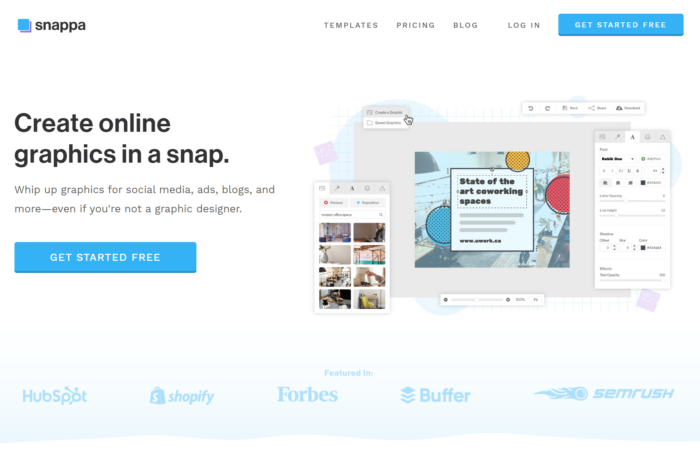
It requires some design elements and skills that are above the level of Snappa.
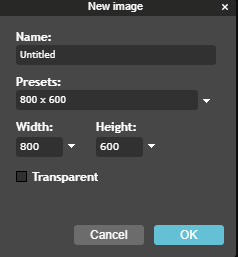
If you create a new image, you can select the dimensions to your liking:
From here, you start to edit a blank canvas just like you would in Adobe’s Photoshop:
The greatest strengths of this tool come in the form of detailed filters, layers, and adjustments.
For example, you can use it to edit an awesome image or create a new blog graphic with various options:
It’s definitely not the easiest tool on the market to use, but if you are looking for a completely free tool with more customization options, Pixlr is a great one.
You can build graphics from the ground up or simply stitch them together like you would in Photoshop.
Go ahead and give it a try today!
6. Luminar AI
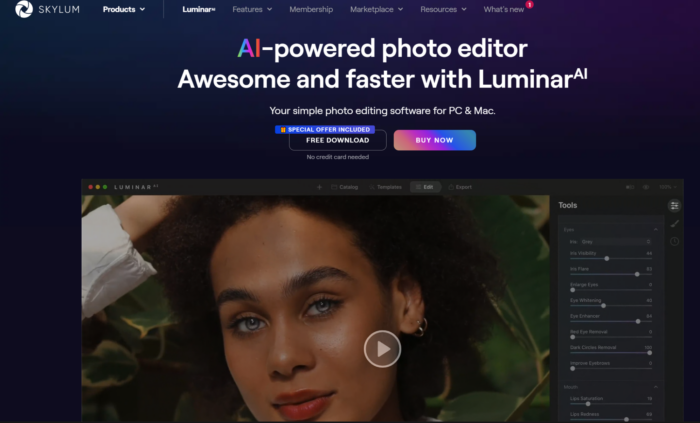
From Skylum, we have the first photo editor powered solely by artificial intelligence: Luminar AI.
Its goal is to take some of the stress out of photo editing by automating the process.
Bridging the gap between basic image editing tools and pro software like Photoshop, this software offers the right in-between gear. Best of all, you need no experience to use it.
Once you choose an image to work on, you can start making additions and enhancements.
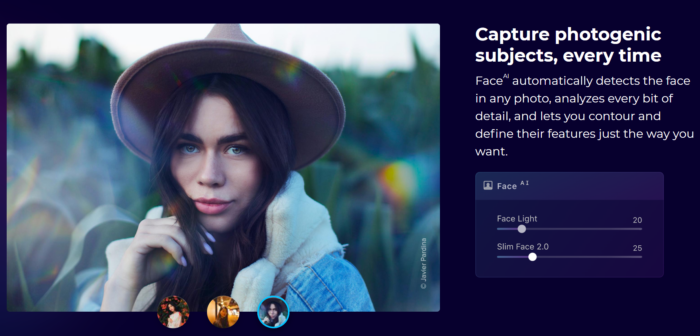
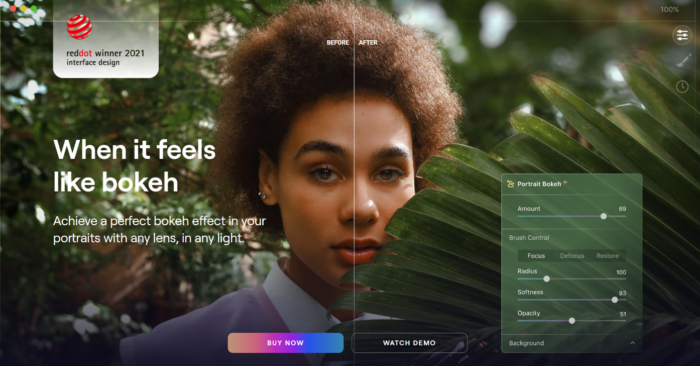
Navigate through the templates and editing features. The specialty features of Luminar are Face AI, Landscape, and Portrait Bokeh. The software will even walk you through the process with editing suggestions it curates.
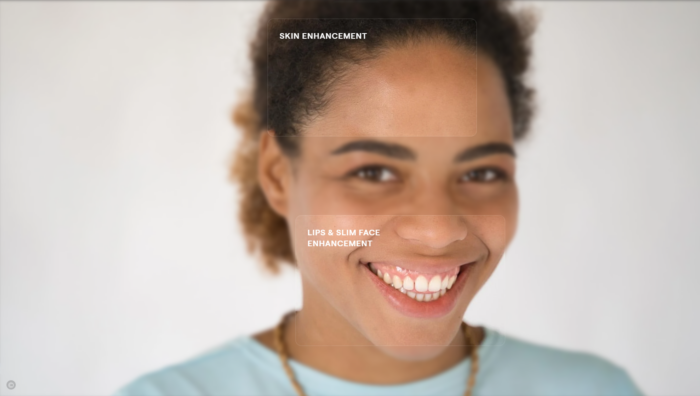
The AI portrait, or Face AI, is meant to make enhancements from shine removal to face slimming to color correcting. Highlight your muse’s smile and give them flawless skin for that “wow” level Luminar helps you strive towards.
This is the creative influence that makes Luminar stand out from other AI editing software.
In the section that has more advanced tools, you will see options that help you replace a background or get the perfect bokeh effect. The cool thing is: This can all be done on the same photo.
With Landscape EnhanceAI, a custom brightness map is used to intelligently balance both light and color across the entire image to make it shine.
Lighting is everything with photo editing. The Bokeh Effect is tough to master, getting the proper balance of light just right. Luminar AI puts you in control and makes suggestions for proper focus and blur for an aesthetically pleasing edit.
When you first start using the software, it can be a bit of a chore to learn. After some time, though, you’ll remember which features are your favorite.
No matter your experience with editing, Luminar allows you to make quick edits at the push of a button. This is especially great for those of you who don’t like sitting in front of your computer too long.
One other thing about this software I like besides its ease of use: While it may be a Photoshop competitor, Luminar can be used as a Photoshop plugin.
That’s right. You can have the best of both worlds with all the aspects of each tool.
So, all around, I say it’s a tool most of you will be a fan of.
Frequently Asked Questions
What is image editing?
Image editing is the process of enhancing digital or analog photographs using various methods, devices, or programs. Photo and image editing might be different when creating graphics versus editing a picture. Scanners, digital cameras, and other image-capturing tools may produce good yet imperfect images that need further editing attention.
What are image editing tools?
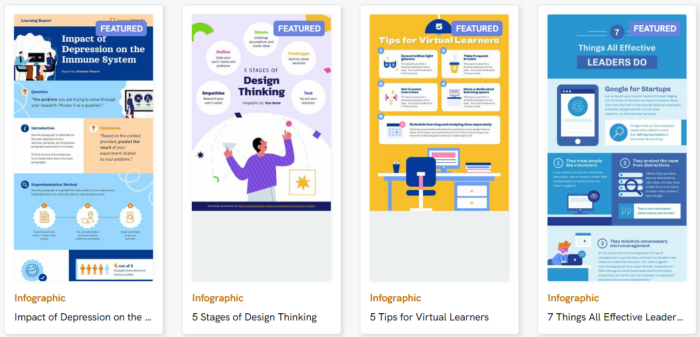
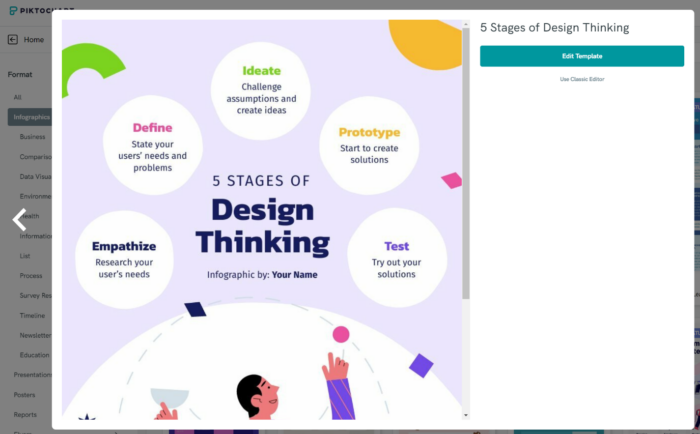
An image editing tool is software that enables the editing and conversion of images to varying graphic formats. Everyone knows Photoshop as one of the most popular image editing tools, but there are many others with similar capabilities. Some specialize in removing backgrounds or are a beginner-friendly version of capabilities found within Photoshop. If you want to make an infographic, try Piktochart. Maybe you want some AI guidance when editing, try Luminar AI instead. Think of your needs or what you want to learn and let that drive your starting point for your editing journey.
How should I choose an image editing tool?
Think about the functionality you need to perform the task at hand. Maybe you need to crop, rotate, or straighten an image. Perhaps you need to correct a smile or the shading of colors of an image. You might need to create an infographic. Read up on the handy tools I mentioned in this post and choose the one that’s best to get your job done.
What are some features I need to have when editing images?
Some standard features of a basic image editor include:
Along with some of these basic features, items you want to have especially for editing images include adding layers to create different amounts of transparency and adding elements like blur or vignette to create specific appearances.
What is photo editing?
This post-production technique of digital photography involves using photo editing tools to alter images to your desired outcome. It is the digital photography equivalent of a darkroom, where photographs are edited after they’re taken.
How to learn photo editing?
Start with photo editing tutorials to learn your style. YouTube is always a great place to start, but the software you use likely offers a tour of its features – use them to your advantage. You can avoid the need for a lot of editing by adjusting your camera’s settings as well. A higher-quality camera helps, too. With many of the tools like I’ve mentioned, the software provides step-by-step instructions telling you how to use the product in real time of your editing process. If you’re still unsure how to get started, read our complete guide on designing stunning visuals as a beginner.
How to calibrate monitor for photo editing?
This will depend on whether you have a Mac or PC
For PC: Go to Start > Control Panel > Appearance and Personalization > Display > Calibrate Display Color. Then open the software that will walk you through and give you a general screen calibration. You can also find it by searching for “Calibrate Display Color” in your Windows search box.
For Mac: With the glossy glass, it’s a bit more difficult, but setting your white point to 5500 will give your screen a warm and fairly accurate display.
What’s the difference between a photo editing tool and image editing tool?
Photo editing tools are exclusively used for manipulating images captured with a camera. Image editing tools can do this as well, but also have the capacity to work on static graphics, or potentially combine the two.
Conclusion
Content marketing should always include visuals.
You can’t just stick a bunch of text up on a page and expect your audience to read and digest every word.
It’s just not going to happen.
Videos and images are a great way to grab their attention and get your message across.
And, like I said, Google likes them, too. A recent study on Google rankings found that images can even help you rank better.
Images should always be a focus in your content marketing and social media strategies.
They are great for driving shares and clicks that plain text just can’t make happen.